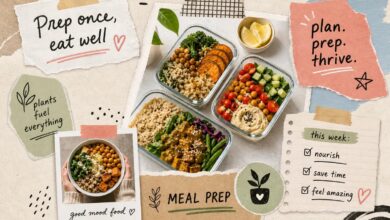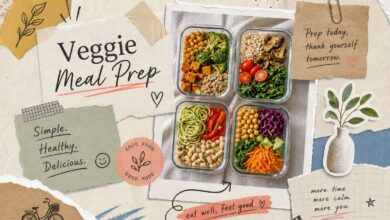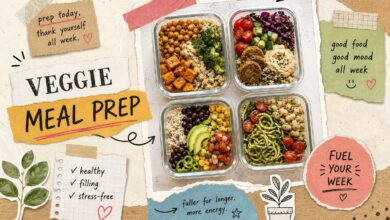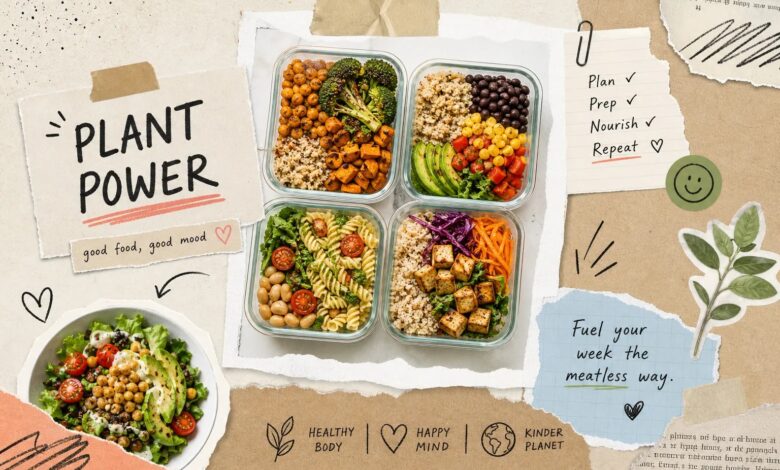
Two fears come up every time someone sits down to plan a meatless meal prep week. The first is hunger: will plant-based food actually keep you full, or will you be raiding the pantry by 4 p.m.? The second is boredom: will you be staring down the same sad grain bowl by Thursday, wondering why you ever started this experiment? Both concerns are completely reasonable, and both are solvable once you have the right system in place.
This guide is that system. It gives you a 90-minute Sunday prep schedule, a focused grocery approach, a full week of meals built from one cooking session, and storage rules that protect your food through day seven. NestKitchenMeals covers vegetarian meal prep recipes and budget meal planning strategies week after week, and this article pulls together the most practical elements into one complete resource. By the time you finish reading, you will have a clear plan to walk into Sunday prepared and walk out of the kitchen with meals for the entire week.
The Real Case for Going Meatless This Week
Why Budget-Conscious Cooks Are Making the Switch
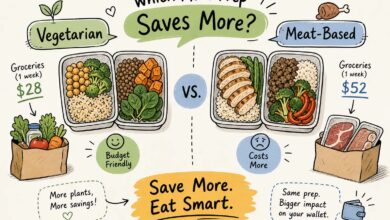
Dried lentils and beans cost roughly $0.10 to $0.20 per serving. Compare that to chicken breast or ground beef, which typically cost several times more per serving depending on your market and cut. Over seven days of three meals each, that difference adds up fast. A full week of plant-based eating can be considerably less expensive than a meat-based plan, and the gap grows wider when you factor in that pantry staples like rice, oats, dried pasta, and canned tomatoes all land under $0.30 per serving as well.
Meatless meal prep is not a compromise. For anyone trying to stretch a grocery budget without sacrificing satisfying food, building the week around legumes and whole grains is one of the most financially sound decisions you can make in the kitchen. Related reading: kitchen decor.
The Protein and Satiety Question, Answered Upfront
Yes, you can absolutely hit your protein target on a fully meatless week. The key is not eating more vegetables; it is anchoring every meal to at least one concentrated plant protein source. A bowl of roasted broccoli and rice will leave you hungry. That same bowl with a full serving of tempeh or lentils becomes a genuinely satisfying meal. The plant-based proteins covered in the next section make this easy and repeatable across all seven days, and they form the foundation of any successful meat-free meal prep routine.
Plant-Based Proteins for Meatless Meal Prep
A Quick Look at What Each Ingredient Delivers
Seitan is among the highest-density options for batch cooking, delivering 17 to 25 grams of protein per serving. Tempeh follows at around 15 grams per half-cup, and edamame delivers 8.5 to 17 grams depending on portion size. Lentils contribute 8.8 to 13 grams per half-cup cooked, tofu sits at about 10 grams per half-cup, and chickpeas bring roughly 7 grams. None of these numbers require you to eat enormous quantities to meet your daily needs, especially when you stack two or three of these across breakfast, lunch, and dinner.
The goal is not to memorize protein counts. The goal is to look at your plate and confirm that a meaningful plant protein is present at every meal, not just as a garnish, but as the centerpiece of the dish.
How to Pick Your Two Anchor Proteins for the Week
Simplicity wins here. Choose one or two proteins for the entire week rather than trying to use all six in every combination. Tempeh and lentils work well together because tempeh handles quick pan-cooking and stir-fry applications while lentils suit longer-simmered curries and soups. Tofu and chickpeas are another reliable pairing because both show up naturally in wraps, grain bowls, stir-fries, and salads without the meals tasting the same.
Keeping your protein count to two reduces decision fatigue and cuts prep time significantly. When Sunday comes, you are not managing six different cooking methods. You are cooking one thing on the stovetop and one thing in the oven, in parallel, while everything else runs on its own. See also: cooking tips.
Meatless Meal Prep: Your 90-Minute Sunday Session
What to Cook and Why the Order Matters
The efficiency in this session comes from running the oven, stovetop, and no-cook assembly at the same time rather than finishing one task before starting the next. Your longest-cooking items go first so they have unattended time to finish while you work on everything else. A grain on the stovetop and a sheet pan of roasted vegetables in the oven give you 25 to 30 minutes to handle cold prep like overnight oats, hummus portions, and snack containers without losing a single minute to waiting.
The goal of the entire session is to touch each ingredient only once. Chop everything before it goes anywhere near heat. Season before it goes into the pan or oven. Portion directly into containers as soon as it comes out. That one-touch approach is what keeps 90 minutes actually realistic.
A Timed Schedule from 0 to 90 Minutes
- Minutes 0 to 10: Preheat the oven to 400°F. Start rice or quinoa on the stovetop. Set out all containers and lids so portioning at the end takes seconds, not minutes.
- Minutes 10 to 25: Chop all vegetables for the week in one go. Season your protein (tofu, tempeh, or both) while the knife is already in your hand.
- Minutes 25 to 35: Load sheet pans with vegetables and place them in the oven. Add seasoned tofu to a second pan if using it this week.
- Minutes 35 to 55: Start lentils or tempeh on the stovetop. While those cook, assemble overnight oats and portion any cold snacks like hummus, cut fruit, or trail mix.
- Minutes 55 to 70: Pull the cooked grain off the heat, fluff it, and begin portioning into containers. Check and stir the stovetop protein.
- Minutes 70 to 90: Pull vegetables and any remaining protein from the oven. Cool everything for about 10 to 15 minutes, then label containers and refrigerate.
A Week of Meals Built from One Sunday Session
Breakfast and Lunch Rotation Without Repetition
Variety across the week does not require cooking something new every day. It requires thinking in components rather than fixed meals. Overnight oats with fruit on Monday can become a chia pudding bowl by Wednesday using the same base with different toppings. A grain bowl with chickpeas and tahini at Tuesday lunch shifts to a hummus wrap with roasted vegetables on Thursday, using the same prepped chickpeas and the same roasted vegetables in a completely different format. If you feel like you are eating the same food every day, you are probably assembling full meals instead of rotating components.
Sauces are where this strategy really pays off. A tahini-lemon dressing on a grain bowl tastes nothing like the same bowl dressed with a peanut-ginger drizzle. Prep two or three sauces on Sunday alongside your proteins and grains, and the perceived variety across the week increases dramatically without any additional cooking time.
Dinner Options That Use Your Batch-Cooked Base
A five-to-seven day dinner rotation built from Sunday prep could look like this: lentil curry over rice on Monday, tofu stir-fry with roasted vegetables on Tuesday, bean taco night on Wednesday using canned black beans from the pantry with your prepped roasted peppers and onions, stuffed peppers or a quick veggie pasta on Thursday, and a grain bowl dinner with whatever protein and vegetables remain on Friday. Each of these pulls from the same base components already in the fridge. Dinner should feel like a fresh meal even though most of the work is already done.
How to Store Your Meatless Prep So It Lasts
Meatless Meal Prep: Storage and Reheating
Cooked grains, legumes, and tofu dishes are safe in the refrigerator for three to four days when stored promptly in shallow, sealed containers at 40°F or below. Tofu-based dishes can technically last up to five days under ideal conditions, but three to four days is the reliable, practical window, especially when the dish includes vegetables, sauce, or coconut milk. Lentils and chickpeas follow the same rule: safe for three to five days, with three to four being the no-guesswork standard.
Use a split-storage strategy for anything intended for days five through seven. Freeze those portions on Sunday rather than leaving them in the refrigerator and risking quality or safety. Pulled from the freezer on Wednesday or Thursday, they reheat like a fresh meal and eliminate the risk of eating something that has been sitting in the fridge too long.
Reheating Methods That Don’t Wreck the Texture
The microwave works best for individual grain or bean portions. Stir or rotate the container halfway through heating to eliminate cold spots, then let it stand for 60 seconds before eating so the temperature evens out. For curries, soups, and tofu-based dishes, stovetop reheating with a splash of water or broth is a better choice because it restores moisture rather than drying the food out. The oven is best reserved for roasted vegetable trays or casserole-style dishes where you want the top to re-crisp: cover with foil, heat until the center hits 165°F, then uncover for the last few minutes.
One firm rule applies to all methods: reheat a portion once and eat it. Repeatedly warming the same container throughout the week degrades both quality and safety. Portion on Sunday so you only pull out what you need, when you need it.
Keeping It Interesting So You Actually Finish the Week
The Sauce Rotation Strategy That Beats Flavor Fatigue
Flavor fatigue is not really about the food. It is about eating the same seasoning combination on repeat. The fix is to prep two or three different sauces on Sunday alongside your base ingredients. A tahini-lemon dressing, a simple tomato-cumin sauce, and a peanut-ginger drizzle cover three completely different flavor profiles and pair differently with every protein covered earlier in this guide. Tempeh with peanut-ginger drizzle reads as an Asian-style bowl. That same tempeh with tomato-cumin sauce becomes a taco filling. The base is identical; the experience is not.
Switching your sauce on Wednesday is one of the most effective mid-week resets you can make without turning on the stove. Pair it with one fresh element added at serving time, avocado, pickled onions, fresh herbs, or toasted seeds, and the meal feels genuinely different from Monday’s version of the same components. This is not a trick; it is how restaurant kitchens rotate the same base proteins across a menu of dishes that feel nothing alike.
Where to Go When You Want More Plant-Based Prep Ideas
NestKitchenMeals covers high-protein vegetarian meal prep recipes designed specifically for plant-based batch cooking, along with budget meal planning guides that keep your weekly grocery spend realistic. If this framework worked for you and you want structured seven-day plans, beginner-friendly recipes, or seasonal variety that keeps meatless eating interesting month after month, the site is the natural next stop for more ingredient swaps and kitchen strategies built for real home cooks.
Make This a System, Not a One-Week Experiment
Sustainable meatless meal prep comes down to a few non-negotiables: high-protein anchor ingredients that keep every meal filling, a parallel Sunday cooking session that gets everything done in 90 minutes, and a sauce rotation that resets the palate mid-week without any additional cooking. Strip away anything more complicated than that and this meat-free meal prep approach holds up week after week without burning you out.
Put it into practice this Sunday: choose two plant-based proteins, run the 90-minute prep schedule, and make at least two different sauces to rotate across the week. The meals will surprise you, both in how satisfying they are and how little time they actually take once the system is running. When you are ready to expand beyond this starter plan, NestKitchenMeals has ready-made vegetarian meal prep plans and grocery-budget guidance to keep things fresh every week. The goal is to make plant-based batch cooking a long-term habit you actually enjoy, not a short-term experiment you abandon by Friday.