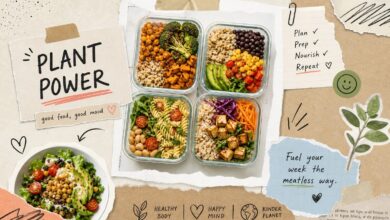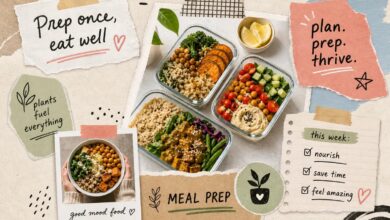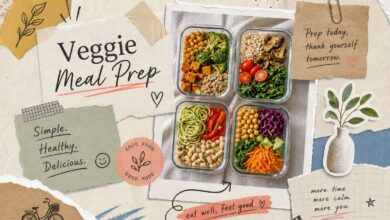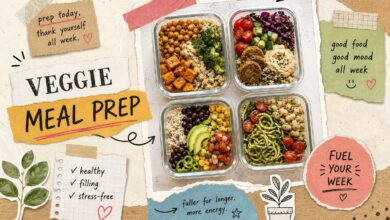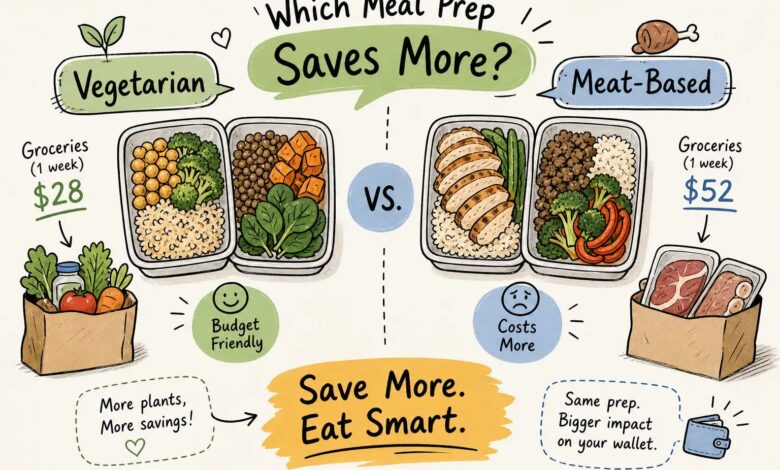
You scan your grocery receipt at checkout and feel that familiar sinking feeling. The total is higher than you planned, and you’re not even sure what pushed it over. For most home cooks, the answer is sitting right there in the middle of the receipt: the protein line items. Chicken breasts, ground beef, pork tenderloin, they add up fast, and they do it quietly. If you’ve been asking yourself whether vegetarian meal prep is cheaper than meat-based meal prep, the short answer is yes, and 2026 grocery prices make the case clearly.
The question is a fair one: does dropping meat actually save you real money at meal prep time, or is vegetarian cooking just a health trend with a similar price tag? Opinions on this are everywhere, but grocery store math cuts through the noise. At NestKitchenMeals, we dig into budget meal planning regularly, and one finding keeps showing up: protein choice is the single biggest cost lever most home cooks aren’t using. This article uses 2026 retail prices and realistic weekly meal examples to show you the actual per-serving cost difference, where the savings come from, and what genuinely affects your total bill from week to week. If you want to go further, kitchen decor covers it in detail.
Is Vegetarian Meal Prep Cheaper Than Meat-Based Meal Prep? The Key Cost Drivers
Protein is where the money splits
The dominant cost driver in any meal prep plan is the protein source, and the numbers at the grocery store make this impossible to ignore. As of mid-2026, dry beans average $1.69 per pound and lentils sit at $1.32 per pound. Boneless skinless chicken breast, by comparison, runs $4.15 per pound at the U.S. city average for July 2026. That’s already more than double, and it gets more interesting when you factor in yield.
One cup of dry lentils costs roughly $0.33 and expands to about 2.5 servings when cooked, putting the protein cost per serving under $0.15. A standard chicken breast portion runs closer to $1.00 to $1.50 per serving depending on pack size and store. That gap is not marginal. It’s the difference between a protein that costs pennies per serving and one that costs dollars, and it compounds across every meal you prep for the week.
Yield loss, spoilage, and prep waste add hidden dollars
The sticker price on meat understates its real cost per serving. Ground beef and chicken breast both shrink significantly during cooking, with yield losses of 15 to 30% on average depending on the cooking method and fat content. When you buy a pound of 80/20 ground beef, you’re paying for weight that cooks off. The effective per-serving cost of meat is consistently higher than the price tag suggests once you account for shrinkage and trim. Related reading: cooking tips.
Plant staples carry their own spoilage risk when it comes to fresh vegetables and fruit, but the core of a vegetarian meal prep plan, dry beans, lentils, whole grains, oats, is shelf-stable. Stored properly, those ingredients have near-zero spoilage loss. You buy them, they sit in your pantry, and you use them when you’re ready. That reliability is part of why plant-based prep tends to run leaner on cost even before you open a recipe. Growing a few staples yourself cuts costs even further; start with this guide on how to grow potatoes.
Cost Comparison: Vegetarian Meal Prep vs. Meat-Based Meal Prep, Side by Side
What a vegetarian week looks like at the register
A realistic one-week vegetarian meal prep grocery run for one adult covers dry lentils, canned chickpeas, rice, oats, eggs, seasonal frozen vegetables, canned tomatoes, olive oil, and basic spices. With 2026 retail prices, a well-planned vegetarian prep week lands in the $35 to $50 range for one person and yields 10 to 14 individual meals. That puts the per-serving cost at approximately $2.50 to $3.50 per meal, and the upper end of that range still includes everything from breakfast oats to a chickpea stir-fry dinner.
The math works because the expensive line items stay small. A week’s worth of dry lentils and canned beans might cost $4 to $6 total, while the grains, frozen vegetables, and pantry staples spread that cost across the full week of meals. Eggs add affordable protein variety. Nothing on the list is premium, and nothing is heavily processed beyond canned tomatoes and chickpeas, which rank among the most budget-friendly pantry items available.
Here’s a quick per-meal cost snapshot for a typical vegetarian prep week:
- Lentil soup (per serving): ~$0.85, lentils, canned tomatoes, broth, spices
- Chickpea stir-fry with rice (per serving): ~$1.40, canned chickpeas, frozen vegetables, rice, soy sauce
- Overnight oats (per serving): ~$0.60, oats, frozen fruit, splash of milk
- Black bean and rice bowl (per serving): ~$1.10, dry beans, rice, spices, canned tomatoes
Average across a full week: roughly $2.80 to $3.20 per meal, all in.
What a meat-based week costs at the same store
Build a comparable meat-based prep week with boneless chicken breast and ground beef as the proteins, the same rice, pasta, and frozen vegetables as sides, and a similar pantry lineup. The protein line items alone push the weekly total to $60 to $85 for the same number of meals and the same single adult. The per-serving cost lands at approximately $5.00 to $6.50 per meal. On a per-meal basis, vegetarian meal prep consistently comes out $2.00 to $3.00 cheaper per serving.
Two studies using real home food spending point in the same direction. A 2019 JAMA Network Open study on low-fat plant-based diets found that participants spent roughly $1.80 less per day on food compared to those eating a Standard American Diet, with most of the savings coming from reduced meat spending. Separately, research commissioned by the campaign organization Veganuary, drawing on actual meal diary data from 11,000 participants, found that plant-based home meals were approximately 40% cheaper than meat-based meals on a per-person basis. Both data sets reflect real spending, not modeled estimates.
Where that weekly savings actually lands for your budget
The per-meal gap adds up quickly. At $2.00 to $3.00 saved per meal across 14 prepped meals per week, that’s $28 to $42 per week staying in your pocket. Over a month, you’re looking at $112 to $168 in grocery savings, just from shifting the protein source. That’s a number worth taking seriously if you want to cut food spending without eating worse.
When Meat-Based Prep Can Close the Gap
Bulk buying whole cuts and family packs changes the equation
Meat-based meal prep isn’t always dramatically more expensive if you shop strategically. A whole chicken costs significantly less per pound than boneless chicken breasts because you’re not paying for someone else’s butchering labor. Family packs of ground beef or pork reduce the per-pound cost compared to single-portion packaging. The tactic is straightforward: buy the larger, less-processed format, portion it yourself at home, and freeze in meal-sized packs right after purchase.
This is the scenario where meat-based prep gets meaningfully closer to vegetarian cost per serving. It requires more hands-on prep upfront, but if you’re already blocking out two hours on Sunday for batch cooking, breaking down a whole chicken or portioning a family pack of ground beef adds maybe 15 minutes. The per-pound savings are real, and they compound across a full month of buying this way.
Stretching meat with plant-based sides drops the per-serving protein cost
The “stretch” approach works well for people who aren’t ready to go fully plant-based but still want to pull their weekly grocery bill down. Using smaller amounts of meat as a flavoring or topping, rather than the centerpiece of a meal, with legumes, grains, or vegetables carrying the bulk of the plate cuts the per-serving protein cost significantly. A taco bowl built on a base of rice and black beans with a modest amount of seasoned ground beef costs far less per serving than a fully meat-centered plate.
This hybrid strategy is the practical middle ground, and it’s where many budget-conscious meal preppers land naturally. You keep the flavors that make meat satisfying, but you’re no longer paying meat prices for every calorie on the plate. The per-meal cost drops toward vegetarian territory without requiring a complete change in how you cook.
Shopping and Prep Tactics That Cut Costs for Either Approach
Dry, bulk, and shelf-stable ingredients over processed alternatives
The clearest cost-cutting swaps available to any meal prepper follow a simple rule: buy the ingredient in the least-processed, largest format you can reasonably store and use. Dry beans instead of canned beans save roughly 40 to 60% per serving after cooking, based on 2026 retail prices showing dry beans at $1.69 per pound versus canned beans running about $1.25 per can for a near-pound of product with significant liquid weight. Bulk rice, oats, and pasta carry dramatically lower unit costs than individually packaged sizes. Frozen vegetables often cost less than fresh equivalents and eliminate almost all spoilage waste.
Store-brand canned tomatoes, broth, and condiments like soy sauce add real flavor to both vegetarian and meat-based meals without adding much to the grocery bill. These swaps apply across the board, whether you prep meatless meals or not. Switching to dry beans alone can offset a meaningful portion of your grocery spending over a month.
Batch cooking and the freezer strategy multiply the value of cheap ingredients
Cooking a full pot of dry lentils or dried beans and portioning them into the freezer makes your cheapest ingredients immediately available for fast weeknight meals without additional effort mid-week. The same approach works for large batches of grains, soups, and stews. You do the work once and draw on it for days. This is why batch cooking consistently separates home cooks who genuinely save money from those who buy the right ingredients but still end up ordering takeout because nothing is ready.
The freezer strategy works just as well for meat-based prep: buying a family pack, cooking it all at once, and freezing in portioned bags prevents the price premium that comes from buying small amounts repeatedly throughout the week. The system matters as much as the ingredient choice. Buying cheap lentils and letting them sit in the pantry unused saves you nothing if dinner ends up being a delivery order on Wednesday.
Ready to Try Meatless Prep? Here’s Where to Start
Knowing that vegetarian meal prep is cheaper than meat-based meal prep is useful information, but knowing lentils are cheap doesn’t get dinner on the table. Having a reliable set of vegetarian meal prep recipes that are genuinely filling and easy to execute on a real schedule is what makes the switch stick past the first weekend.
NestKitchenMeals has vegetarian recipe roundups and budget meal prep guides built specifically for batch cooking, using the shelf-stable staples covered in this article. The recipes are organized around a home cook’s actual week, not a culinary school curriculum. If you’ve been meaning to shift toward more plant-based meals for cost reasons and haven’t found a starting point that feels manageable, that’s the place to look. The savings are real, the math is already done, and a practical recipe lineup is waiting when you’re ready to put it into action.
The Bottom Line on Plant-Based vs. Meat-Based Meal Prep Costs
Vegetarian meal prep is cheaper than meat-based meal prep in most realistic scenarios. The per-meal savings run $2.00 to $3.00 per serving, which translates to $28 to $42 per week and $112 to $168 per month for someone prepping 14 meals weekly. That’s consistent across multiple studies using actual home meal data, not modeled projections.
Smart bulk buying of whole cuts and family packs narrows the gap for meat-based prep, and the hybrid stretching approach offers a practical middle ground. But when the math is done honestly, whole-food plant-based prep versus standard meat-based prep at the same store, vegetarian meal prep wins on cost. If your goal is to reduce your grocery bill while still eating well, this is one of the highest-leverage changes available to you, and the entry point is simpler than most people assume.