As an Amazon Associate I earn from qualifying purchases. Some links in this post are affiliate links, at no extra cost to you.
It’s Wednesday evening. You just finished work, the kids need dinner in 45 minutes, and when you open the fridge there’s nothing ready. So you order takeout again, spend $40 you didn’t plan to spend, and tell yourself this weekend will be different. A solid weekly meal prep routine fixes exactly that problem: one focused prep session on Saturday or Sunday sets up the entire week, and NestKitchenMeals is built to help you get there.
This isn’t about cooking 21 individual meals or following a rigid menu that falls apart by Tuesday. It’s a system built on core building blocks, proteins, grains, and roasted vegetables, that combine into different meals all week long. Whether you’re cooking for yourself or feeding a household, the approach scales well because you’re multiplying ingredients, not cooking steps. You will find more ideas in cooking tips.
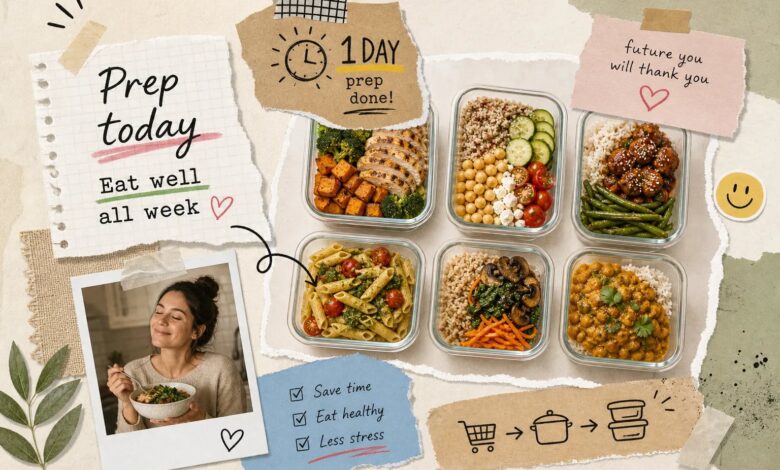
Below you’ll find a shopping strategy, a timed 90-minute cooking schedule, 30 recipe ideas sorted by how long they hold, and storage guidance down to the container size. Skip the theory and start the plan.
Why one prep session actually covers five to seven days
The core logic is simple: you’re not cooking separate meals. You’re cooking components that assemble into meals. A batch of shredded chicken becomes grain bowl lunches on Monday, tacos on Tuesday, and chicken soup on Thursday. That’s three different dinners and lunches from one cooking task. This “cook once, remix twice” mindset is what separates a weekly meal prep routine that actually sticks from one that burns you out.
Many people default to Sunday for prep, but Saturday afternoon can work better. Grocery stores are freshly stocked, Sunday stays open for rest, and you hit the kitchen with a clear head. For meal prep beginners, the actual cook time typically runs 60 to 90 minutes, and many people find the session gets noticeably shorter once they’ve repeated the system a few times. The key is separating shopping from cooking: plan and buy on Saturday morning, then cook in the afternoon with a clear counter and no interruptions. You will find more ideas in kitchen decor.
How to build your shopping list for weekly meal prep
Before you write a single item on the list, check your fridge, freezer, and pantry. Use what’s already there, then build around two proteins, two starches or grains, three to four vegetables, one breakfast prep item, and one snack. Organize the list by store section, produce, proteins, dairy, pantry, frozen, so you move through the store once without backtracking. Ingredients that overlap across multiple meals cut both cost and waste significantly.
Budget-smart buying habits
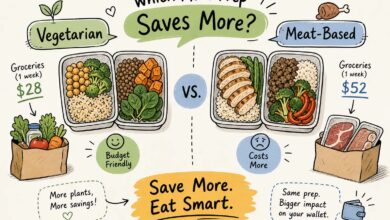
For budget stretching, buy staples in bulk only when you actually cycle through them: rice, oats, dried beans, frozen vegetables, and spices are the right targets. Always check unit price rather than package price, since larger packages aren’t always cheaper per ounce. Store-brand canned goods, frozen proteins, and shelf-stable basics perform nearly identically to name brands at a fraction of the cost. Seasonal produce and frozen berries run cheaper than fresh out-of-season options and count equally toward a balanced week.
A well-planned week of meal prep for one person runs roughly $40 to $50 on a budget grocery list, approximately $6 to $7 per day, or $2 to $3 per meal. The savings over takeout or restaurant meals add up fast, especially when you’re eating three solid meals a day from food you actually like.
The 90-minute weekly meal prep schedule
The first step before you touch any food: clear the counters, set out your containers, and preheat the oven. Then start everything that takes the longest without needing your attention. Get grains on the stove (rice or quinoa), proteins in the oven or on the burner, and a sheet pan of vegetables roasting. While those cook, wash and chop anything that’ll stay raw through the week. Staggering tasks this way means nothing sits idle waiting on something else.
Breakfast prep and sauce-making
Once the big items are running, shift to breakfast prep. Mix overnight oats into jars, assemble egg muffin batter and pour it into a muffin tin, or lay out breakfast burritos for wrapping and freezing. This is also the right window to make one sauce or dressing that will rotate across multiple meals during the week. A single chipotle yogurt sauce, a basic teriyaki glaze, or a lemon-garlic vinaigrette prevents flavor fatigue without requiring extra cooking sessions.
Portioning and cool-down
In the final 20 minutes, portion meals into containers and label each one. Let everything cool completely before sealing, trapped steam makes food soggy and creates condensation that shortens shelf life. Anything you won’t eat within four days goes straight to the freezer before you clean up. By the time the kitchen is reset, the week is covered.
Thirty make-ahead recipes sorted by what holds longest
Knowing which foods hold their texture and flavor across multiple days determines what’s worth prepping. The list below is organized by how long each item reliably holds in the fridge, so you know what to reach for first and what to freeze.
Breakfasts and snacks (five days refrigerated): overnight oats, egg muffins, chia pudding, baked oatmeal, frittata slices, baked French toast casserole, breakfast casserole, banana bread, and breakfast cookies. For snacks: energy bites (oats, nut butter, honey) keep two weeks refrigerated, while muffins, roasted chickpeas, hummus with cut vegetables, and yogurt parfaits with granola stored separately hold reliably through the week. Breakfast burritos freeze well and reheat quickly from frozen in a microwave, typically a few minutes, depending on your microwave wattage and portion size.
Lunches and dinners (three to four days refrigerated): grain bowls, chicken salad, tuna or chickpea salad, pasta salad, quiche slices, lentil soup, and Mediterranean chickpea bowls all hold well and reheat cleanly. For dinners, sheet-pan chicken and vegetables, baked ziti, meatballs with sauce, chili, lentil stew, fried rice, stuffed peppers, and shepherd’s pie are all built for reheating. Chili and lentil stew specifically improve after a day or two as the flavors develop. Plan two or three ready-to-eat dinners and keep remaining proteins and grains as loose components for flexible assembly on busier nights.
Anything past the four-day refrigerator window freezes well. According to USDA food safety guidelines, cooked chicken and meat hold two to six months frozen, soups and stews hold two to three months, and egg dishes and baked pasta hold two to three months frozen. The USDA also puts most cooked proteins, grains, soups, and casseroles at three to four days safe refrigeration at 40°F or below, use that as your decision point: eat it this week or freeze it today.
How to store everything so it actually stays fresh
Glass containers with airtight snap-lock lids are the best default for cooked meals. They handle microwave reheating without absorbing odors or staining, and they seal tightly enough to preserve texture across multiple days. A standard 32-ounce container holds a full adult meal with protein, a grain, and vegetables. Use smaller 16-ounce containers for sauces, dressings, and toppings that travel separately from the main meal.
Choosing the right meal prep containers and storage options
For portable cold lunches you won’t reheat, BPA-free plastic or stainless steel is lighter and more practical than glass. For anything moving from the freezer directly to the oven, borosilicate glass handles that temperature shift better than standard glass. Look for containers with silicone gaskets on the lid seal, those create a real airtight barrier rather than just a loose fit.
Two storage rules make the biggest practical difference. First, always let food cool fully before sealing so trapped steam doesn’t make everything soggy. Second, keep wet and dry components separate: dressings, croutons, and fresh greens travel in their own small containers and get combined right before eating. When components are stored apart, many grain bowls retain good texture for three to five days, though results vary depending on the specific ingredients.
Keeping your weekly rotation from feeling repetitive
Flavor fatigue is the main reason people quit meal prep after two weeks. The same shredded chicken over rice tastes completely different with a teriyaki glaze versus a chipotle yogurt sauce versus a simple marinara. One or two sauces prepared each week carry your core proteins and grains through entirely different flavor profiles without requiring new recipes every week. Keep a short rotating list of five or six sauces you enjoy and the variety takes care of itself.
The harder ongoing problem is knowing what to cook before you shop. That’s where a reliable source of weekly recipe ideas saves real planning time. NestKitchenMeals publishes recipes designed for busy home cooks, weeknight dinners, freezer-friendly batch meals, one-pot dishes, and air fryer options that slot directly into a weekly meal prep routine like this one. Having a go-to recipe source means you rotate ideas without starting from scratch every weekend, which keeps the planning step short and the system running.
Start this weekend with one small batch
The system works like this: build your shopping list around ingredients that overlap across multiple meals, cook in a 90-minute session starting with the longest tasks, and make a fridge-or-freeze decision for every item before you seal the containers. Those three steps are the whole framework.
Weekly meal prep is a repeatable skill, not a one-time project. The first session takes the most mental effort because you’re building the system. Many people find that after two to four sessions, the routine becomes much faster and more automatic.
Start small this weekend: one protein, one grain, two vegetables, and one breakfast item. That’s enough to feel the difference on Wednesday night when dinner is already handled. Then use NestKitchenMeals to keep the recipe rotation fresh each week so the system never gets stale.