

As an Amazon Associate I earn from qualifying purchases. Some links in this post are affiliate links, at no extra cost to you. If you want to go further, meal prep covers it in detail. If you want to go further, recipes covers it in detail.
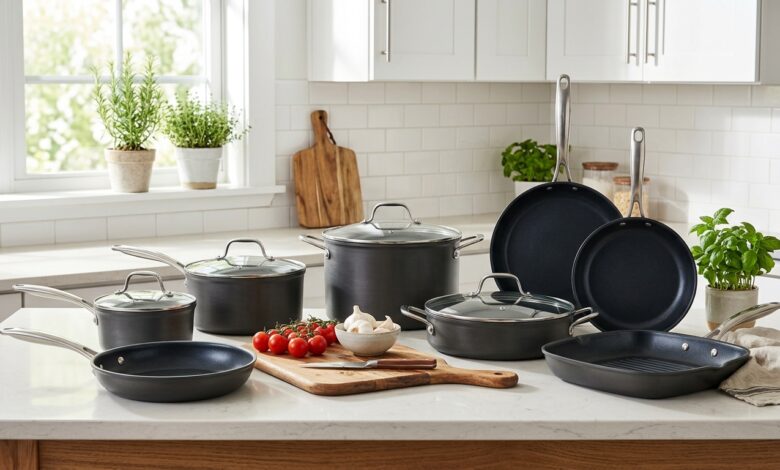
Nonstick cookware is the most forgiving place to start building a kitchen, since it covers eggs, delicate fish, and everyday sautéing without the learning curve cast iron or stainless steel demand. The catch is that not all nonstick sets are equal — some warp or lose their coating within months, while others last for years with basic care. Here’s how to pick a set that actually holds up, and specific picks depending on your budget and kitchen size. If you want to go further, kitchen decor covers it in detail. See also: weekly meal prep guide for beginners.
What Makes a Nonstick Set Actually Worth Buying
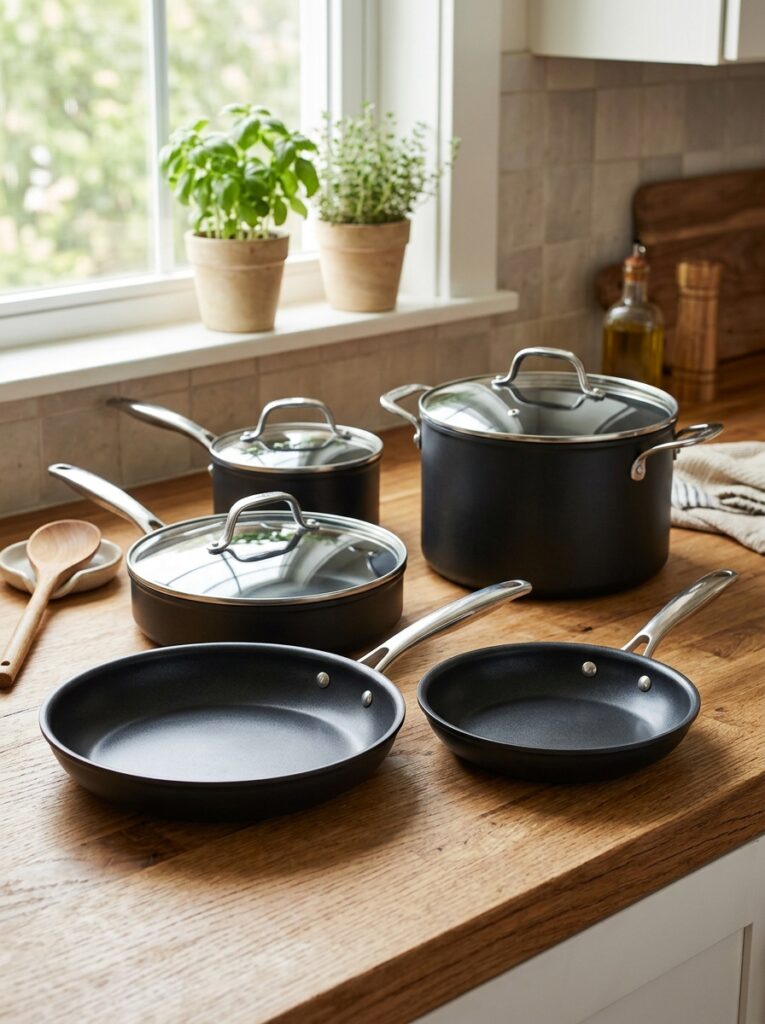
Coating quality matters far more than the number of pieces in the box. A 5-piece set with a durable coating beats a flashy 12-piece set that scratches within a month. For the rest of what belongs in a starter kitchen, see our kitchen tools every home cook needs guide. For more on this, see our meal prep for beginners: your complete starter guide guide.
- Heavier gauge aluminum or hard-anodized construction resists warping better than thin, lightweight pans.
- Oven-safe handles add real flexibility for finishing dishes under the broiler or baking.
- A reinforced or ceramic-based coating tends to outlast basic nonstick coatings, especially with metal utensil use.
Best Overall: A 7-10 Piece Starter Set
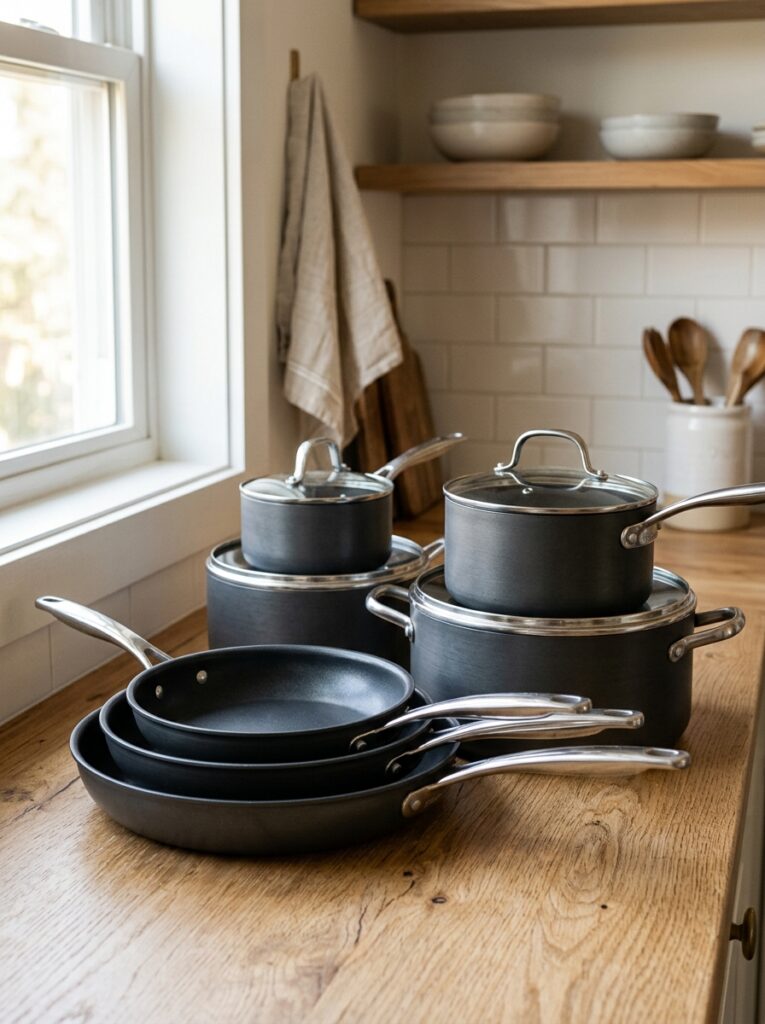
A well-rounded nonstick cookware set in the 7-10 piece range covers a small skillet, a larger skillet, a saucepan, and a stockpot with lids — enough range to handle nearly everything a beginner cooks without redundant pieces.
- Best for: first apartments, anyone building a kitchen from scratch.
- What’s included: typically 2 skillets, 1-2 saucepans, and a stockpot, all with matching lids.
- Price range: $50–$100.
Best for Small Kitchens: A Compact 5-Piece Set
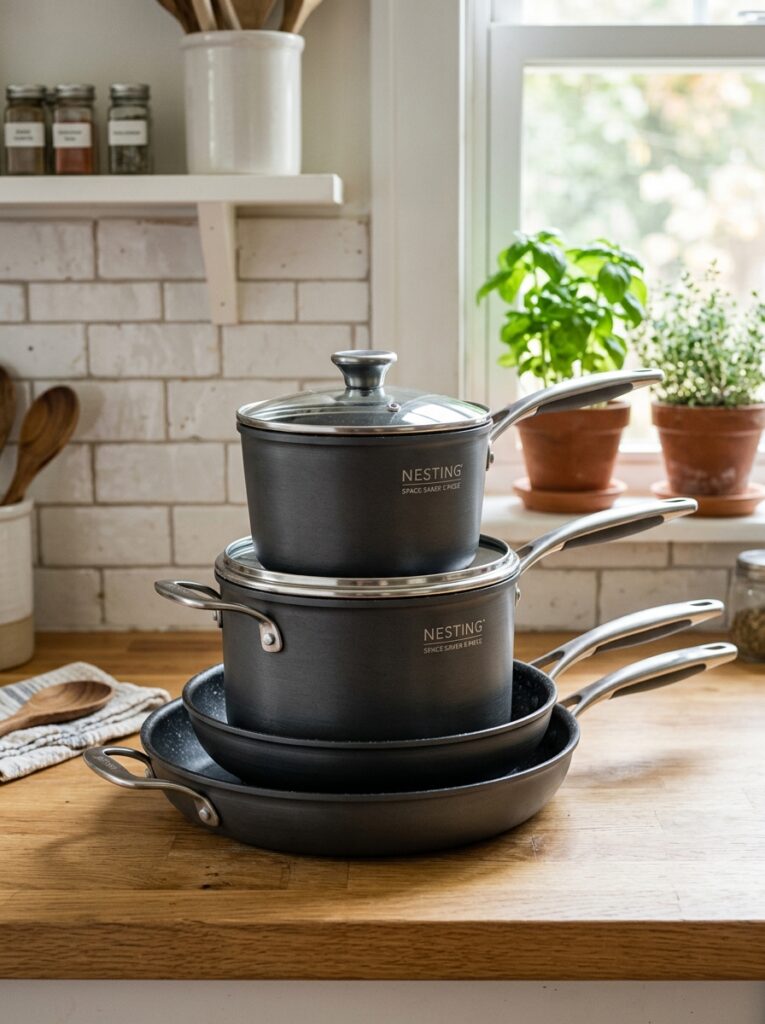
If cabinet space is tight, a smaller 5-piece set covers the essentials without the storage burden of a full 10-piece collection you’ll rarely use all of anyway.
- Best for: studio apartments, dorms, anyone with minimal cabinet space.
- What’s included: usually one skillet, one saucepan, and lids — the true daily-use core.
- Price range: $35–$65.
Best Single Pan If You Don’t Need a Full Set
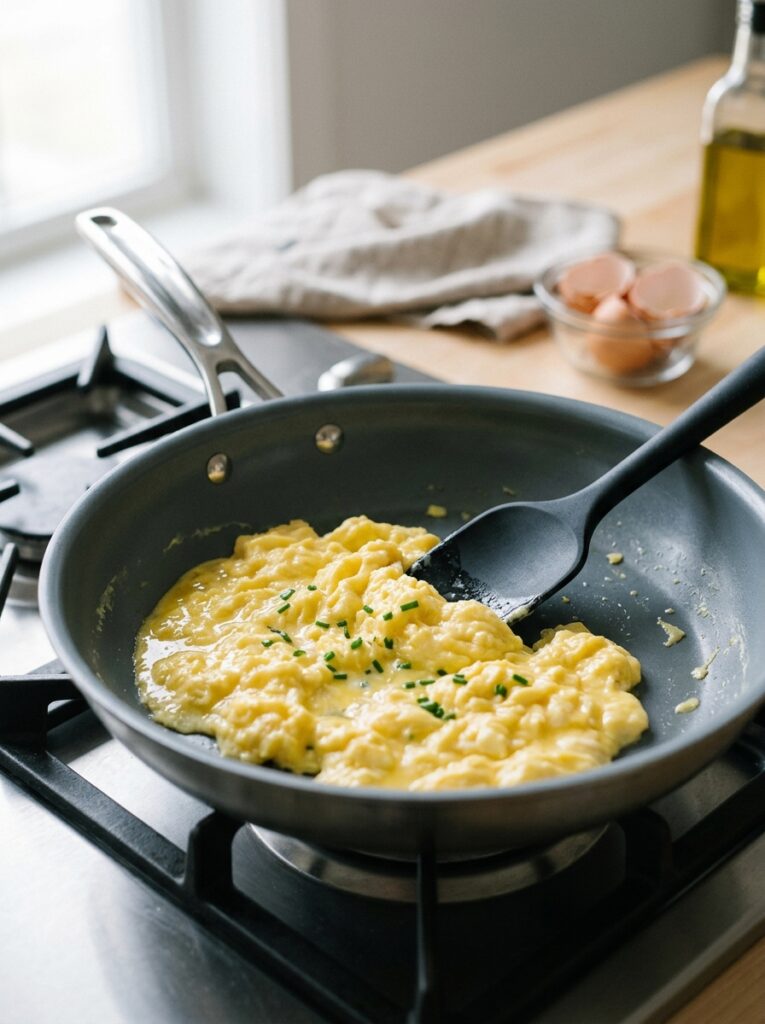
Plenty of people already own a stockpot and saucepan and just need a reliable nonstick surface. A single 10-inch nonstick skillet is often the only new piece worth buying.
- Best for: anyone upgrading just their everyday egg-and-sauté pan.
- What to look for: a comfortable, stay-cool handle and enough weight to sit flat without wobbling.
- Price range: $15–$35.
Best Ceramic Nonstick (PFOA-Free) Option
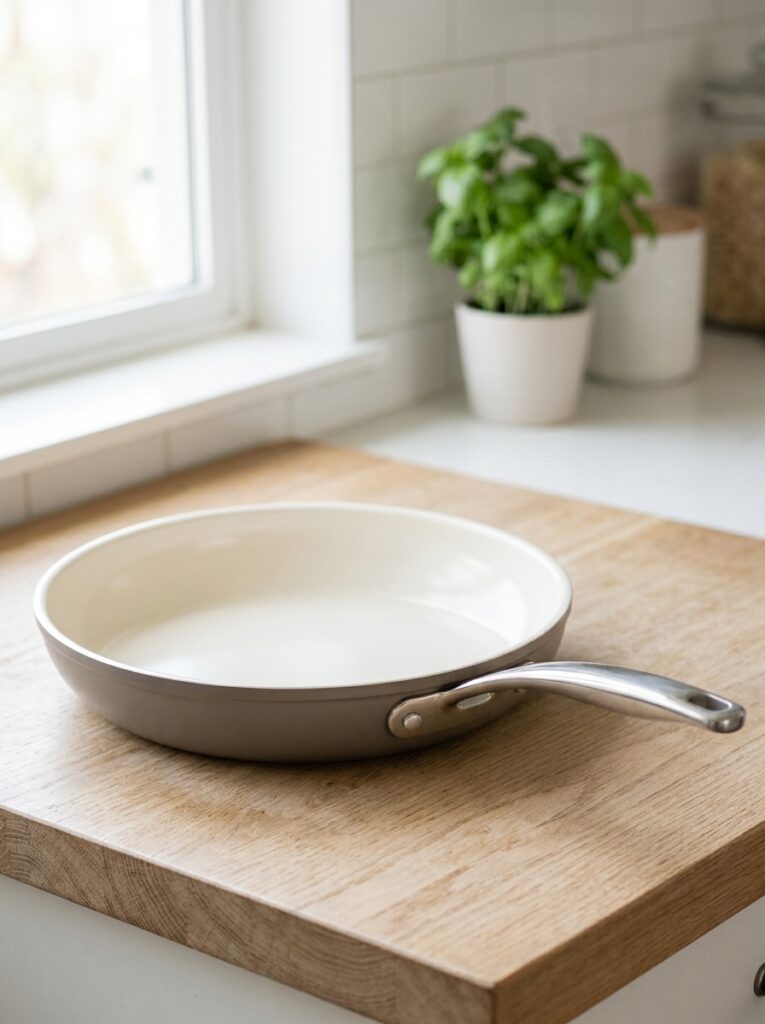
For anyone specifically avoiding traditional PTFE coatings, a ceramic nonstick set offers a mineral-based coating alternative, though it typically needs slightly more oil and gentler care to perform well long-term.
- Best for: anyone prioritizing PFOA-free or PTFE-free cookware.
- Tradeoff: ceramic coatings tend to lose their nonstick performance faster than traditional coatings if overheated.
- Price range: $45–$90.
Best Budget Pick
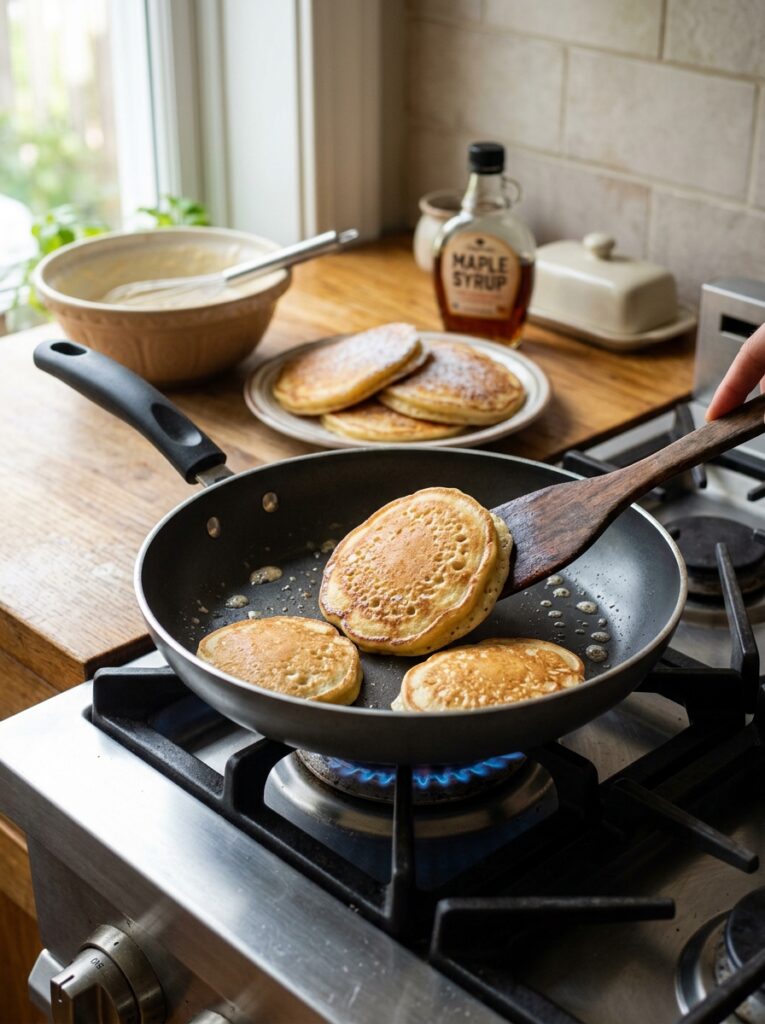
A basic budget nonstick pan under $20 is a fine starting point if you’re not ready to commit to a full set, especially if you take care of it properly from day one.
- Best for: testing the waters before a bigger cookware investment.
- Realistic expectation: a shorter lifespan than higher-end coatings, but perfectly usable for a year or two of regular cooking.
- Price range: $10–$20.
How to Make Nonstick Cookware Actually Last
Even a great set fails early if it’s treated like cast iron or stainless. A few habits make the biggest difference: use silicone, wood, or plastic utensils instead of metal, which scratches most coatings within weeks. Skip the dishwasher — hand washing keeps the coating intact far longer. Avoid high heat, since most nonstick coatings are rated for medium heat at most and degrade faster when overheated empty. And never stack pans directly on top of each other without a protective layer like a pan protector pad between them, since metal-on-coating contact in storage is a surprisingly common cause of early scratching.
Frequently Asked Questions
How many pieces do I actually need in a nonstick cookware set?
Most home cooks use a skillet, a saucepan, and a stockpot regularly — a 5-7 piece set covers this without extra pieces that sit unused in a cabinet.
Is ceramic nonstick better than traditional nonstick?
Ceramic is a good PFOA-free alternative, but it typically needs more oil and gentler heat to perform as well, and its nonstick surface tends to degrade faster if overheated.
How long should nonstick cookware last?
With proper care — hand washing, non-metal utensils, and moderate heat — a good nonstick pan should last 3-5 years before the coating noticeably degrades.
Can I use metal utensils on nonstick cookware?
It’s best to avoid it. Metal utensils scratch most nonstick coatings within weeks, even on higher-end pans. Stick to silicone, wood, or plastic.
Is it worth buying an expensive nonstick set?
For daily use, mid-range sets with heavier construction and reinforced coatings tend to offer the best value — very cheap sets wear out fast, while ultra-premium sets often cost more than the performance difference justifies.




8 Comments