As an Amazon Associate I earn from qualifying purchases. Some links in this post are affiliate links, at no extra cost to you.
Walk into any kitchen store or scroll through Amazon for five minutes, and you’ll find dozens of air fryers all making the same promise: fast, crispy food with less oil. The problem is they’re not all equal, and buying the wrong one means a bulky countertop appliance you stop using after a month. Finding the best air fryer for your kitchen comes down to four practical factors: capacity, wattage, basket style, and coating type, all of which affect how the machine actually performs on a Tuesday night when dinner needs to be on the table in 20 minutes.
At NestKitchenMeals, we dig into real testing data, compare independent lab results, and translate the specs into practical buying decisions for home cooks. This guide covers the top picks of 2026 across five use cases: best overall, best budget, best for families, best small air fryer, and best multi-function. By the end, you’ll know exactly which model fits your household size, your kitchen footprint, and your budget.
Basket or oven style: which one actually fits your kitchen?
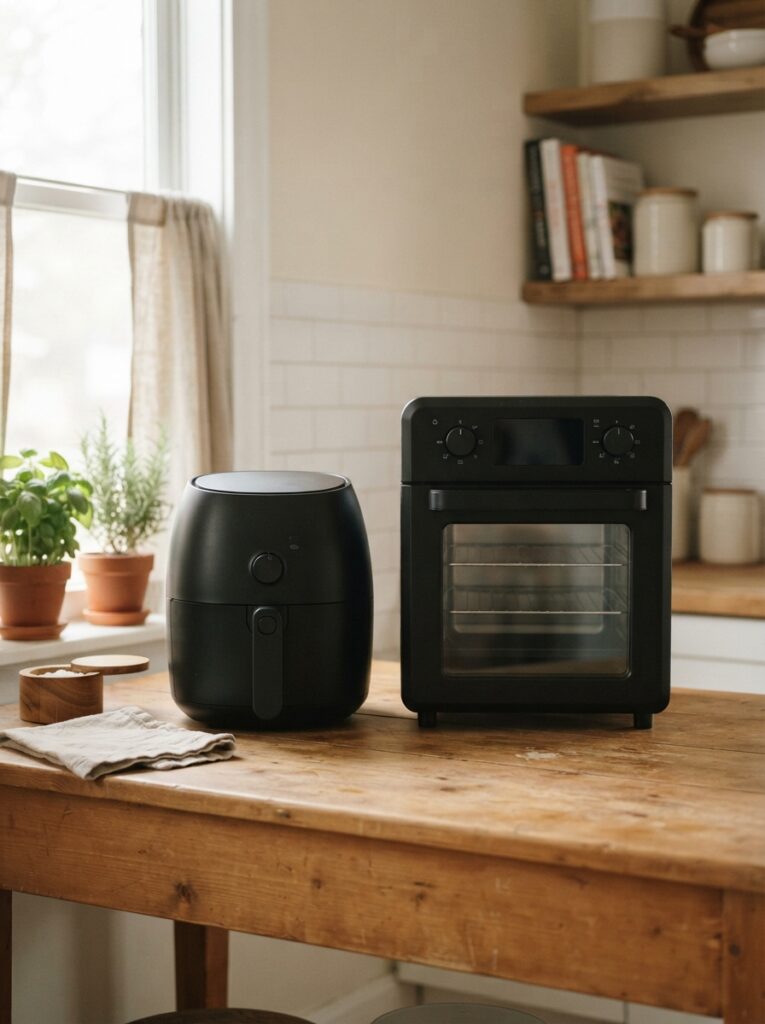
Before you compare any specific models, you need to answer one question: basket or oven? The answer determines everything else about your purchase, from the counter space you’ll need to the crispiness of your food.
Why basket air fryers crisp faster and suit most home cooks
Basket-style air fryers concentrate heat and direct airflow straight at the food, which produces better crisping and faster cook times. RTINGS testing found basket models reached 45% moisture loss about 3 minutes and 46 seconds faster than oven-style units, and they scored higher on average fry crispiness: 68.7% versus 65.6%. For weeknight cooking and single-item batches, basket models are the practical choice for most households.
When an oven-style air fryer is the smarter buy
Oven-style air fryers make sense when you’re cooking for four or more people, fitting a 9×13 baking pan, or wanting one appliance that replaces your toaster oven entirely. Consider the size difference this way: basket models typically run 3 to 8 quarts, while oven-style models land in the 8 to 15-quart range. If you meal prep large batches on Sundays or roast a full sheet of vegetables for the week, the extra footprint is worth it.
The counter space reality check
Measure the space you actually have before you shop. Basket models are compact and easy to tuck away. Oven-style units are cabinet-sized and rarely moved once they’re on the counter. If counter space is tight, a quality 4 to 6-quart basket model handles most cooking jobs without crowding your kitchen. If you have room and cook for a large household regularly, an oven-style unit earns its footprint.
How to choose the best air fryer: specs that actually matter
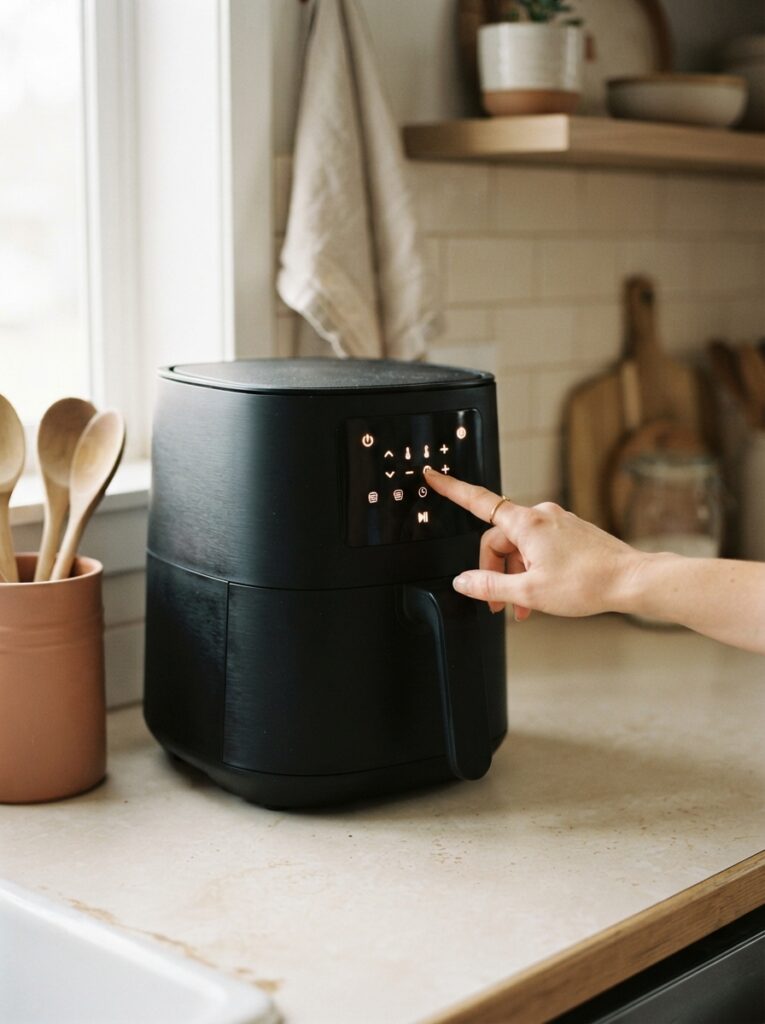
Air fryer boxes are full of numbers designed to impress rather than inform. Here are the only specs worth checking before you buy.
Wattage and capacity: the two numbers worth checking
Look for 1,500W or higher for efficient, consistent cooking. Models below that threshold can cook food unevenly or take significantly longer to preheat. For capacity, 4 to 6 quarts covers one to four people for most meals; go 6 quarts or oven-style if you’re regularly feeding a family of four or more. Don’t buy a 10-quart machine if you’re cooking for two. The NestKitchenMeals air fryer buying guides break capacity down by household size if you want a more tailored starting point before you shop. For more on this, see our cooking tips guide.
Preset functions: genuinely useful or just marketing?
Presets matter if you’re new to air frying. A dehydrate setting is useful for batch-cooked snacks. A reheat function preserves texture better than a microwave. A proof mode is a genuine bonus for anyone who bakes bread at home. Smart WiFi features, on the other hand, typically add cost without directly improving cooking results, they’re a convenience upgrade, not a food-performance one. Focus on presets you’ll actually use rather than the longest list printed on the box.
Coating choices and PFAS-free options
Interest in PFAS-free and PTFE-free air fryer baskets has grown significantly, and there are now legitimate options at different price points. The Ninja Crispi Pro uses glass bowls and a stainless steel basket, making it one of the clearest PFAS-free options on the market at around $300. Other verified options include the Instant Vortex Plus ClearCook with a third-party certified ceramic coating and the Typhur Dome 2 with a PFAS-free ceramic basket. For most buyers, standard nonstick coatings are safe with regular use as long as the basket is not overheated or subjected to extreme temperature swings. If you want a verified PFAS-free basket, plan to pay more. It’s a real material cost, not a marketing label.
The best air fryers of 2026, ranked by use case
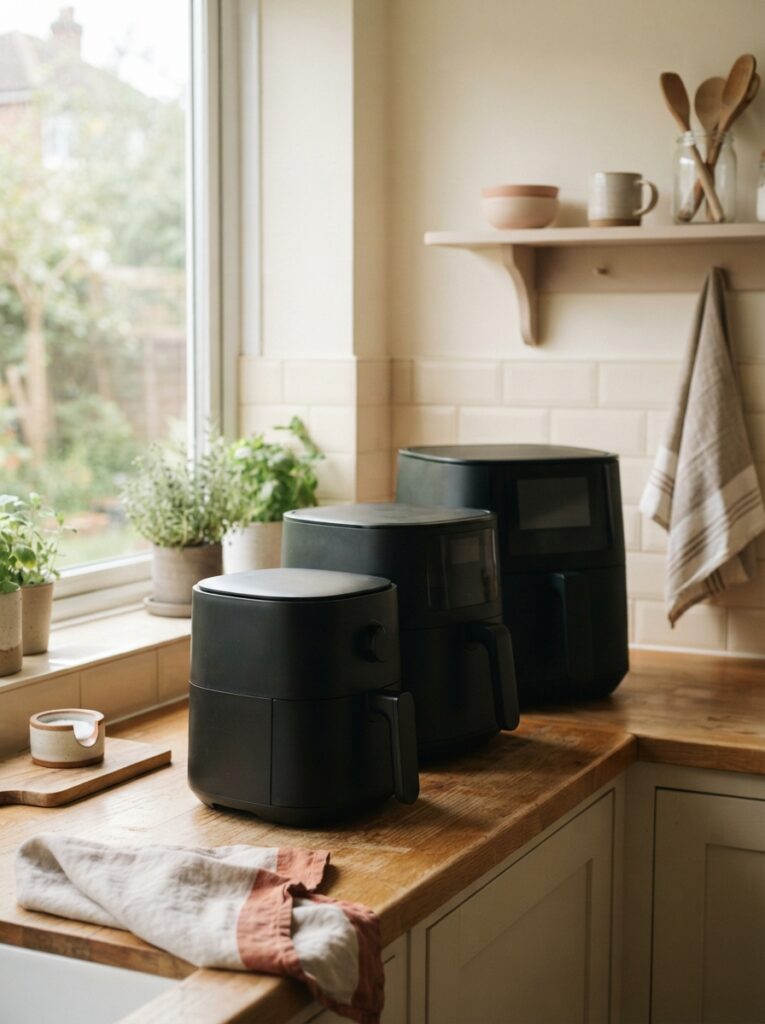
Not every air fryer is built for the same kitchen. Here are the top picks organized by who actually needs them, based on performance testing and real-world specs.
Best overall (and best value): Cosori TurboBlaze
The Cosori TurboBlaze is the best starting point for most people. It runs at 1,725W, holds 6 quarts, and lands around $90 at full price. Nine cooking functions cover air fry, roast, bake, broil, dehydrate, proof, reheat, frozen, and keep warm, more than most home cooks will ever use. In head-to-head testing, it reached an internal chicken temperature of 165°F in about 6 minutes and 12 seconds, faster than the comparable Ninja and Instant Vortex in the same test.
Wirecutter testing noted the TurboBlaze wavered a few degrees more from its set temperature than the Ninja and took about a minute longer to reach 400°F. In actual weeknight cooking, that difference is minor. Widely recommended by multiple 2026 review sources including Wirecutter and TechGearLab, the TurboBlaze offers a compelling balance of performance, capacity, and price.
Best small air fryer for compact kitchens
If you’re cooking for one or two people in a small apartment, you don’t need a 6-quart countertop air fryer taking up half your counter. A 2 to 4-quart basket model is the right call. The Ninja AF101 at 4 quarts consistently ranks as the top all-around small air fryer across 2026 review lists, combining solid crisping performance with a compact footprint.
For solo cooks, the Dash Tasti-Crisp at 2.6 quarts and the Instant Pot Vortex Mini at 2 quarts are both strong, space-saving options worth considering. The NestKitchenMeals small air fryer buying guide breaks down compact models by exact dimensions, wattage, and who each one suits best, worth reading before you commit to a specific capacity.
Best for families and large batches: Instant Vortex Plus
The Instant Vortex Plus at 6 quarts and 1,700W is the pick for households cooking larger quantities and prioritizing precision. TechGearLab found it was the most temperature-accurate unit tested, staying within 1.5°F of its target temperature across trials. Families of four should look for at least 5 to 6 quarts to avoid cooking in multiple batches every night, and the Vortex Plus hits that range while delivering consistent results across a full basket.
It’s worth noting that the Vortex Plus’s strength is temperature accuracy and batch consistency rather than raw speed. In a direct cook-time test, it reached 165°F in about 13 minutes, slower than the Cosori’s 6:12. For families who follow temperature-sensitive recipes or cook large portions regularly, that precision payoff is real. Price runs between $120 and $150 depending on the retailer and sale timing. That’s a reasonable step up from the Cosori if consistent accuracy matters to you.
Best multi-function splurge: Breville Smart Oven Air Fryer Pro
The Breville is for cooks who want to replace multiple appliances with one unit. It handles 13 cooking functions, fits a standard 9×13 pan, and runs around $400. It preheats slower than basket models because of its size, but if you roast, bake, toast, and air-fry on a weekly basis, that trade-off makes sense. Think of the Breville less as an air fryer and more as a full oven replacement that also air-fries exceptionally well.
How the top models compare on crispiness, temperature, and cook time
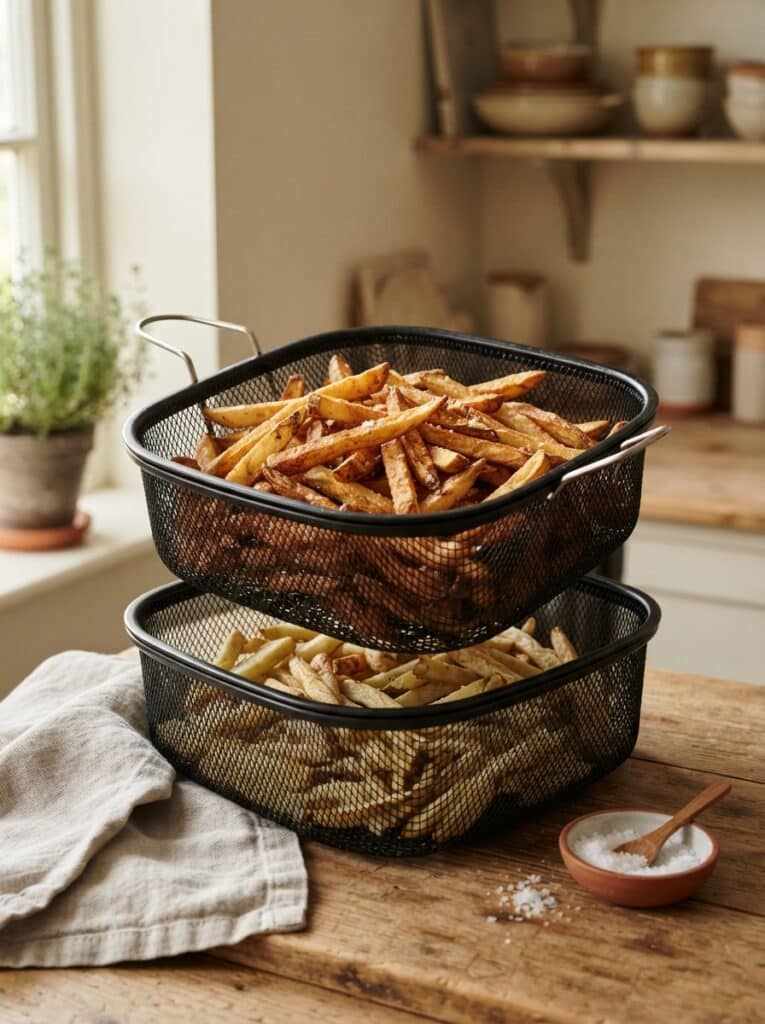
Marketing claims and box copy tell you very little about real performance. Here’s what independent testing actually shows.
Which models crisped best in real testing
TechGearLab testing put the Cosori TurboBlaze and Ninja models at the top for crisping performance. A separate comparative test ranked the Philips Premium XXL highest on overall crisp score, with the Ninja Foodi DualZone next. The Ninja AF101 specifically edged out the Cosori on wing crispiness, producing noticeably crispier chicken wings in 22 minutes compared to 24 minutes for the Cosori basket. For frozen fries, the Cosori finished in 14 minutes with better evenness, while the Ninja needed 13 minutes but required two basket shakes and still left some pale fries.
Results vary by food type. If your household mostly makes fries and frozen foods, your experience may differ from households that primarily air-fry chicken or vegetables.
Temperature accuracy: the result that surprised most testers
The Instant Vortex Plus was the standout for accuracy, holding within 1.5°F of its set temperature across multiple trials in TechGearLab testing. The Ninja was also strong and reached 400°F faster than the Cosori TurboBlaze in Wirecutter’s separate evaluation. For bakers or anyone following temperature-sensitive recipes, accuracy matters more than raw speed. For general weeknight cooking, the Cosori’s slight temperature variance rarely affects the final dish.
Cook time head-to-head: what the numbers mean for busy weeknights
In a direct head-to-head test cooking chicken to 165°F, the Cosori finished in about 6 minutes and 12 seconds, the Ninja came in at around 8 minutes and 20 seconds, and the Instant Vortex reached the target in about 13 minutes. Six minutes versus thirteen minutes is not an abstract data point. That gap is a full side dish, a school bag packed, or the difference between sitting down to eat and scrambling. For busy families, cook time is a real daily quality-of-life factor, though as noted above, the Vortex Plus trades some speed for accuracy and batch consistency.
Warranty coverage, common failures, and the best time to buy
Understanding the warranty landscape and common failure points helps you factor risk into your buying decision, especially when two models are similarly priced and otherwise comparable.
Warranty lengths by brand: what you’re actually getting
Cosori and Philips both offer 2-year warranties. Ninja and Instant Vortex cover 1 year. Cuisinart leads the mainstream field at 3 years. Shorter warranties don’t automatically mean worse products, but they do shift more risk onto you when two models are similarly priced and otherwise equivalent. Factor warranty length in when performance and price are close.
Common failure points owners report
Reported issues cluster around a few recurring components, based on available service and repair data. Cosori units show heating element failures most often. Ninja models are more likely to develop basket motor problems. Instant Vortex owners report thermal fuse issues at higher rates than other brands. None of these are universal, and proper care extends the life of any model. Avoid overfilling the basket, don’t expose the unit to thermal shock by running cold water over a hot basket, and let the appliance cool fully before cleaning.
When and where to find the best price
Amazon’s kitchen category has run discounts up to 50% during major 2026 sale events, including Prime Day in late June and early July and the Big Spring Sale in March. The Cosori TurboBlaze at around $90 is already strong value at full price, but sale pricing can push it below $70. Walmart and Best Buy both participate in the same major sale windows. Check all three during Prime Day and Black Friday, prices move quickly on popular models. Buying during a sale on a well-reviewed model beats buying a cheaper unknown brand at full price every time.
The best air fryer for your specific kitchen
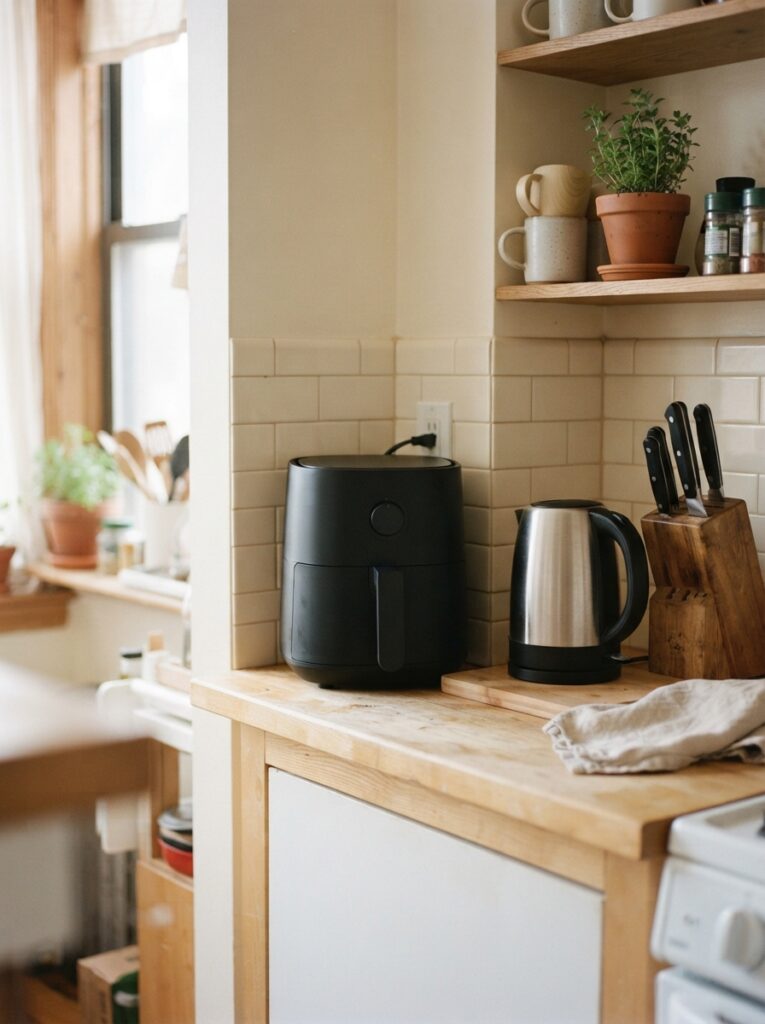
Most people overthink this decision. Here’s how to make it quickly. If you cook for one or two people with a compact counter, a 4 to 6-quart basket model like the Cosori TurboBlaze is your starting point. Families of four benefit most from the Instant Vortex Plus or a 6-quart basket with consistent temperature accuracy. Multi-function cooks who bake, roast, toast, and air-fry regularly should look at the Breville Smart Oven Air Fryer Pro. Budget shoppers looking for the best air fryer under $100 will find the Cosori makes the strongest case at $90 full price.
If you want a more specific recommendation before purchasing, NestKitchenMeals has detailed buying guides broken down by household size, kitchen footprint, and budget. The small kitchen guide covers compact models with exact dimensions; the family-size guide compares larger basket and oven-style units side by side. You will find more ideas in kitchen decor.
The practical bottom line: pick the use case that fits your household, check current pricing across major retailers, and don’t over-engineer the decision. The right model gets pulled out multiple times a week. Ultimately, the best air fryer for you is the one that actually fits your counter space, your family size, and the meals you cook most nights.