
15 Cooking Tips for Busy Families to Save Time, Eat Healthier, and Stress Less

As an Amazon Associate I earn from qualifying purchases. Some links in this post are affiliate links, at no extra cost to you.
Cooking for a family while juggling work, school runs, and everyone’s schedules can feel like a full-time job on top of your actual full-time job. Most parents hit the same wall every evening: “What’s for dinner?” — asked with no plan, no defrosted protein, and no energy left to figure it out. The good news is that a handful of small, repeatable habits can take most of that daily stress off the table without asking you to cook more, spend more, or become a different kind of person on weeknights.
Why Cooking for a Busy Family Feels So Hard
It’s rarely about not knowing how to cook — it’s about decision fatigue. Deciding what to make, checking if you have the ingredients, and finding the energy to actually cook it are three separate hurdles, and most weeknight burnout happens at the first one, before a single pan even comes out. The families who feel most in control of dinner aren’t necessarily better cooks; they’ve just removed most of those daily decisions ahead of time.
Start With a Simple Weekly Meal Plan
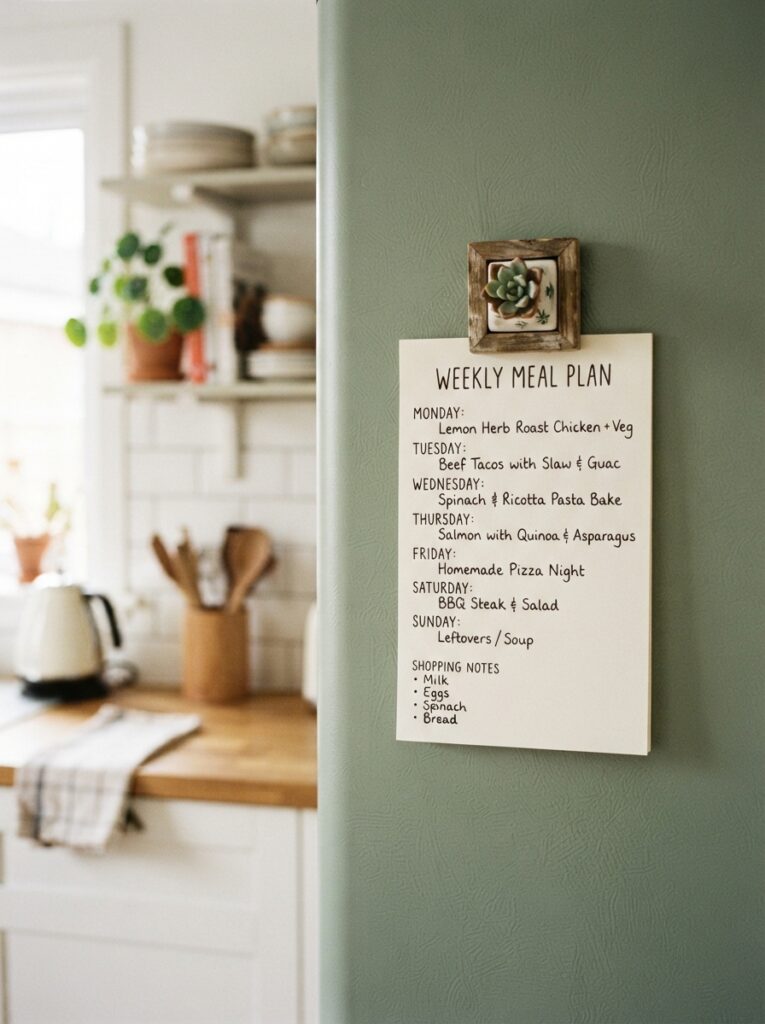
A weekly meal plan is the single highest-leverage habit on this whole list, because it collapses seven daily decisions into one 20-minute planning session.
- Pick a day that works — Sunday afternoon is common, but any consistent slot works as long as it happens before the week starts.
- Write down actual dinners, not just ideas — “Monday: chicken stir-fry” removes far more stress than a vague intention to “cook something healthy.”
- Plan around what’s already in the fridge or freezer first, then fill gaps with new ingredients, which also cuts down on food waste.
- Leave one night flexible for leftovers or a backup meal, since real weeks rarely go exactly as planned.
- Post it somewhere visible — on the fridge or a shared family calendar — so everyone stops asking what’s for dinner in the first place.
Shop With a List (and Never on an Empty Stomach)
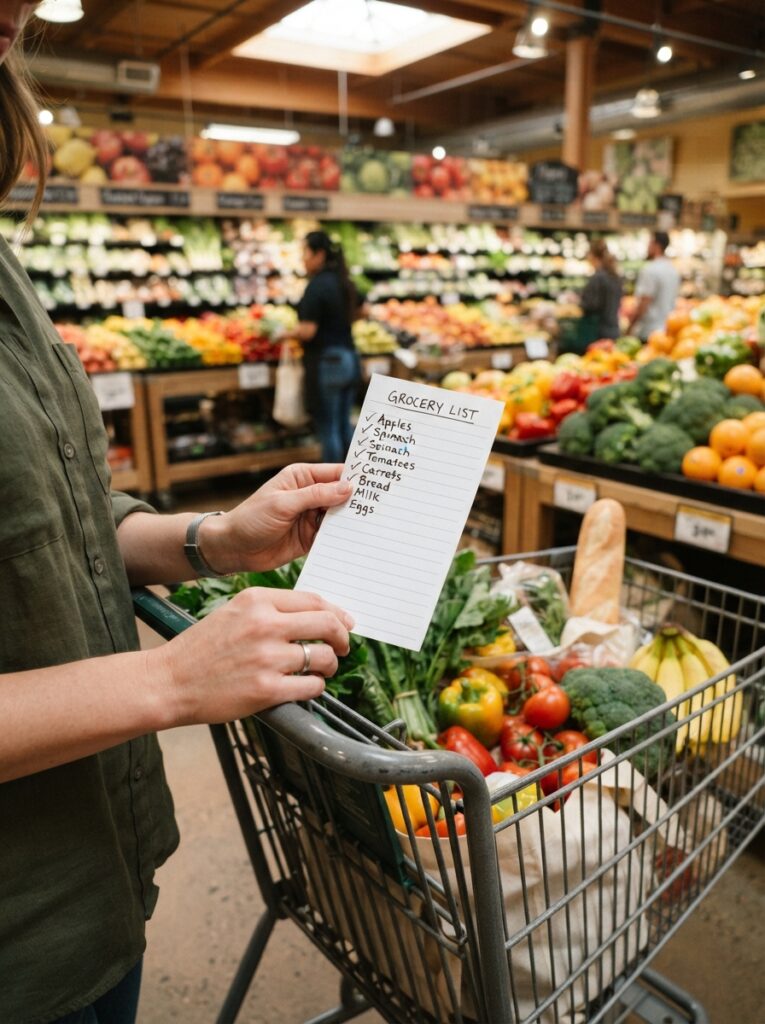
Grocery shopping without a plan is where good intentions quietly fall apart — you either forget half of what you need or come home with things that don’t add up to actual meals.
- Build your list straight from the meal plan, checking what you already have before adding anything to the cart.
- Organize the list by store section — produce, meat, dairy, pantry — so you’re not backtracking across the store.
- Never shop hungry, which is one of the most well-documented ways impulse purchases and off-plan snacks end up in the cart.
- Stick to the perimeter of the store for most of your shopping, since that’s typically where fresh produce, meat, and dairy live, versus the more processed center aisles.
Buy Ingredients That Work in More Than One Meal
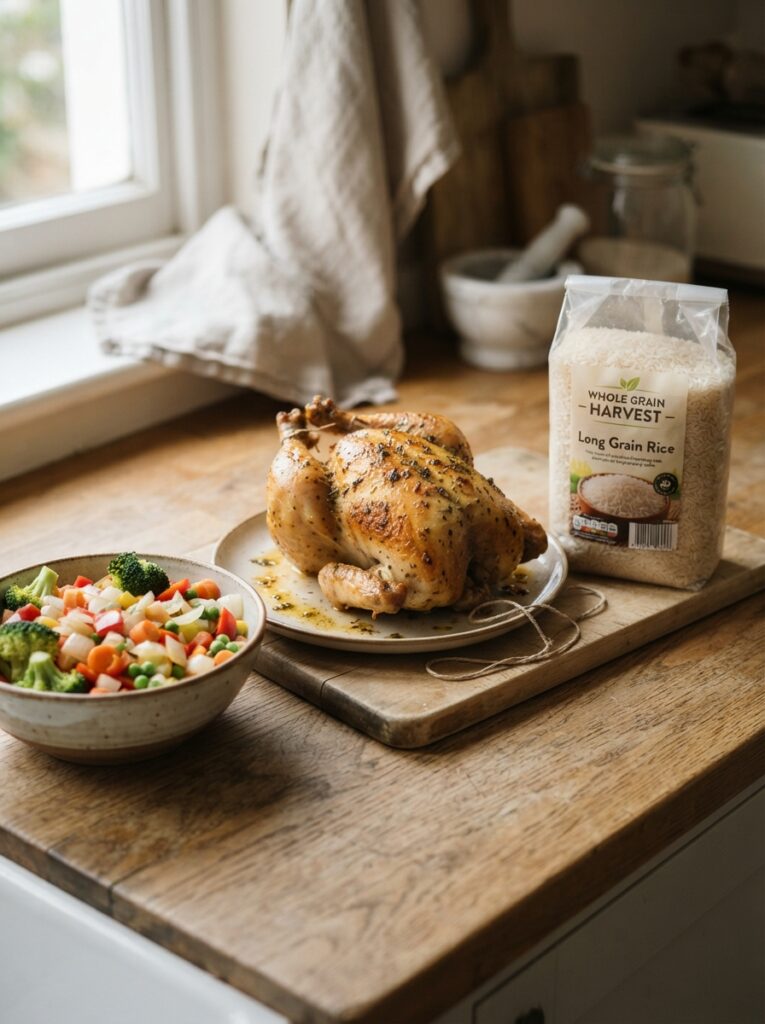
Versatile ingredients quietly do more work than any single “healthy” food — they multiply the number of meals you can make without multiplying your shopping list.
- A rotisserie or baked chicken becomes tacos on Monday, a salad topping on Tuesday, and a quick soup by Wednesday.
- Rice or another grain works across burrito bowls, stir-fries, and soups, so cooking a big batch once covers multiple dinners.
- Roasted vegetables served as a side one night can be folded into an omelet or a wrap the next day.
- Canned beans stretch a pound of ground meat across chili, tacos, and grain bowls without anyone noticing the meal got smaller.
Stock a Pantry That Does the Thinking for You
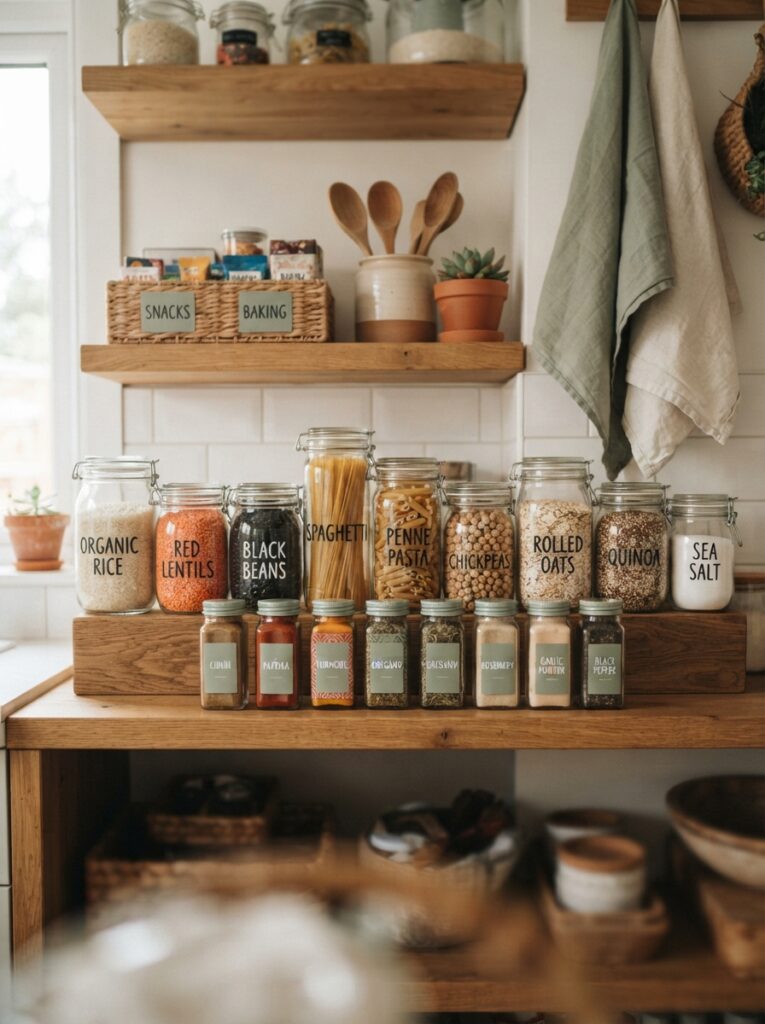
A well-stocked pantry means “we have nothing to eat” almost never has to be true, even on the busiest weeks.
- Grains and starches: brown rice, whole wheat pasta, quinoa, and oats form the base of dozens of quick meals.
- Canned staples: beans, crushed tomatoes, and chicken broth turn into soup, chili, or pasta sauce with almost no prep.
- Aromatics and seasonings: garlic powder, onion powder, paprika, and Italian seasoning make even the plainest protein taste intentional.
- Backup proteins: a jar of peanut butter and a carton of eggs cover breakfast-for-dinner nights when nothing else is defrosted.
Prep Once, Cook All Week: The Basics of Meal Prep
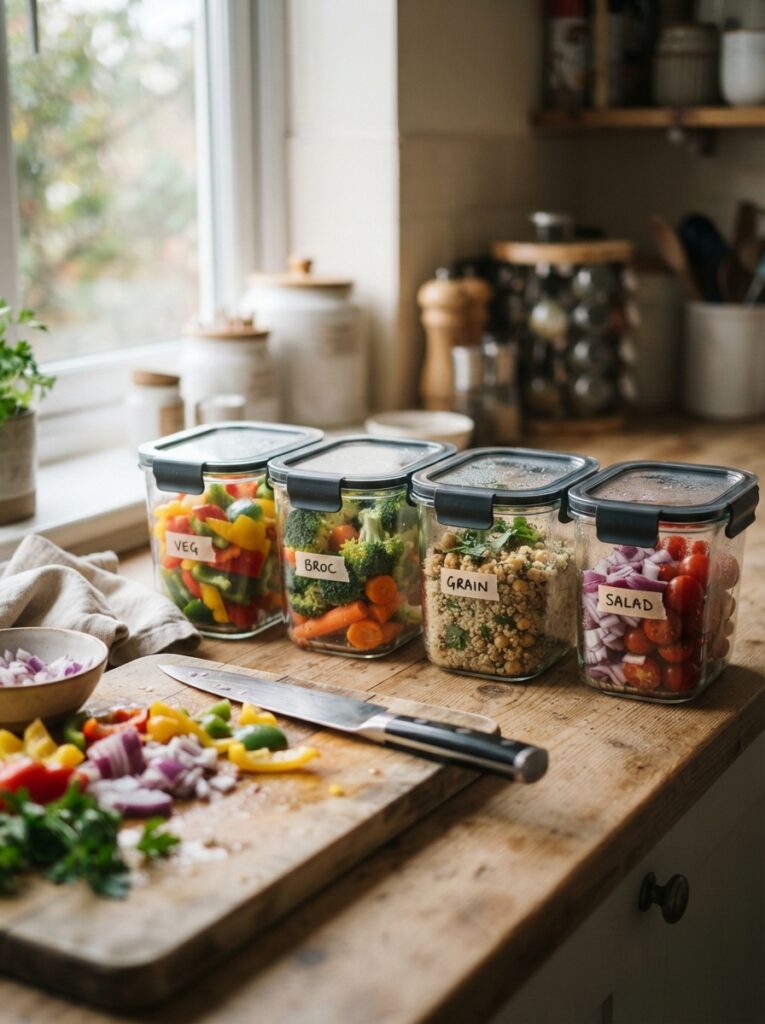
Meal prep doesn’t have to mean cooking seven full dinners in one marathon session — it just means doing a handful of small tasks in advance so weeknight cooking takes less time.
- Wash and chop vegetables — carrots, peppers, celery, and lettuce — the same day groceries come home, so they’re ready for snacks and quick dinners all week, similar to the approach in our 30 easy meal prep ideas for the week.
- Cook a few portions of protein ahead — grilled chicken, ground turkey, or hard-boiled eggs — so at least one component of dinner is already done.
- Portion healthy snacks into grab-and-go containers (fruit, cheese cubes, nuts, hummus) so the easiest option in the fridge is also the healthiest one.
- Prep isn’t all-or-nothing — even 20 minutes of chopping on a Sunday measurably shortens Tuesday’s cooking time.
Batch Cook on Weekends, Eat All Week
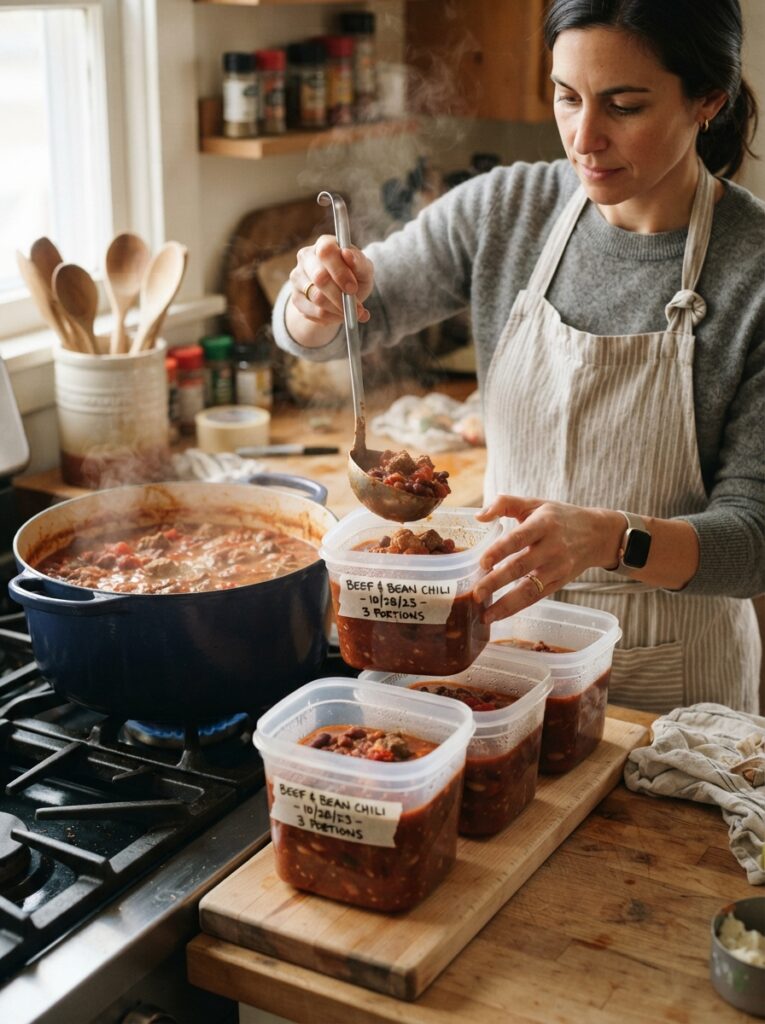
Batch cooking takes the meal-prep idea one step further: instead of prepping ingredients, you cook a full, freezer-friendly meal in a larger quantity.
- Good candidates for batch cooking include chili, soup, pasta sauce, meatballs, casseroles, and enchiladas — all of which freeze and reheat well.
- Double or triple a recipe you’re already making, then freeze the extra portions in individual or family-sized containers.
- Label everything with the date and contents, since a freezer full of unlabeled mystery bags defeats the whole purpose.
- Rotate older meals to the front of the freezer so nothing gets forgotten and wasted.
Get Kids Involved in the Kitchen (By Age)

Cooking doesn’t have to be a one-person job, and involving kids does double duty: it lightens your load and makes them more likely to actually eat what’s on the table.
- Young children can wash produce, stir ingredients, measure dry components, and set the table.
- Older kids can chop soft vegetables under supervision, read the recipe out loud, and help pack lunches for the next day.
- Teens can take on an entire simple meal start to finish, which builds real independence and takes a full dinner off your plate for the night.
- Kids who help cook a dish are consistently more willing to actually try it, even if it includes a vegetable they’ve previously refused.
Five Kitchen Tools That Actually Save Busy Families Time
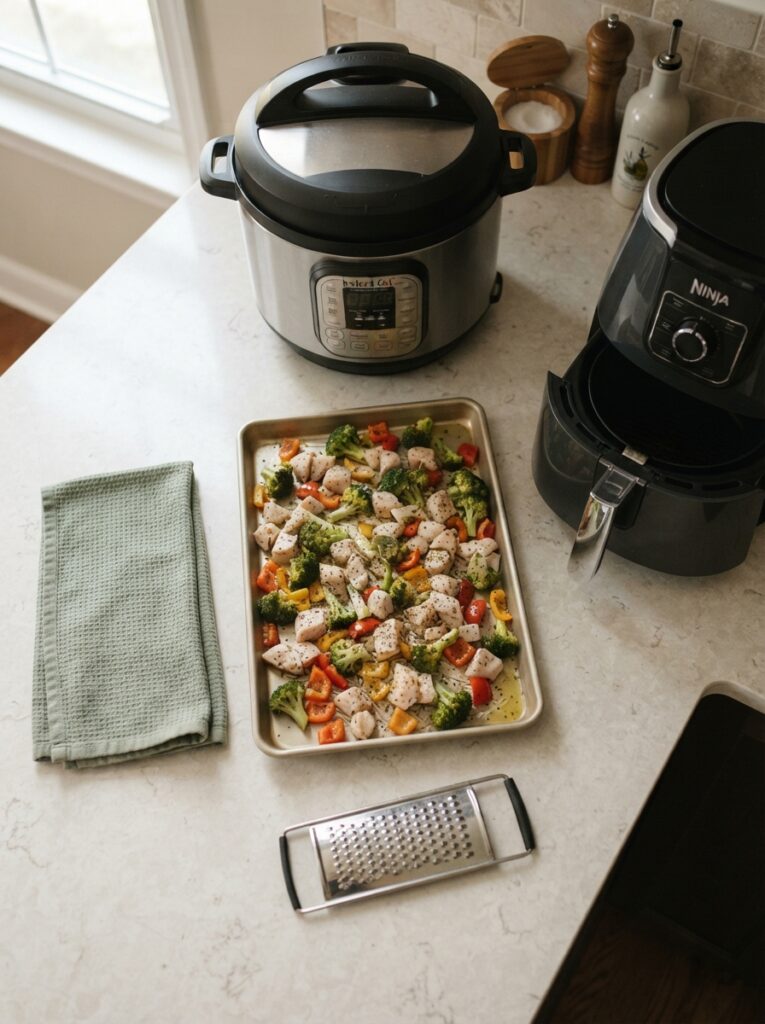
You don’t need a kitchen full of gadgets, but a few reliable tools genuinely cut down on both time and cleanup, building on the basics from our budget-friendly kitchen tools starter kit. See also: kitchen decor.
- A slow cooker lets you load ingredients in the morning and come home to a finished dinner, ideal for soups, stews, and shredded meats.
- A pressure cooker or Instant Pot cuts cook times dramatically for rice, beans, and meats that would otherwise take an hour or more.
- An air fryer gets vegetables and proteins crispy with minimal oil and reheats leftovers far better than a microwave.
- A food processor turns 15 minutes of chopping into 90 seconds, especially useful for big batch-cooking sessions.
- Sheet pans let you roast a full protein-and-vegetable dinner on one tray, which means one pan to clean instead of three.
Quick Weeknight Dinners for the Nights You Have Nothing Left
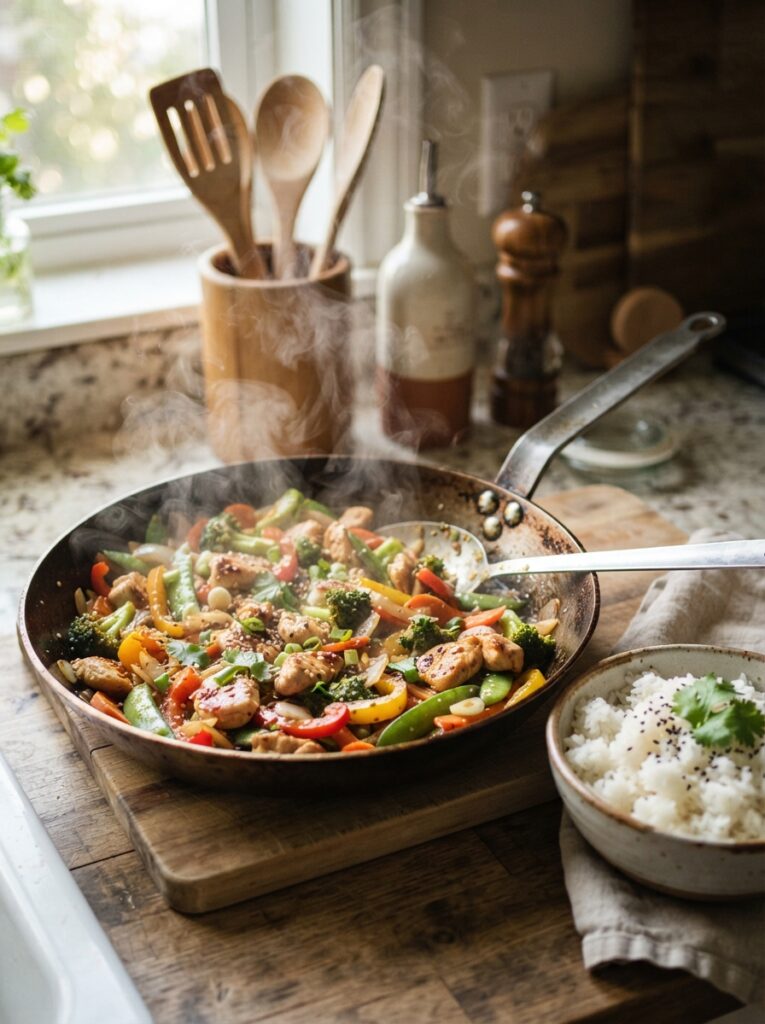
Every busy family needs a short list of true fallback meals — dinners that come together fast on the nights when planning ahead simply didn’t happen.
- Chicken stir-fry — sliced chicken and frozen mixed vegetables over rice, ready in about 20 minutes.
- Turkey taco bowls — browned ground turkey with taco seasoning over rice, topped with whatever vegetables and cheese are on hand.
- Sheet pan salmon — salmon fillets roasted alongside broccoli or sweet potatoes on one tray for a genuinely low-cleanup high-protein dinner under 30 minutes.
- Loaded vegetable omelets — eggs cook in minutes and turn whatever vegetables are left in the fridge into a full dinner.
- One-pan pasta with whatever’s on hand, following the same low-cleanup logic behind our one-pan dinner recipes for busy weeknights.
Fixing Common Family-Dinner Mistakes
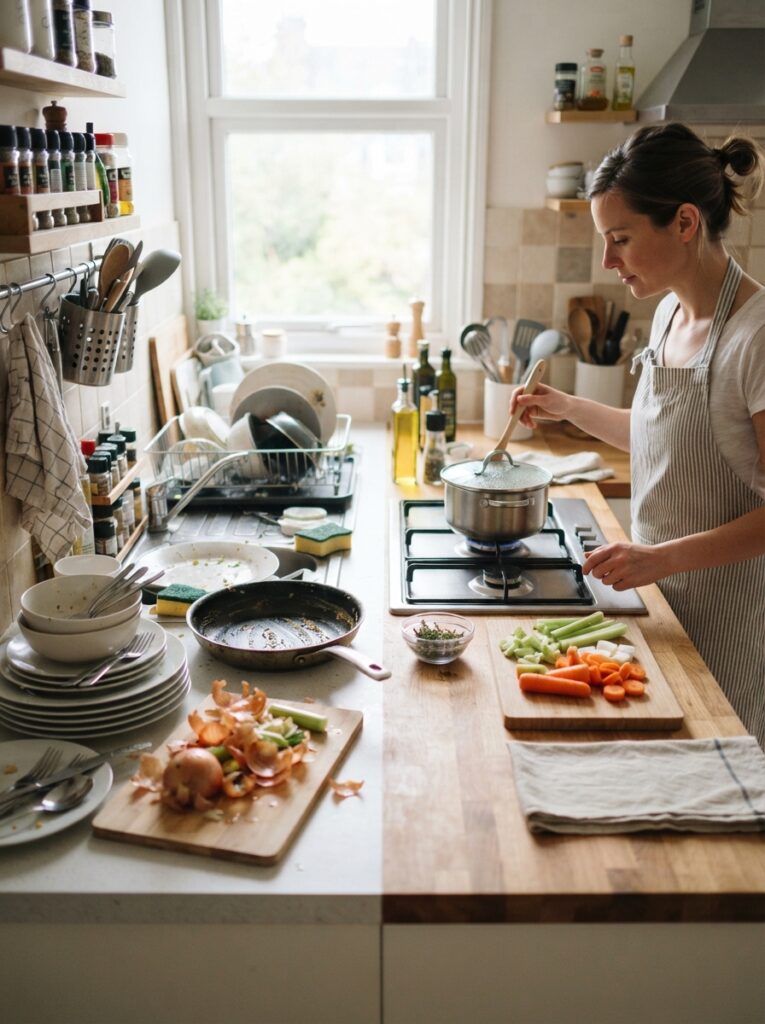
A few repeatable habits quietly undo a lot of the effort busy families put into eating well — the fixes are simple once you can name the problem.
- Skipping the meal plan “just this once” tends to snowball into several nights of last-minute takeout in a row.
- Overcomplicating weeknight recipes — a simple five-ingredient dinner made consistently beats an ambitious recipe that’s too tiring to repeat.
- Treating leftovers as boring instead of as a head start on tomorrow’s dinner.
- Not cleaning as you go, which turns a manageable dinner into an overwhelming kitchen disaster by the time everyone’s fed.
Turning Leftovers Into Tomorrow’s Dinner
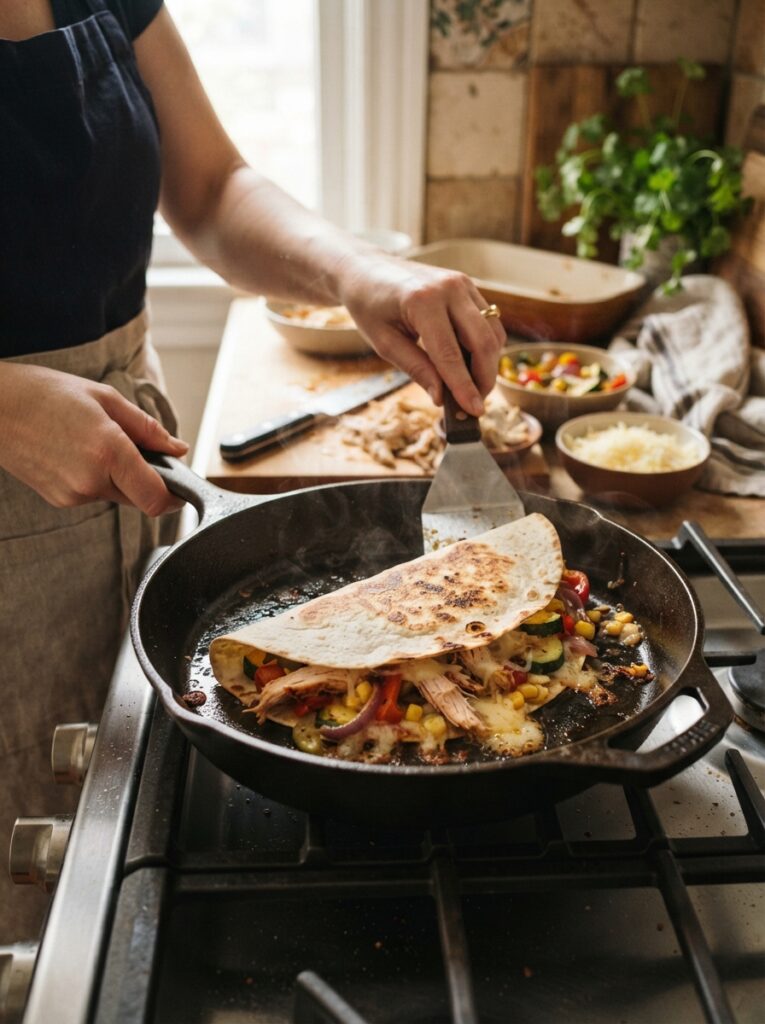
Leftovers feel a lot less like a chore when they’re treated as an ingredient for a new meal rather than a rerun of the same one.
- Leftover roasted chicken becomes tomorrow’s quesadillas, soup, or grain bowl instead of a repeat plate.
- Leftover vegetables fold easily into an omelet, a quick stir-fry, or a pasta dish.
- Leftover rice crisps up nicely in a hot pan for a fried-rice-style dinner with whatever protein is left.
- One planned “leftovers night” per week clears out the fridge on purpose instead of letting things quietly go to waste.
A Sample Busy-Family Week: 7 Dinners, Minimal Effort
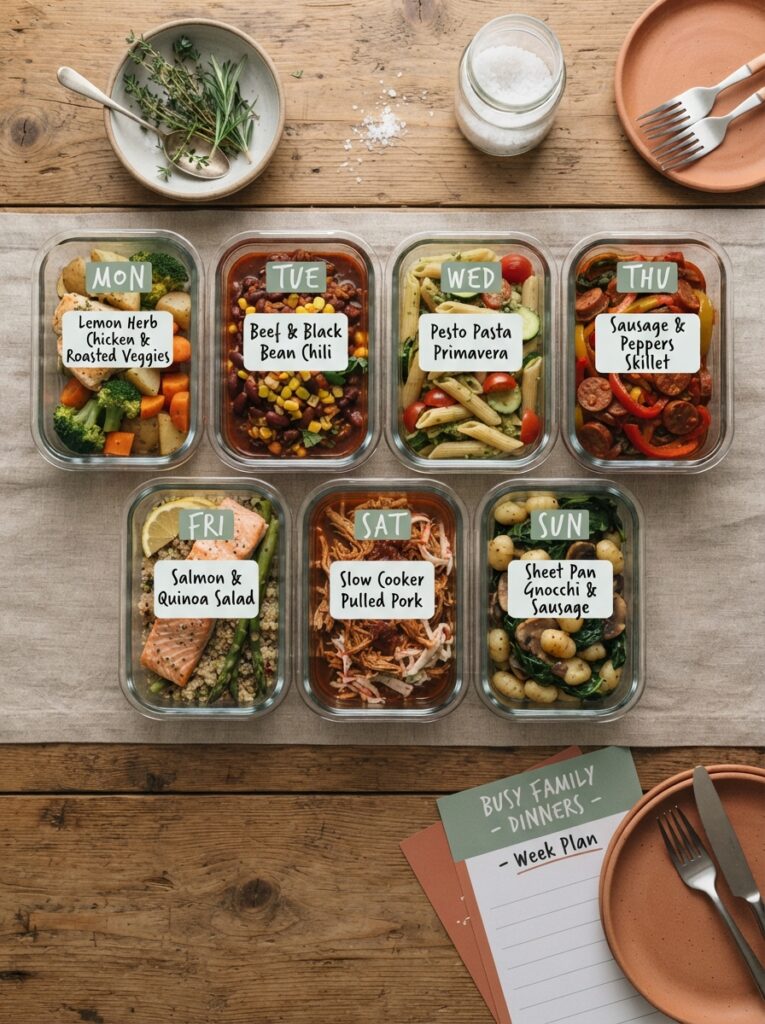
A realistic week might look like this: Monday’s sheet pan salmon uses the fresh fish before it’s no longer fresh; Tuesday’s turkey taco bowls use up the ground turkey from the freezer; Wednesday leans on a big batch-cooked chili pulled straight from the freezer; Thursday’s chicken stir-fry uses the chopped vegetables prepped over the weekend; Friday is intentionally the flexible night, built around whatever needs using up; Saturday is a slightly more involved family-cooking night where the kids help; and Sunday is the planned leftovers night that clears out the fridge before the whole cycle starts again. None of these nights require more than about 30 minutes of active cooking, and most of that time was already covered by weekend prep.
Frequently Asked Questions
What are the best cooking tips for busy families?
Meal planning, shopping with a list, prepping ingredients ahead of time, batch cooking on weekends, and keeping a well-stocked pantry make the biggest difference with the least extra effort.
How can I cook healthy meals when I have very little time?
Lean on quick-cooking proteins like chicken, eggs, or fish, prep vegetables in advance, and use tools like a slow cooker or air fryer to cut down on active cooking time.
How often should I meal prep?
Even one to two hours on a weekend — spent chopping vegetables and cooking a couple of proteins — measurably shortens cooking time for the whole week ahead.
What foods are best for batch cooking?
Chili, soup, casseroles, pasta sauce, meatballs, and shredded meats all freeze and reheat well, making them ideal for cooking once and eating several times.
How do I get kids more involved in cooking without it taking longer?
Give younger kids simple, low-stakes tasks like washing produce or stirring, and let older kids take on more of a recipe as they’re ready — it adds a little time upfront but pays off in kids who are more willing to eat what’s served.
What’s the easiest way to stop wasting food?
Plan a “leftovers night” once a week, store produce properly, and freeze anything you won’t use in the next couple of days before it has a chance to spoil.





3 Comments