
Kitchen Pantry Organization Ideas: 15 Ways to Make Yours Beautiful and Functional

As an Amazon Associate I earn from qualifying purchases. Some links in this post are affiliate links, at no extra cost to you. See also: recipes.
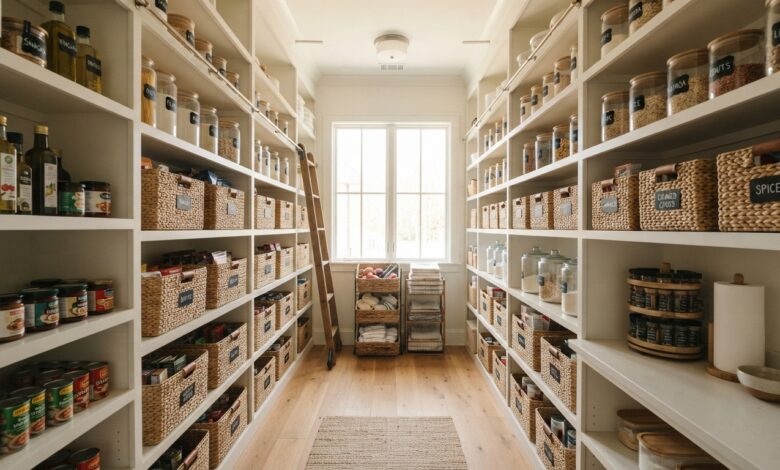
A pantry that looks good on Pinterest and a pantry that actually works for your family aren’t always the same thing — but they don’t have to be different, either. A well-organized pantry saves you from buying duplicate ingredients, makes cooking dinner faster because you can actually find what you need, and turns one of the most-used spaces in your home into somewhere that feels calm instead of chaotic. None of it requires a full renovation. A weekend, a stack of containers, and a system that fits how your household actually eats is enough to get there. You will find more ideas in cooking tips.
Why a Well-Organized Pantry Actually Matters
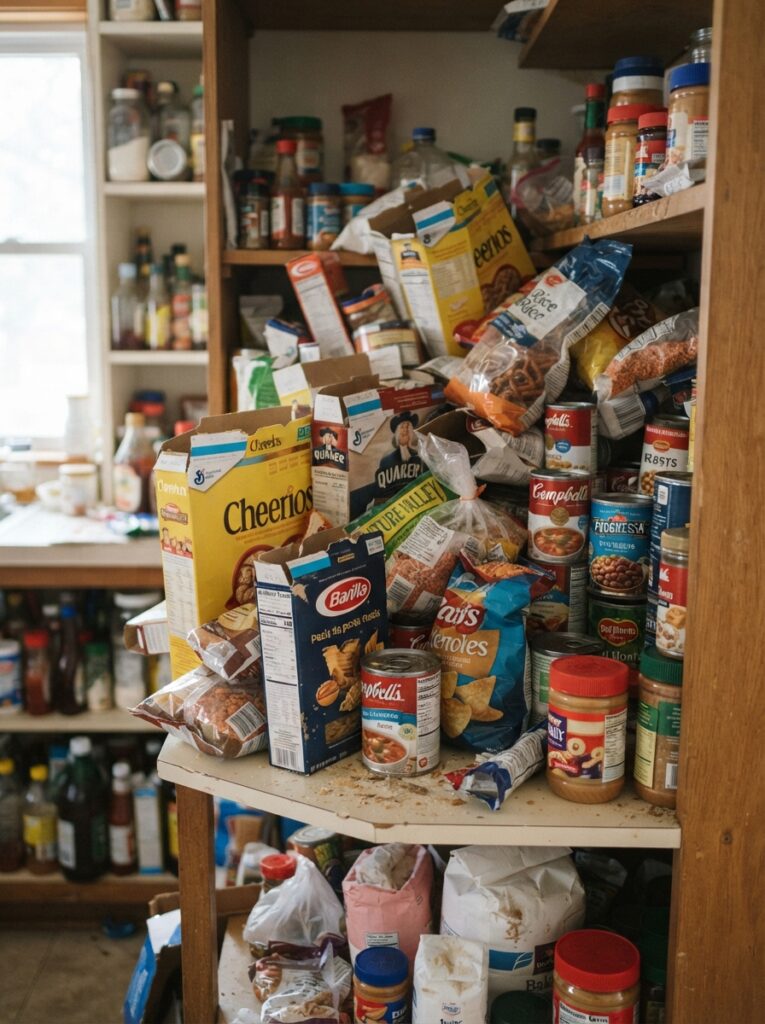
An unorganized pantry costs more than it looks like it does. Ingredients get pushed to the back and forgotten until they expire, duplicate items pile up because you couldn’t see what you already had, and meal planning gets harder when you can’t quickly check what’s on hand. Beyond the practical side, a pantry you can open and immediately understand takes real mental load off busy weeknights — there’s no digging, no guessing, no giving up and ordering takeout because finding dinner felt harder than making it. For more on this, see our meal prep guide.
Start With a Full Clear-Out
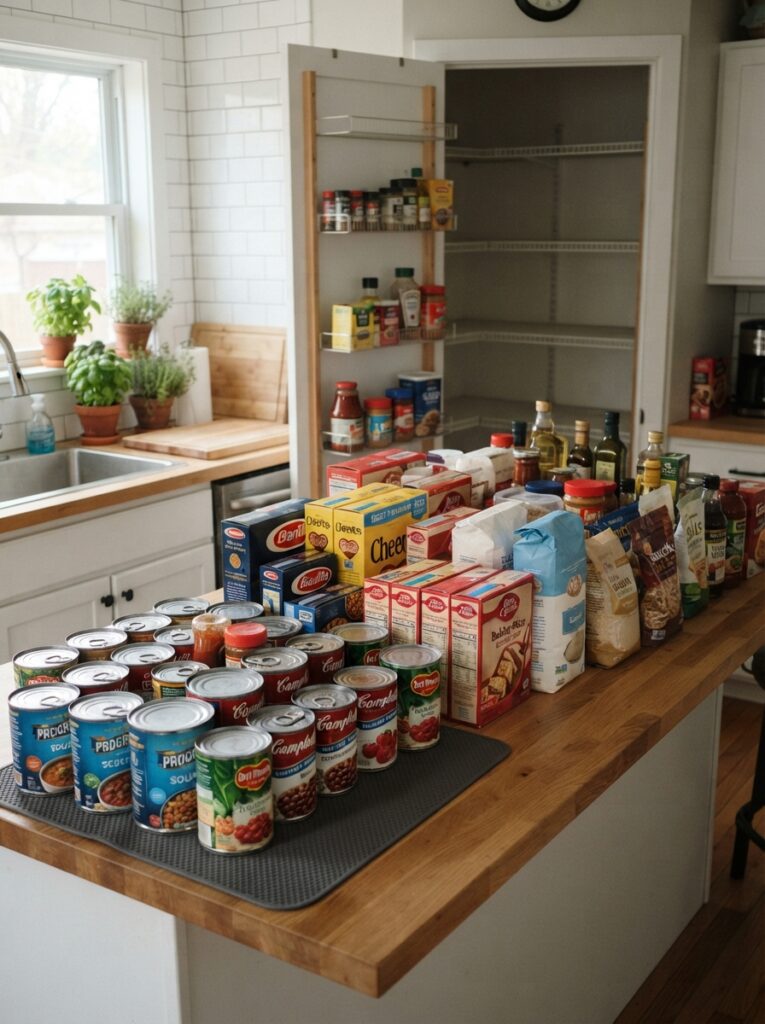
Every good pantry system starts with an empty pantry, even if that feels like it’s making a bigger mess before it gets better.
- Pull everything out and group it by category on the counter or table so you can actually see what you own before deciding where it goes back.
- Check expiration dates as you go — this is the single easiest moment to toss anything expired without having to make a separate pass later.
- Wipe down shelves while they’re empty, since this is the only time it’s genuinely easy to reach every corner.
- Be honest about duplicates — three half-used bags of the same pasta shape is a sign the old system wasn’t working, not a reason to feel bad.
- Set aside anything unopened and unwanted for a food bank donation instead of just cramming it back in.
Group Everything Into Zones
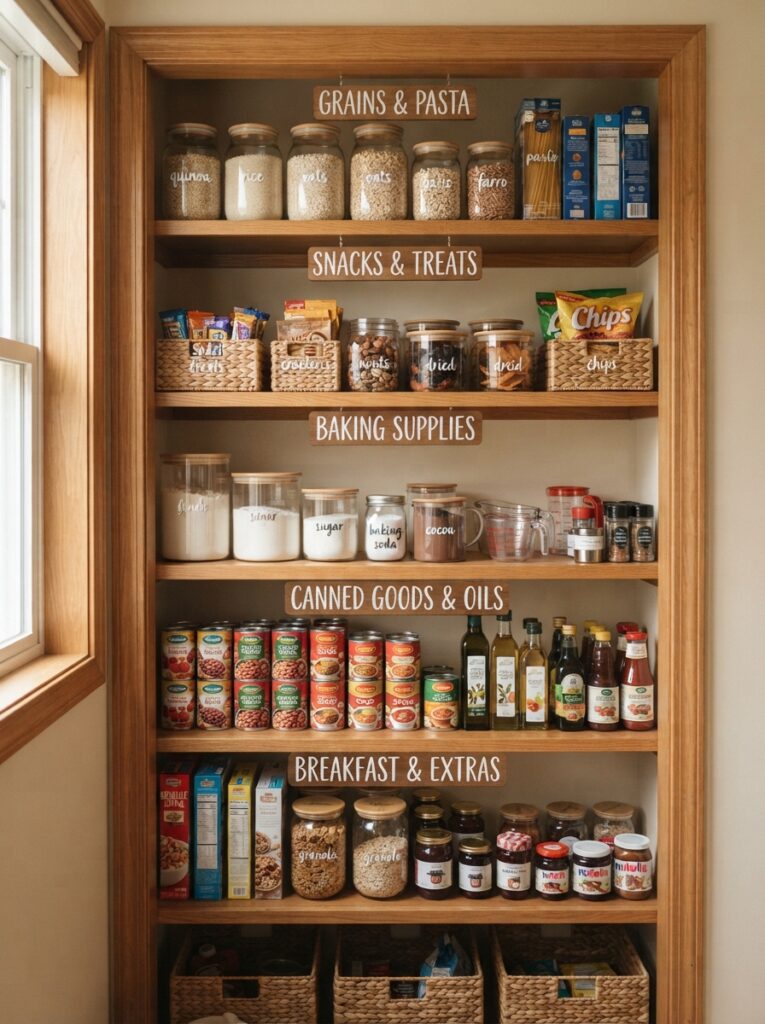
Zones are the backbone of a pantry that stays organized instead of sliding back into chaos within a month.
- Group by category, not by size — all grains together, all canned goods together, all baking supplies together, rather than stacking things wherever they happen to fit.
- Put everyday items at eye level — the things you reach for constantly, like cooking oils, pasta, and cereal, belong where you don’t have to bend or stretch.
- Reserve the top shelf for backstock — extra cans, bulk purchases, and anything you only need occasionally can live higher up, out of the daily rotation.
- Keep baking supplies together as their own zone, since flour, sugar, baking powder, and extracts tend to get used in the same sessions.
- Give kids’ snacks a low, easy-to-reach zone if children help themselves, which cuts down on “where’s the granola bars” questions entirely.
Choosing the Right Storage Containers
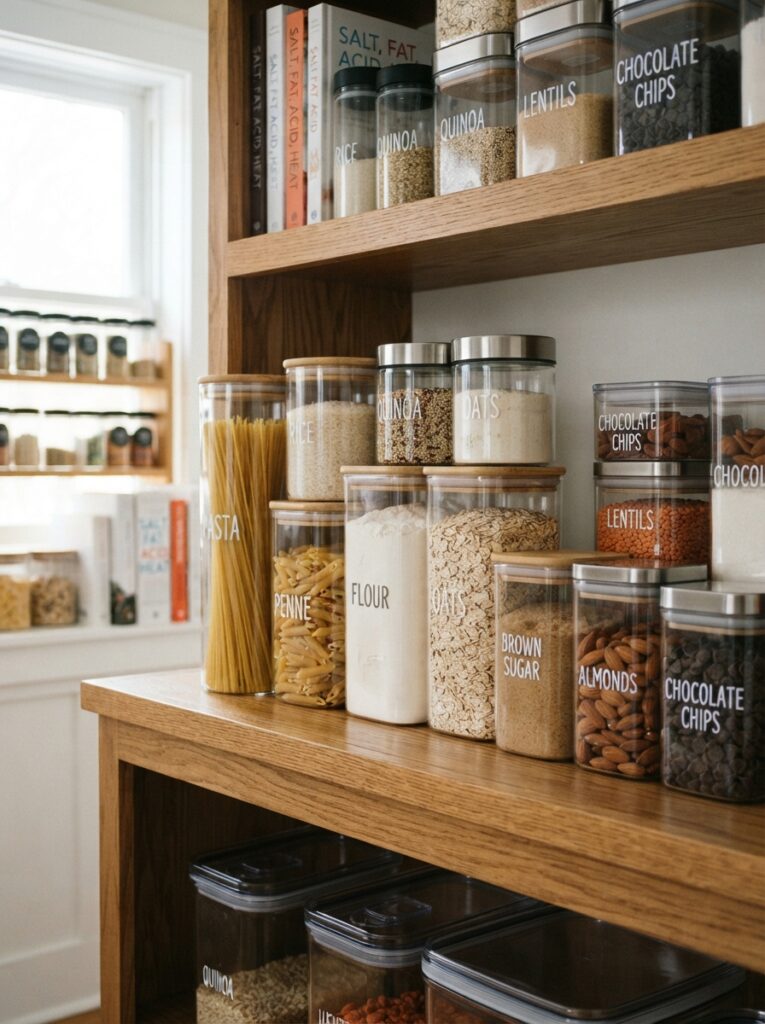
Containers do more than look nice — they keep food fresher longer and make it obvious at a glance how much of something you actually have left.
- Airtight containers for dry goods — flour, rice, pasta, oats, and sugar all stay fresher and pest-free longer in sealed containers than in their original bags.
- Clear containers beat opaque ones for anything you want to track at a glance, since you shouldn’t have to open five containers to find the one with pasta left.
- Matching containers create a calmer visual, but mismatched containers organized well still function just as effectively — don’t let container shopping delay actually organizing.
- Stackable bins for snack packets and smaller loose items keep shelves from turning into a pile of individually wrapped bars and pouches.
- Save the original packaging’s cooking instructions by cutting off the label and taping it to the container, or snapping a photo before you toss the box.
Labeling: The Detail That Ties It All Together
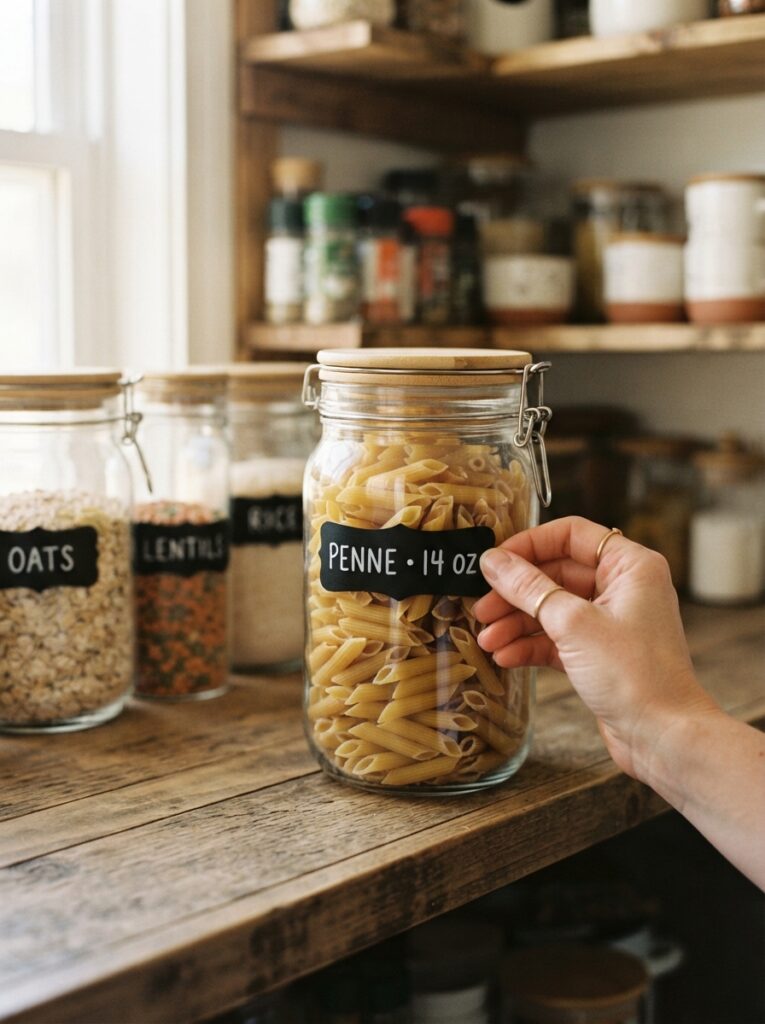
Labels are what separate a pantry that looks organized from one that actually stays organized when more than one person is putting groceries away.
- Label by contents, not brand, so anyone in the household can put a new bag of rice in the “rice” container without having to ask where it goes.
- A simple label maker gives a clean, consistent look without needing any design skill, and refills are inexpensive.
- Handwritten chalkboard-style labels work just as well functionally and add a warmer, more personal look if that fits your kitchen better.
- Label shelves themselves, not just containers, if multiple people share the space — a small tag on the shelf edge keeps zones intact even during a rushed grocery unload.
Making the Most of Deep or Awkward Shelves
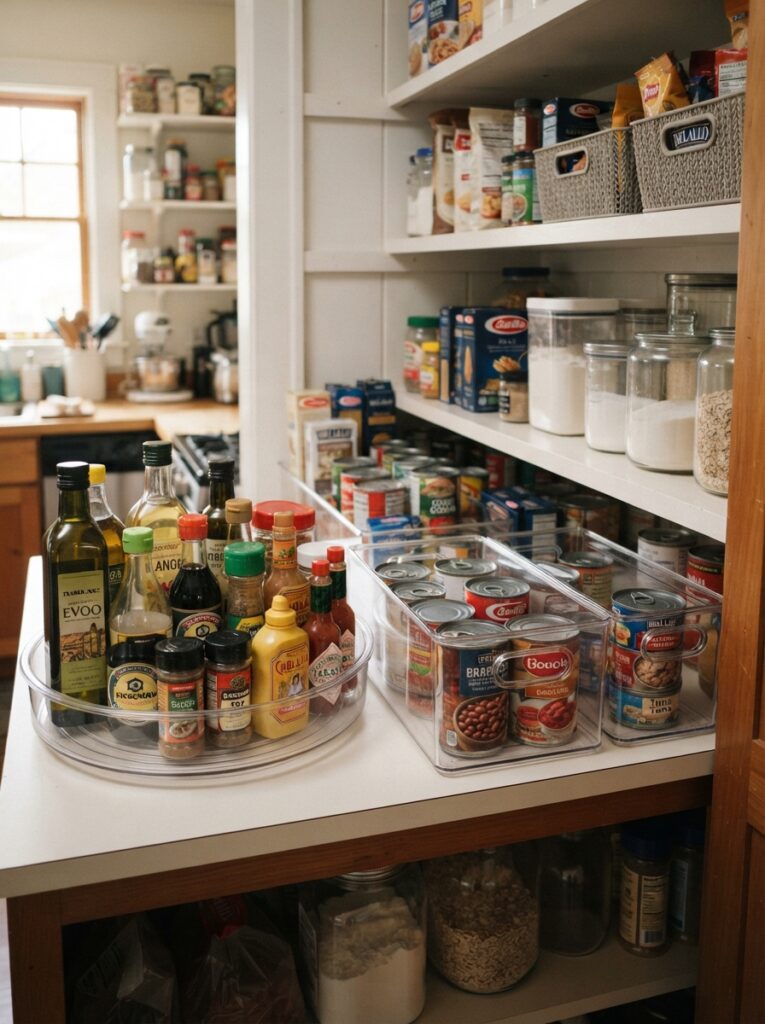
Deep shelves are notorious for swallowing items whole, but a few tools make even the most awkward pantry layout usable.
- Lazy Susans or turntables solve the classic “things get lost in the back” problem for oils, sauces, and spice jars — just spin instead of dig.
- Pull-out bins or baskets bring the back of a deep shelf forward with one motion, which is especially useful for canned goods.
- Risers and stepped shelving let you see everything on a shelf at once instead of only the front row, similar to how a spice rack works but scaled up.
- Group deep-shelf items by how often you use them, putting the true backstock furthest back where digging matters least.
Door and Wall Storage You’re Probably Not Using
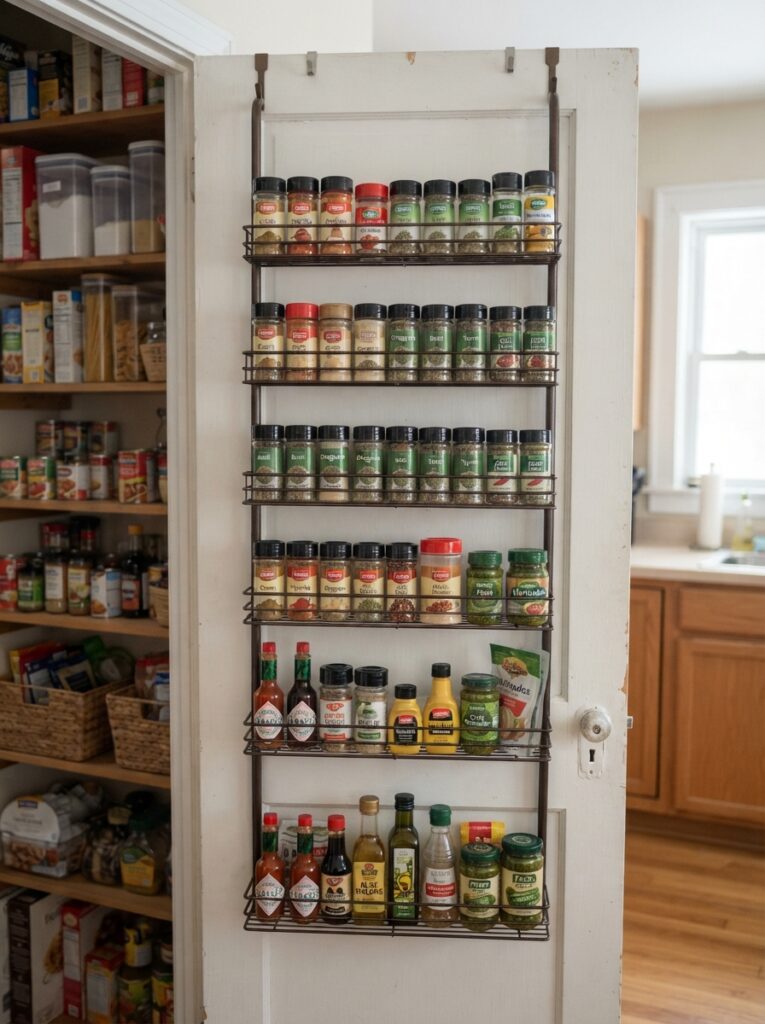
The back of the pantry door and any open wall space are some of the most underused square footage in the whole kitchen.
- Over-the-door organizers are ideal for spices, small condiment bottles, and packets that would otherwise clutter a shelf.
- Adhesive hooks can hold measuring cups, aprons, or reusable grocery bags without needing to drill anything, which is ideal for renters.
- A slim wall-mounted rack on unused vertical space can hold cutting boards or baking sheets that otherwise eat up shelf room.
- Magnetic strips just inside the door work well for holding small metal tins of spices or seasoning packets.
Organizing a Small or Closet-Style Pantry
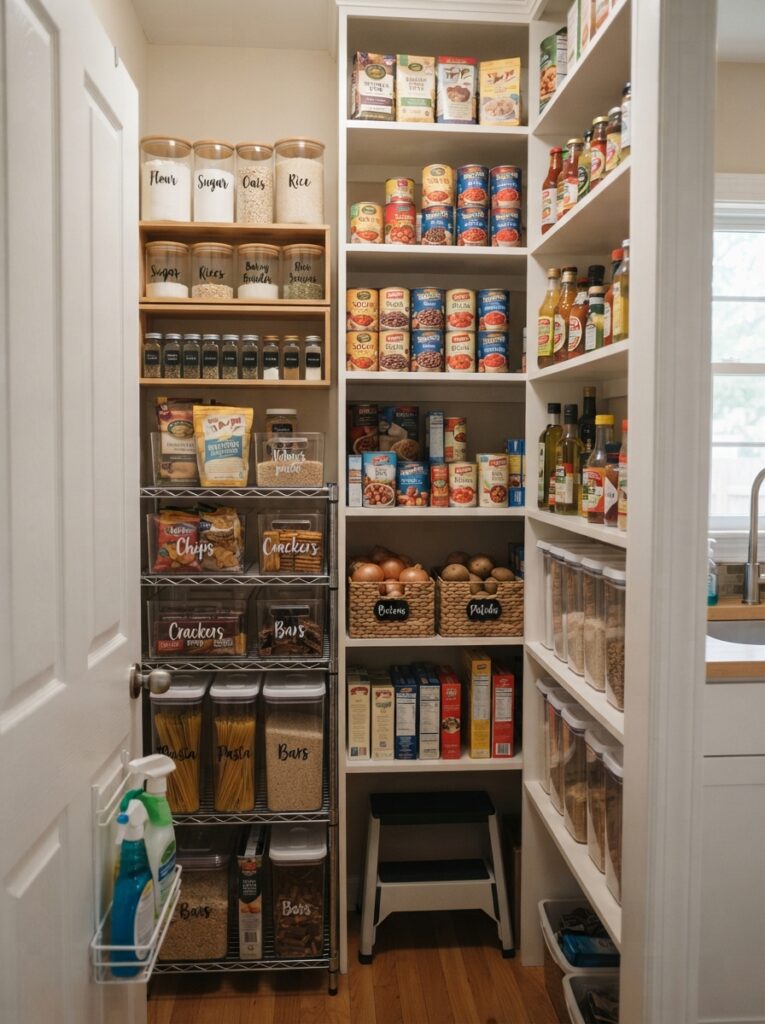
A tiny pantry — or a single kitchen cabinet doing the job of one — needs a slightly different approach than a full walk-in space, building on the same principles from our small kitchen organization ideas.
- Think vertically first, since a small footprint usually still has unused height — stackable shelving units add storage without expanding the floor plan.
- Slim, uniform containers fit more efficiently into a narrow space than the bulky original packaging most dry goods come in.
- Use the inside of the door aggressively in a small pantry, since it’s often the single biggest source of untapped storage.
- Rotate seasonal or bulk items out of a small pantry into a garage or basement backstock area, keeping only what’s actively in use in the prime real estate.
Keeping Snacks and Kids’ Items Accessible
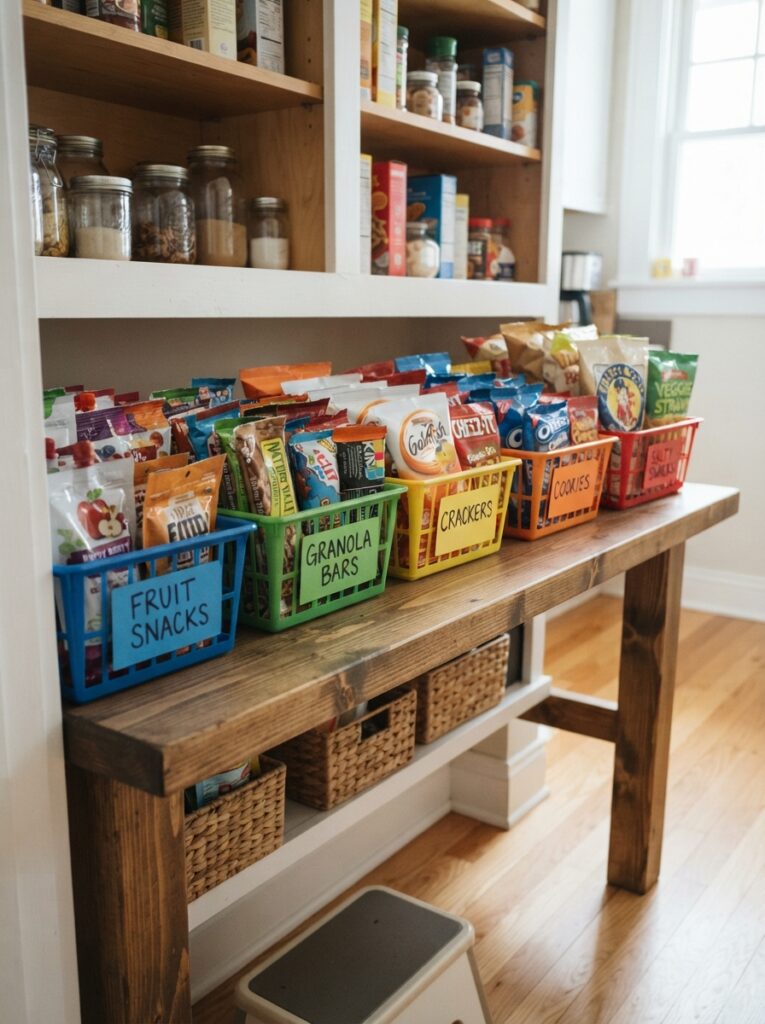
A pantry that works for the whole family accounts for the shortest people in the house, not just the adults doing the organizing.
- Low, open bins at kid height let children grab their own snack without needing help or climbing on anything.
- Pre-portion snacks into small containers during grocery unpacking so grabbing one doesn’t mean tearing into a full family-sized bag.
- Color-code or picture-label bins for kids who aren’t reading fluently yet, so the system works for them too.
- Keep choices limited but rotating — a smaller, curated snack zone is easier for kids to navigate than an overwhelming wall of options.
A Simple System for Managing Expiration Dates
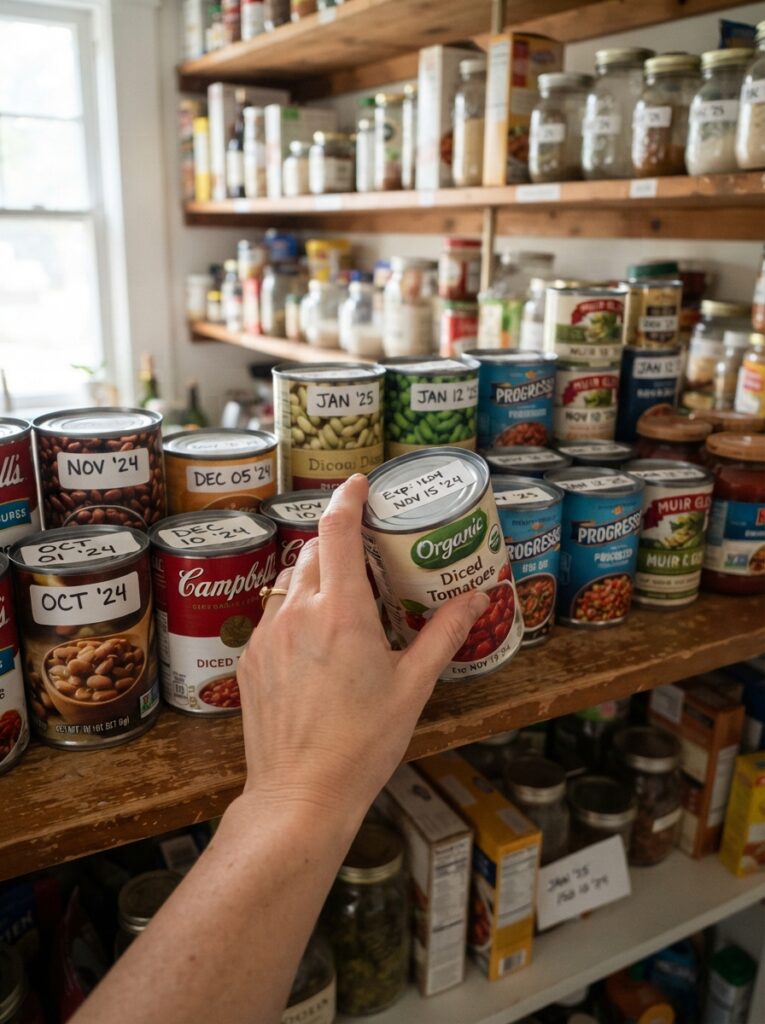
Expiration dates are one of the easiest things to lose track of once food goes into a container without its original packaging.
- First in, first out — new groceries go behind existing stock rather than in front of it, so older items naturally get used first.
- Write the expiration date on containers with a wipe-off marker when you decant something from its original packaging.
- Do a quick monthly scan of anything nearing its date, moving those items to eye level so they get used before they’re forgotten.
- Keep a small “use soon” bin at the front of the pantry for items that need to be worked into meals in the next week or two.
Budget-Friendly Organization Ideas That Still Look Great
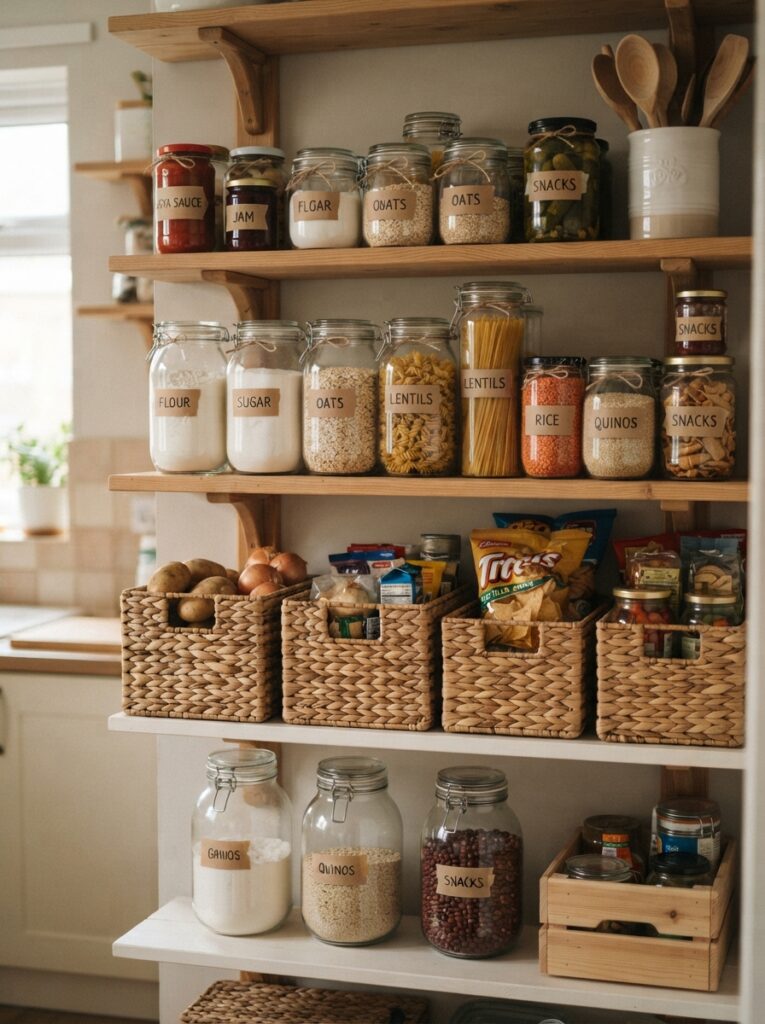
An organized, good-looking pantry doesn’t require an expensive container haul — a few smart, low-cost swaps get most of the way there.
- Reuse glass jars from pasta sauce or pickles instead of buying a full matching set — wash, remove the label, and they work just as well.
- Dollar-store bins and baskets handle grouping and zoning just as effectively as premium versions, especially once everything is labeled consistently.
- Buy containers gradually instead of all at once, prioritizing the categories you use most rather than trying to convert the whole pantry in one weekend.
- A single roll of chalkboard labels or masking tape and a marker can label an entire pantry for just a few dollars.
Maintaining an Organized Pantry Week to Week
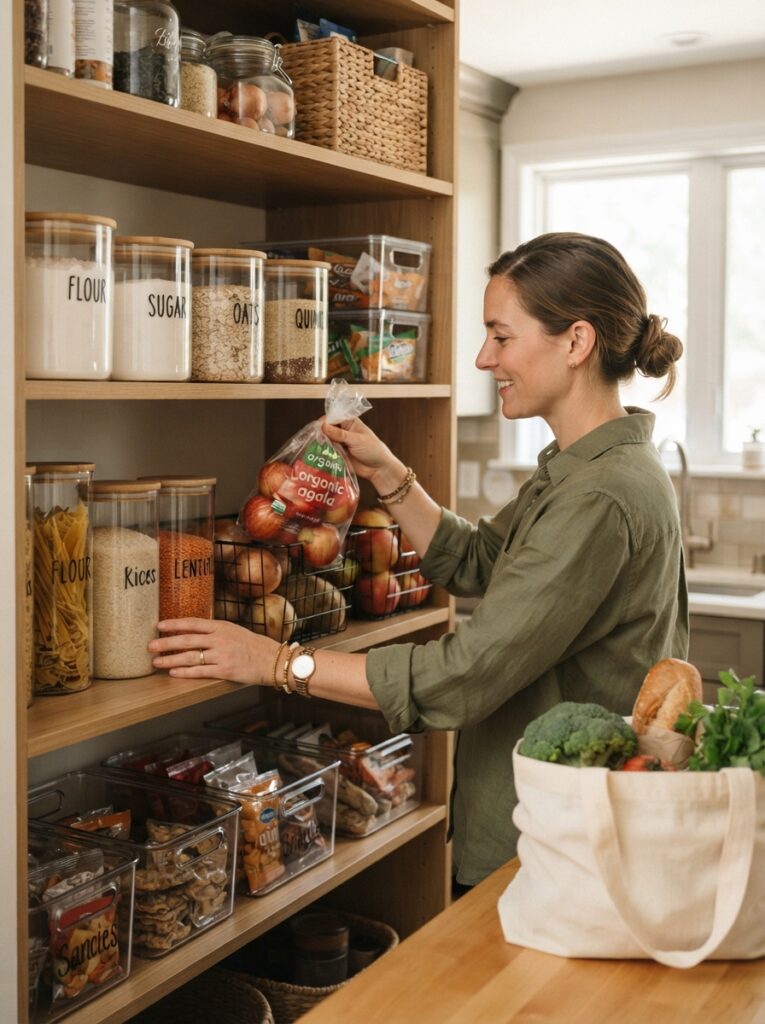
The setup is the easy part — keeping it that way is what actually determines whether the system sticks.
- Put groceries away with the system in mind, not just wherever there’s an open gap, which takes maybe an extra minute per shopping trip.
- Do a 5-minute reset weekly, straightening anything that’s drifted and refilling any containers that ran low, similar in spirit to a weekly meal prep routine.
- Involve the whole household in understanding where things go, since a system only one person maintains tends to fall apart the first busy week.
- Revisit zones every few months — eating habits shift, and a zone that made sense in January might need adjusting by summer.
A Sample Pantry Organization Weekend Plan
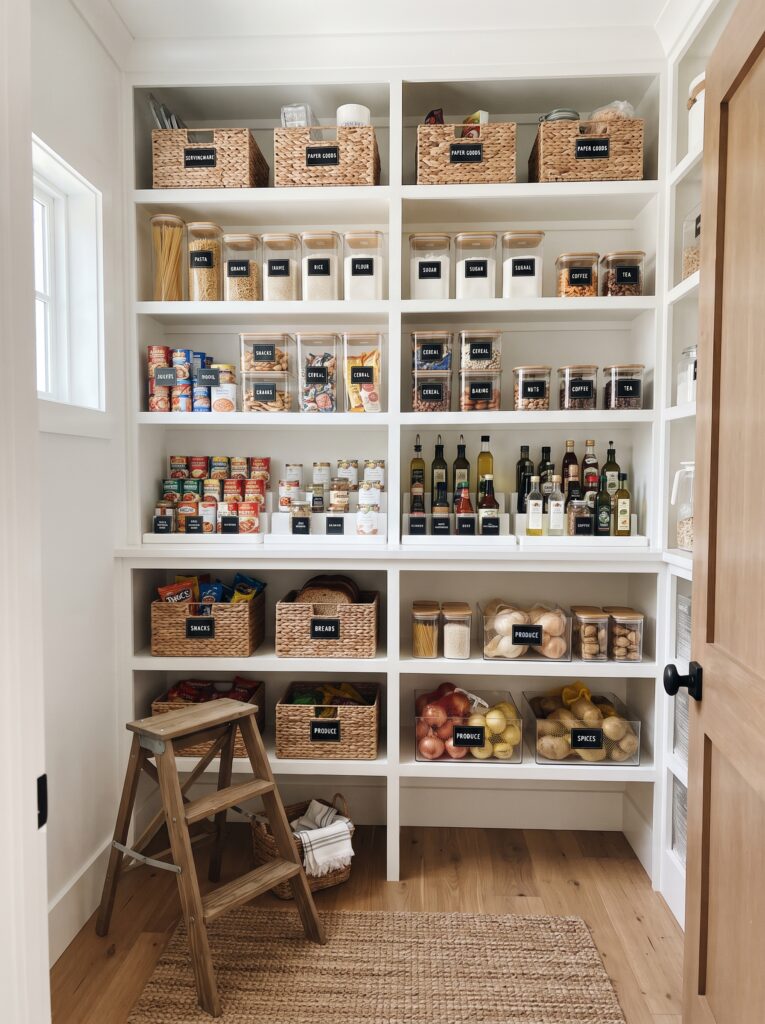
A realistic weekend plan spreads the work across two manageable sessions instead of one exhausting marathon: Saturday morning, clear everything out, wipe down shelves, sort into categories, and toss anything expired; Saturday afternoon, take a quick trip for any containers or bins you’re missing, using what you already own wherever possible; Sunday morning, decant dry goods into containers and label everything; and Sunday afternoon, do the final placement into zones, put backstock up top, and set kids’ snacks within easy reach. By Sunday evening you’ll have a pantry that works the same way a well-run kitchen does — similar to the habits covered in organizing your kitchen like a chef, and worth pairing with a solid set of meal prep containers for the fridge and freezer side of the equation.
Frequently Asked Questions
What’s the first step in organizing a pantry?
Pull everything out and sort it into categories on the counter — you can’t organize a pantry you can’t fully see, and this step also makes checking expiration dates much easier.
Do I need to buy matching containers to have an organized pantry?
No — matching containers look polished, but consistent grouping, zoning, and labeling matter far more for actual function than whether every container matches.
How do I organize a small pantry or single cabinet?
Think vertically, use slim uniform containers, make full use of the door, and rotate backstock out to another storage area so only what’s in active use takes up the prime space.
What’s the best way to keep an organized pantry from falling apart?
Put groceries away with the zones in mind, do a quick weekly reset, and get the whole household on board so the system doesn’t rely on one person maintaining it alone.
Should I decant everything into containers?
Focus on dry goods that benefit most from airtight storage — flour, rice, pasta, cereal, and sugar — rather than feeling obligated to decant every single item.
How often should I go through and clean out the pantry?
A quick monthly check for expiring items plus a deeper seasonal reset every few months keeps a pantry from sliding back into clutter.
What’s a budget-friendly way to start organizing a pantry?
Reuse glass jars you already have, pick up inexpensive bins from a dollar store, and label with basic tape and a marker — the system matters far more than the price of the containers.



3 Comments