

As an Amazon Associate I earn from qualifying purchases. Some links in this post are affiliate links, at no extra cost to you. You will find more ideas in recipes.
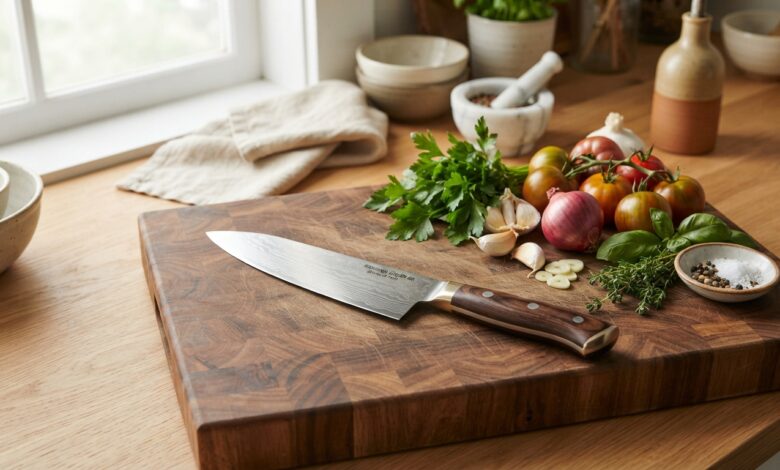
A chef’s knife is the one tool that touches almost everything you cook, which makes it the single highest-impact purchase you can make for your kitchen. Buy the wrong one and every dinner starts with a fight against a blade that slips, drags, or just doesn’t feel right in your hand. Buy the right one and chopping stops being a chore. Here’s how to actually choose, plus specific picks for every budget and hand size. See also: kitchen decor.
Why Your Knife Matters More Than Any Other Kitchen Tool

Every other kitchen gadget is optional. Your chef’s knife isn’t — it’s what you reach for whether you’re dicing an onion, breaking down a chicken, or slicing bread in a pinch. A genuinely good knife makes food cook more evenly (because your cuts are consistent), makes prep faster, and is honestly safer than a cheap one, since dull blades slip and require more force. For more on getting the most out of whatever knife you choose, our knife skills guide covers grip, cuts, and sharpening.
- One good knife beats a 15-piece block almost every time — quality varies wildly within cheap sets.
- 8 inches is the sweet spot for most home cooks — big enough for real prep work, small enough to control.
- Weight and balance matter more than the brand name — always consider how it feels in your specific hand.
Best Overall: A Classic German-Style Chef’s Knife
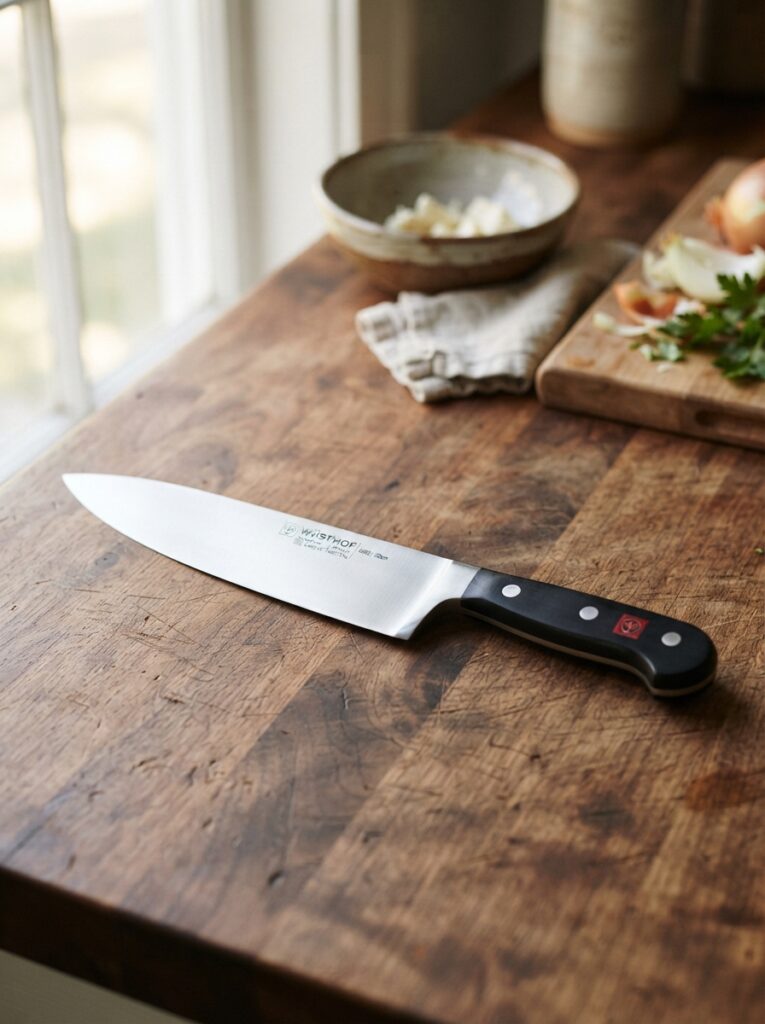
A German-style stainless steel chef’s knife is the safest recommendation for most home cooks — heavier, more forgiving, and easier to maintain than most alternatives. The extra heft does some of the cutting work for you, which matters if you’re still building technique.
- Best for: most home cooks, especially beginners and anyone who wants one knife that does everything well.
- What to look for: full tang (the metal runs through the entire handle), a comfortable bolster, and stainless steel for easy care.
- Price range: $30–$60.
Best Budget Pick: Under $25

You genuinely don’t need to spend a lot to get a knife that outperforms whatever came in a cheap starter block. A solid budget chef’s knife under $25 holds an edge reasonably well and is a smart way to try the single-good-knife approach before investing more.
- Best for: students, first apartments, or anyone testing whether they even like cooking enough to upgrade later.
- What to look for: stamped (not forged) blades are fine at this price point — don’t expect forged-knife performance for forged-knife money.
- Price range: $12–$25.
Best Splurge: A Japanese Gyuto

A Japanese gyuto is thinner, lighter, and sharper out of the box than most Western knives, which makes for cleaner cuts with less effort — but it also requires more careful maintenance and a gentler cutting board. This is the pick for someone who already knows they love cooking and wants a noticeable upgrade in feel.
- Best for: confident home cooks who want a precision feel and don’t mind extra care.
- What to look for: higher carbon content steel for edge retention, and a wood or resin handle that suits your grip.
- Price range: $50–$120.
Best for Smaller Hands: A 6-Inch Chef’s Knife
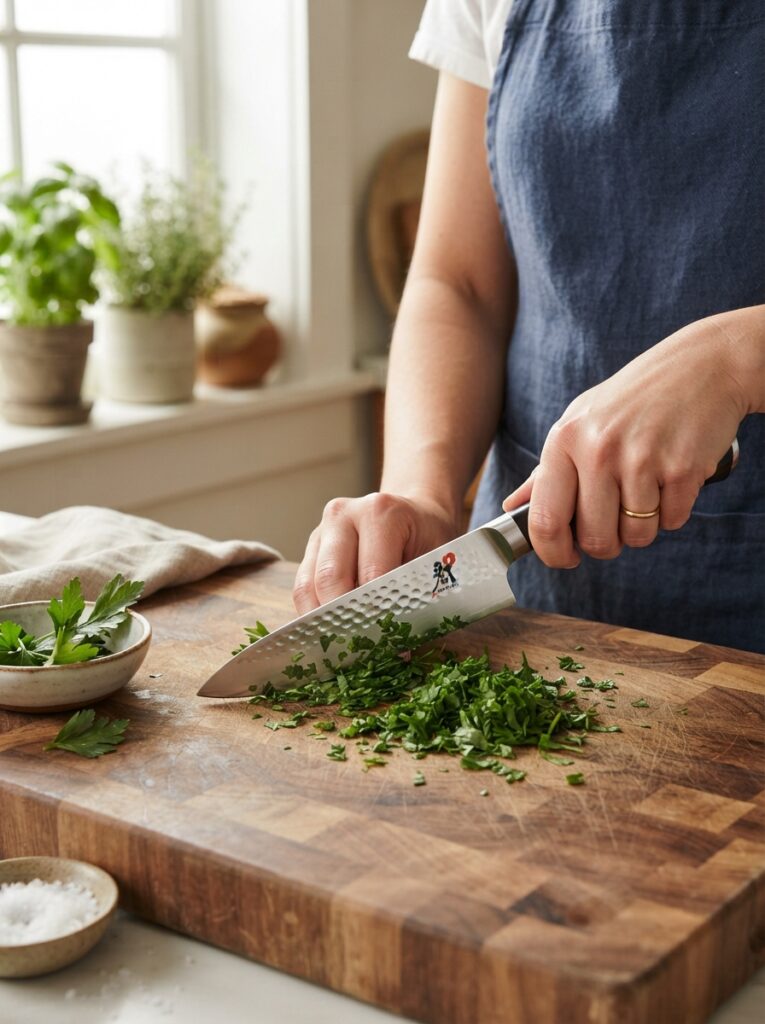
An 8-inch blade isn’t right for everyone — if it feels unwieldy or tiring to control, a 6-inch chef’s knife handles almost the same range of tasks with noticeably more control for smaller hands.
- Best for: anyone with smaller hands, or cooks who do more precise, detailed cutting than heavy chopping.
- What to look for: the same full-tang, comfortable-bolster criteria as an 8-inch knife, just scaled down.
- Price range: $20–$40.
Best Starter Set: Knife Plus Honing Steel
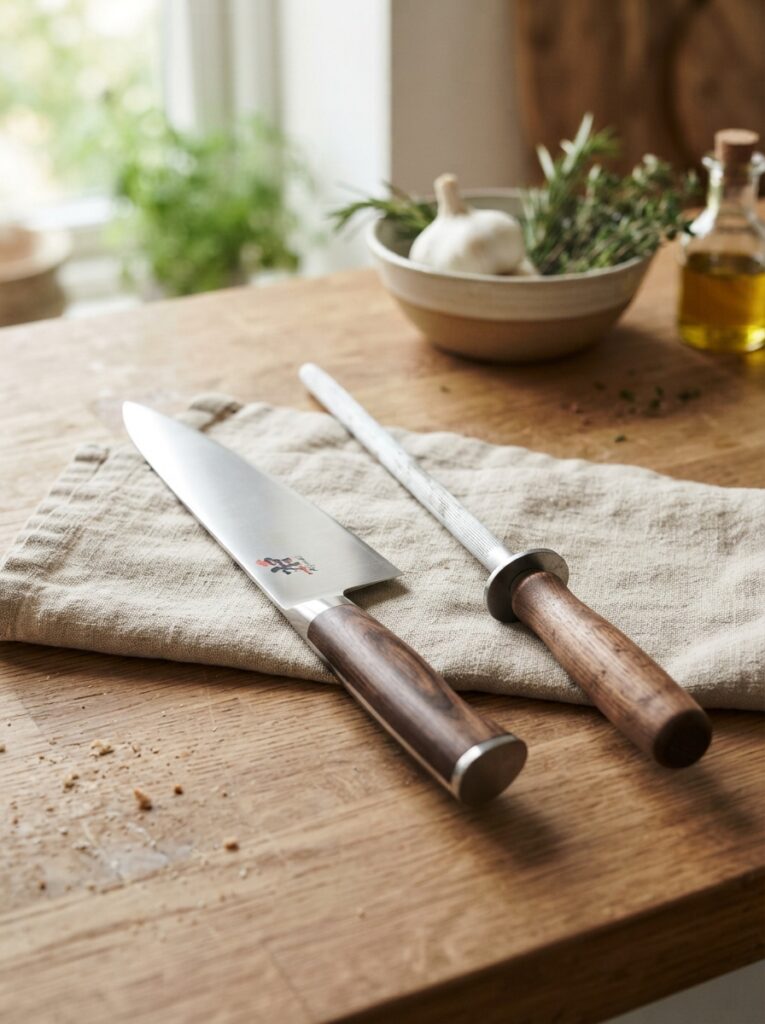
If you’re buying a knife for someone who doesn’t already own a honing steel, a bundled set solves the maintenance problem before it starts. A knife that never gets honed dulls fast and makes cooking frustrating within weeks, so the two really do belong together.
- Best for: gifts, or anyone building a kitchen from scratch.
- What to look for: a steel (not stone) for regular honing between the occasional real sharpening.
- Price range: $30–$55 for the pair.
Best Paring Knife to Pair With It

A chef’s knife handles most tasks, but a paring knife is still worth owning for the small, precise jobs a bigger blade is too clumsy for — hulling strawberries, deveining shrimp, peeling. It’s the natural second knife to add once your chef’s knife is sorted.
- Best for: anyone who’s ever tried to peel an apple with an 8-inch blade and regretted it.
- What to look for: a 3-4 inch blade, comfortable grip, matching material to your chef’s knife if you want a cohesive set.
- Price range: $8–$20.
Blade Material: Stainless vs. Carbon Steel
This is the biggest decision after size, and it genuinely changes how much upkeep your knife needs.
- Stainless steel: resists rust and stains with almost no maintenance — the right choice for most home cooks.
- Carbon steel: takes a sharper edge and holds it longer, but needs to be dried immediately after washing to avoid rust — better suited to cooks who already have a maintenance routine.
- High-carbon stainless: a middle ground that’s become common in mid-range knives, balancing edge retention with easier care.
How Much Should You Actually Spend?
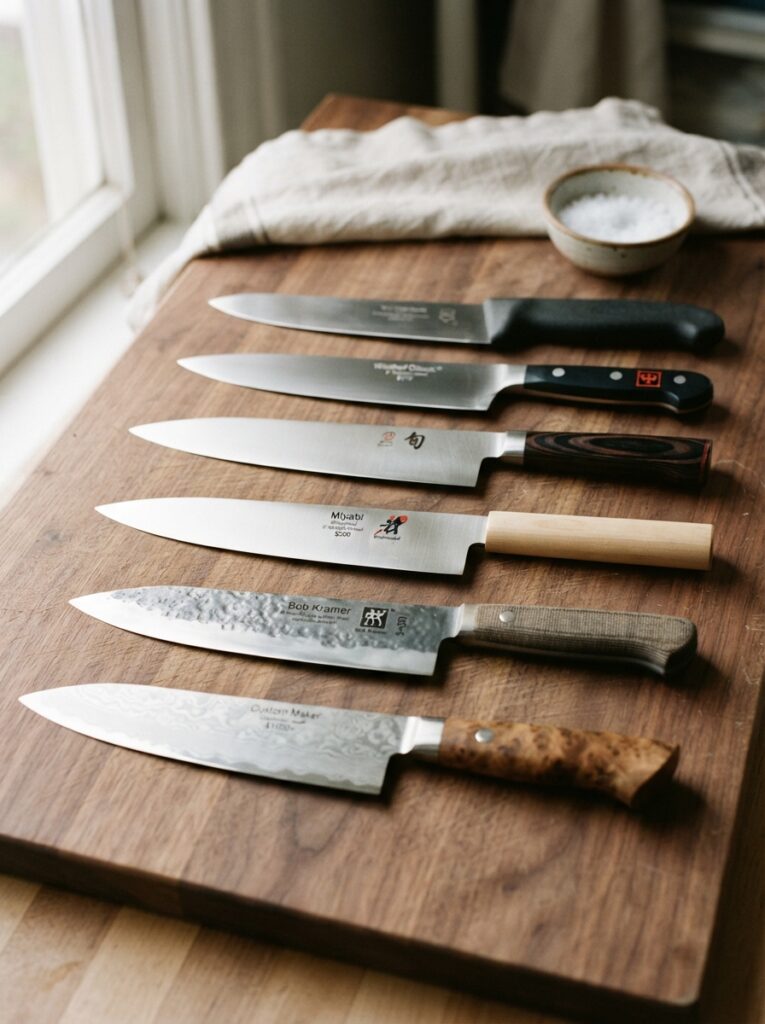
Past a certain point, more money buys marginal improvements, not dramatically better cutting. A $30 knife, properly honed and occasionally sharpened, will outperform a $150 knife that never gets maintained. Spend what fits your budget on a knife with a full tang and a comfortable grip, put the rest of your budget toward keeping it sharp, and you’ll get more real-world performance than chasing a bigger price tag.
Caring for Your New Knife
A good knife lasts decades if you treat it right, and the habits are simpler than most people expect. Hand wash and dry it immediately — never the dishwasher, which dulls the edge and can damage the handle. Store it in a block, on a magnetic strip, or with a blade guard rather than loose in a drawer, where it dulls faster and becomes a safety hazard. Hone it before every use or two, and get it professionally sharpened, or use a whetstone at home, two to four times a year. For the full breakdown on grip, cuts, and technique, see our complete knife skills guide.
Frequently Asked Questions
What’s the best all-around chef’s knife size?
An 8-inch blade is the standard recommendation for most home cooks, offering enough length for real prep work while staying manageable to control. For more on this, see our meal prep guide.
Do I need to spend a lot of money on a chef’s knife?
No — a well-maintained $30 knife will outperform an expensive one that’s never honed or sharpened. Spend within your budget on a full-tang knife with a comfortable grip.
Stainless or carbon steel — which is better for beginners?
Stainless steel is better for most beginners since it resists rust with minimal care. Carbon steel takes a sharper edge but needs to be dried immediately after every wash.
How often does a chef’s knife need to be sharpened?
Hone it before every use or two with a honing steel, and get it properly sharpened two to four times a year depending on how often you cook.
Is a knife set better than buying one knife?
Usually not — one genuinely good chef’s knife, used well, outperforms most budget sets. A paring knife and a serrated bread knife are the only real additions worth making.





4 Comments