

As an Amazon Associate I earn from qualifying purchases. Some links in this post are affiliate links, at no extra cost to you. See also: recipes. If you want to go further, kitchen decor covers it in detail.
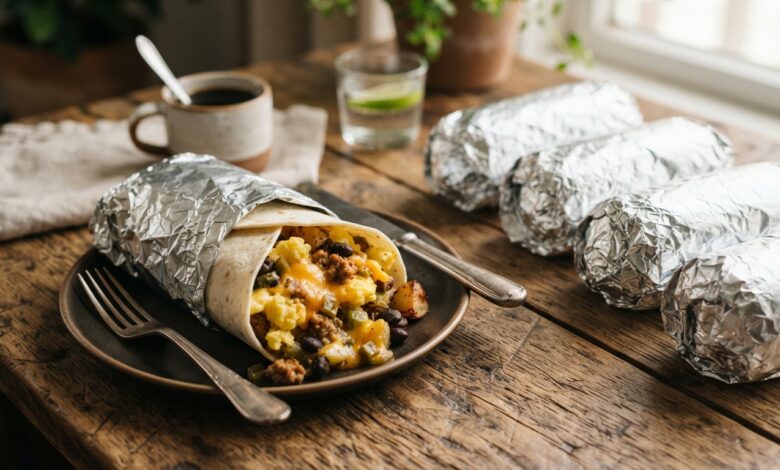
A stash of freezer burritos means breakfast is solved for a month with about an hour of work on one weekend. They reheat in minutes, travel well, and are endlessly customizable — once you’ve got the assembly and wrapping technique down, you’ll never go back to scrambling eggs on a weekday morning again. Having breakfast sorted is one of the easiest ways to build a morning routine that actually sticks.
Why Breakfast Burritos Are the Ultimate Make-Ahead Breakfast
Breakfast burritos hit almost every box a make-ahead meal needs to check: they’re portable, they reheat evenly, they hold up well in the freezer, and they can be packed with enough protein and fiber to actually keep you full until lunch. Unlike a lot of freezer meals, burritos don’t taste noticeably different after freezing when they’re assembled and wrapped correctly — which makes them one of the best entry points into freezer meal prep if you haven’t tried batch-cooking breakfast before.
What You Need Before You Start Assembling
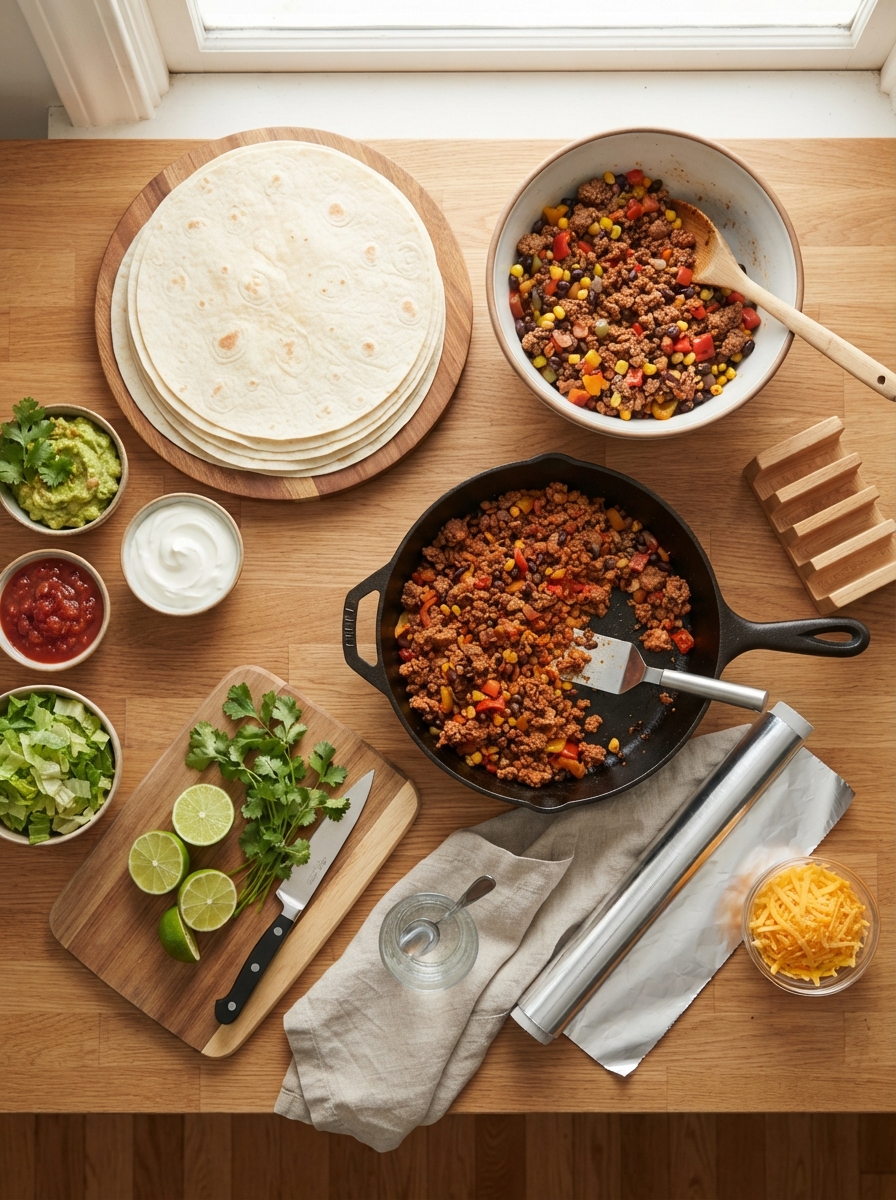
Getting your setup right before you start cooking makes the whole session faster and less chaotic:
- Large flour tortillas: Burrito-size (10–12 inch), which give you enough room to fold without the filling spilling out.
- Foil or parchment paper: For wrapping each burrito individually before freezing.
- A large mixing bowl or two: For scrambling eggs in bulk and mixing in fillings.
- A large skillet or griddle: The bigger the surface, the faster you can scramble a large batch of eggs.
- Freezer bags or a container: To hold the wrapped burritos together once frozen, keeping them organized and freezer-burn free.
The Best Fillings for Freezer Burritos
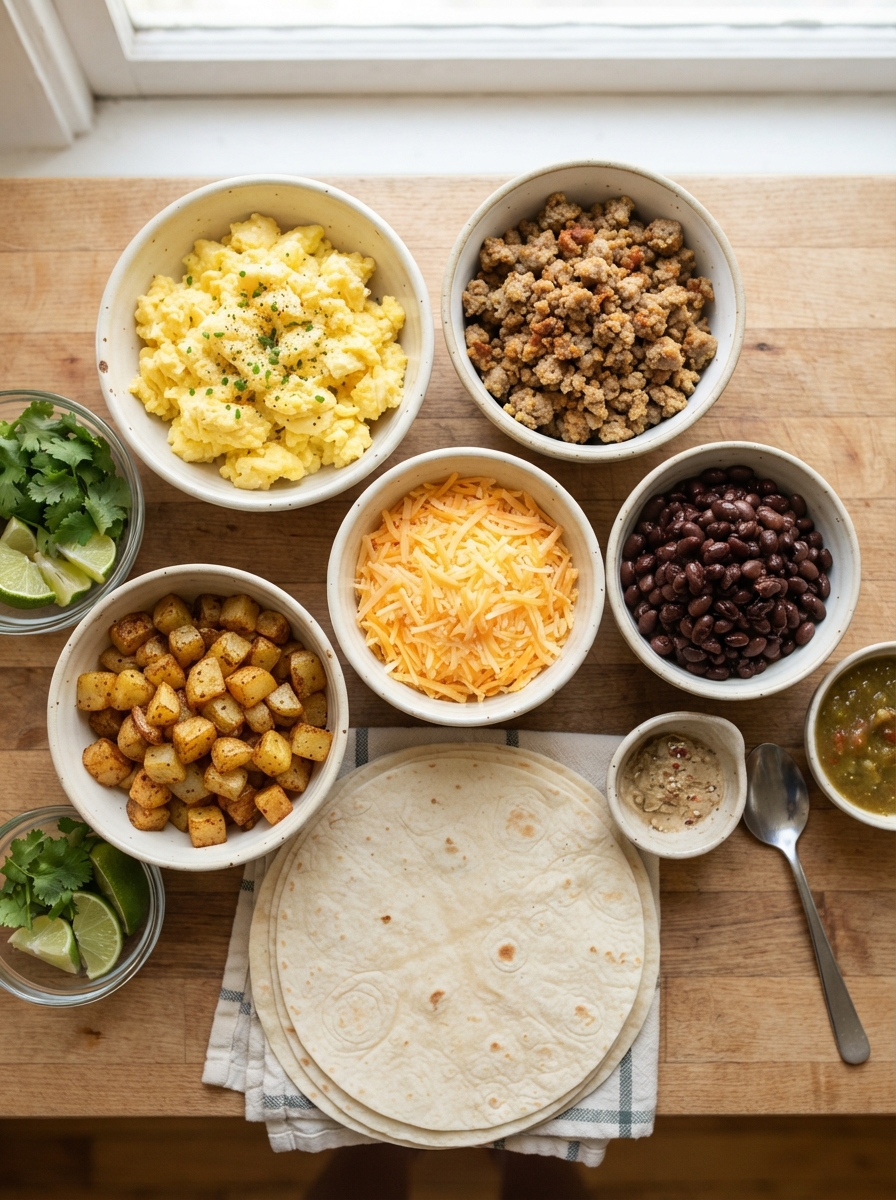
Some fillings freeze and reheat far better than others. Build your burritos around these for the best results:
- Scrambled eggs: Slightly undercook them before wrapping, since they’ll finish cooking during reheating — this keeps them from turning rubbery.
- Cooked breakfast meat: Sausage, bacon, or chorizo all freeze well; cook and crumble or chop it before assembling.
- Shredded cheese: Melts back down perfectly on reheat and helps hold the filling together.
- Cooked potatoes: Diced and pan-fried or roasted potatoes add heartiness and hold their texture well frozen.
- Black beans: A great way to add fiber and protein without adding more meat.
- Avoid fresh vegetables like lettuce or tomato: They turn watery and limp after freezing — save fresh toppings for after reheating instead.
How to Assemble Burritos That Don’t Turn Soggy
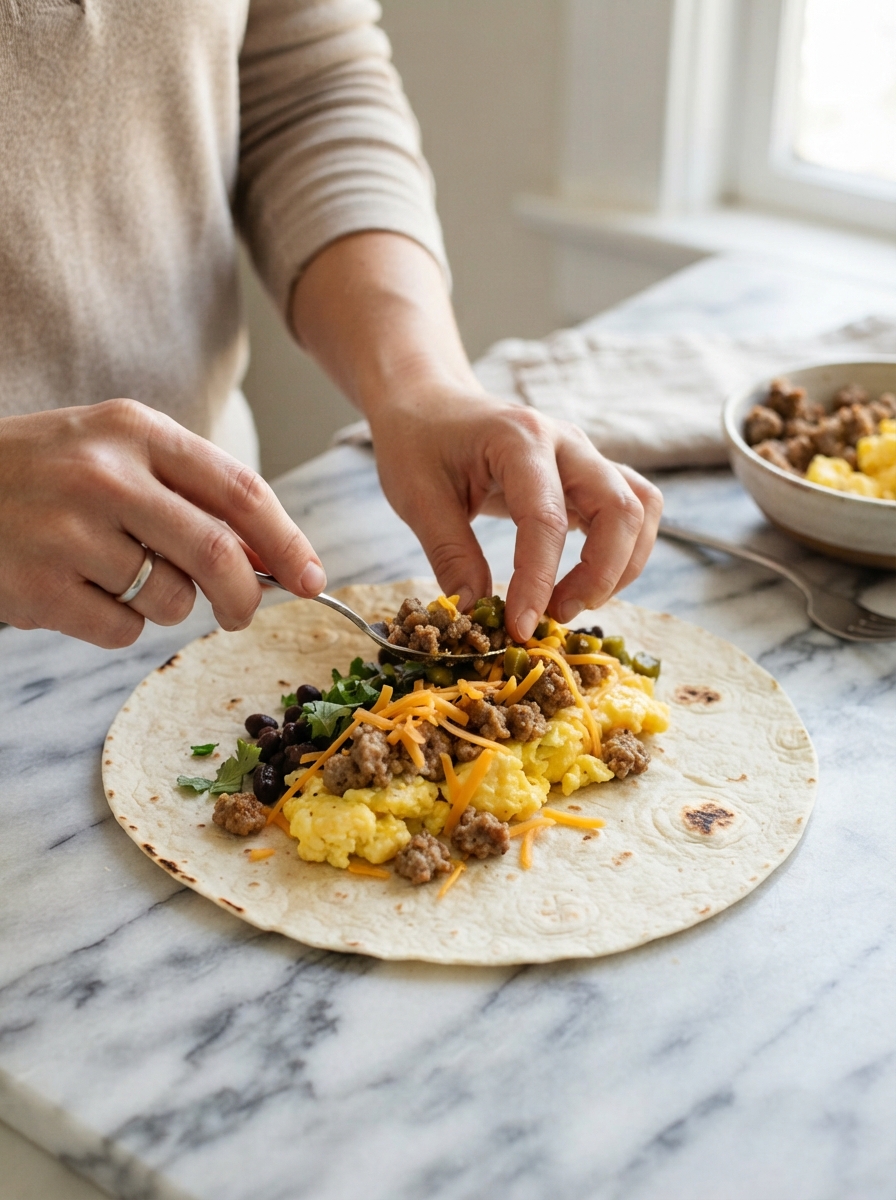
Sogginess is the number one complaint about freezer burritos, and it almost always comes down to moisture management during assembly:
- Let all fillings cool slightly before assembling — hot filling creates steam that gets trapped and turns the tortilla mushy.
- Drain excess liquid or grease from cooked meat and vegetables before adding them to the burrito.
- Layer cheese next to the tortilla as a light barrier, which helps prevent the tortilla from absorbing moisture from wetter fillings.
- Don’t overfill: A packed burrito is harder to wrap tightly and more likely to tear or leak during freezing.
- Warm the tortillas slightly before filling — this makes them more pliable and less likely to crack when you roll them.
The Right Way to Wrap and Freeze Them
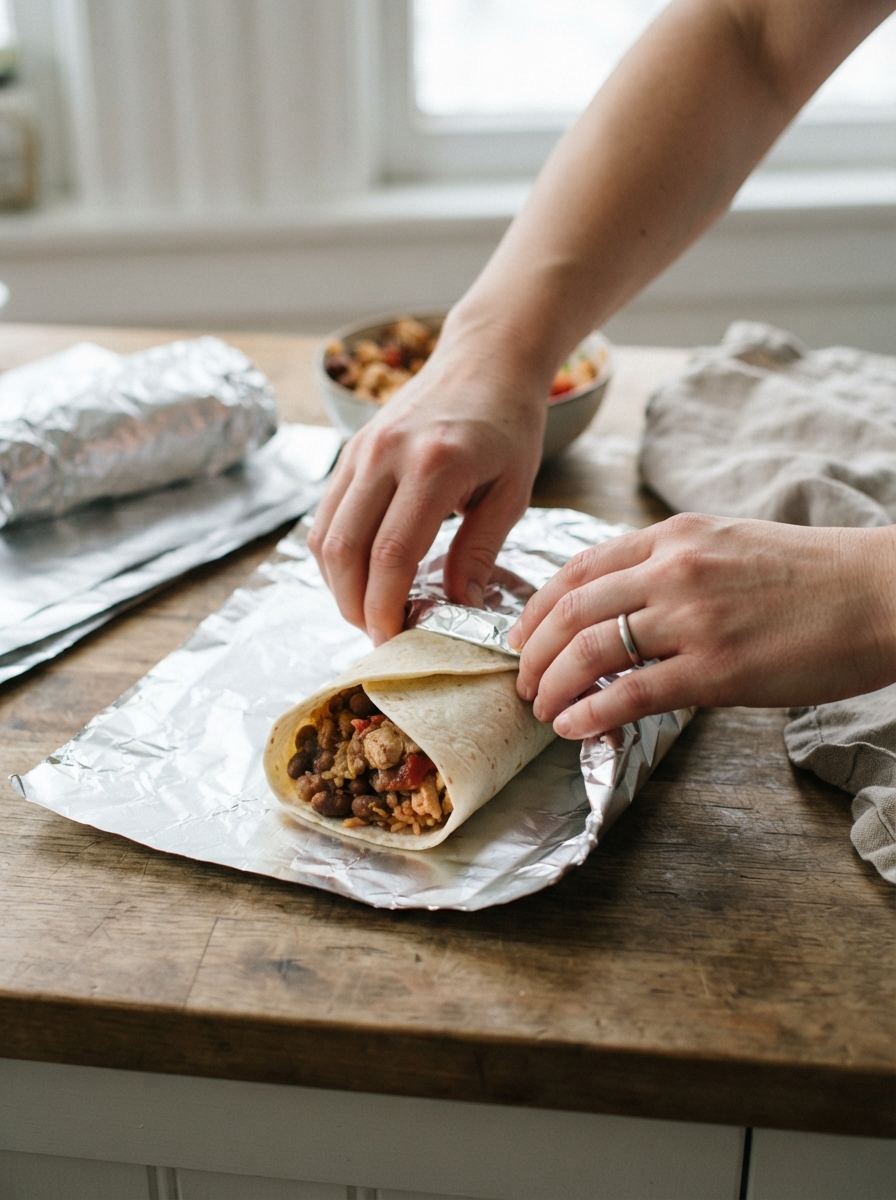
How you wrap directly affects how well the burritos survive weeks in the freezer:
- Fold burrito-style first: Tuck in the sides, then roll tightly from the bottom up before adding any outer wrapping.
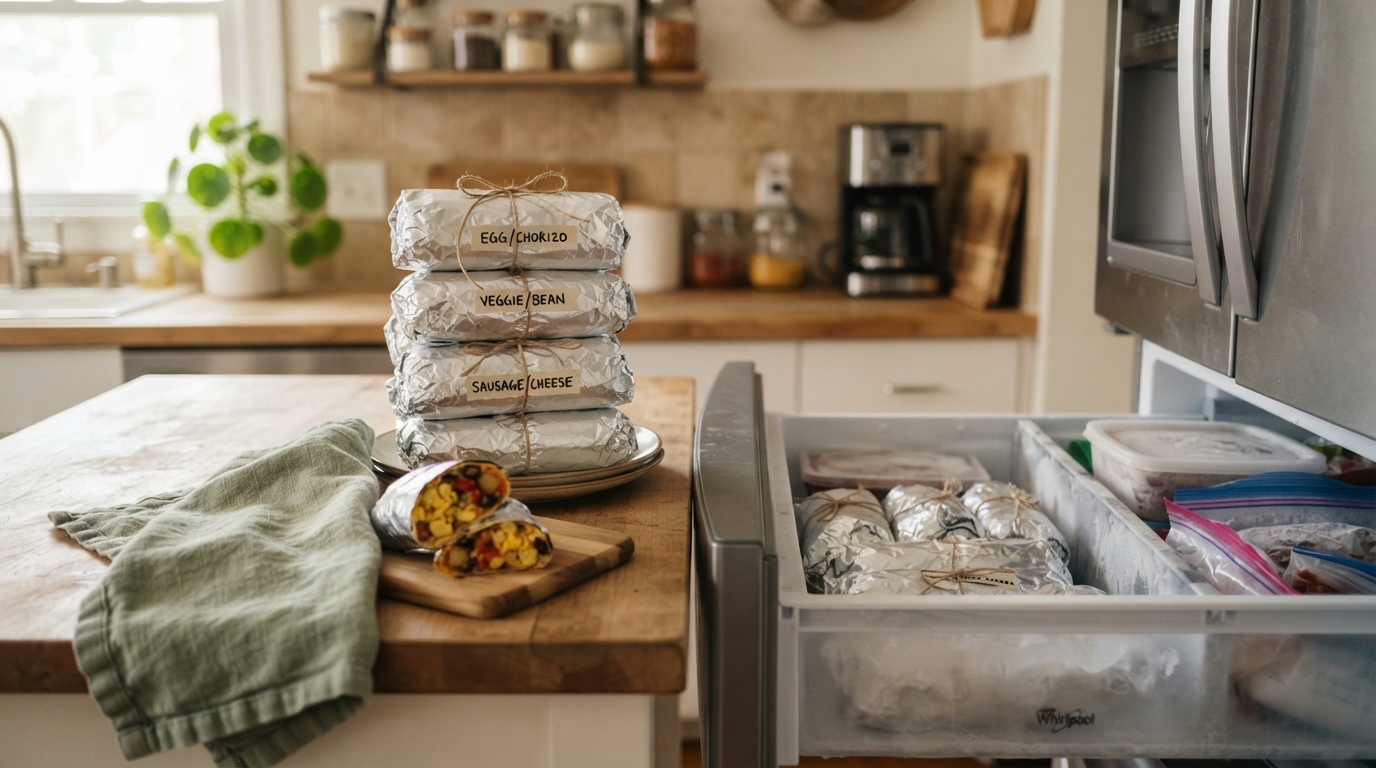
- Wrap each burrito individually in foil or parchment paper, pressing out as much air as possible.
- Label each one with the filling and date, especially if you’re making more than one variety at once.
- Flash-freeze if you have room: Lay wrapped burritos flat on a tray for an hour before bagging them together, which keeps them from freezing into one solid clump.
- Store in a freezer bag or airtight container once individually wrapped, pressing out excess air before sealing.
How to Reheat Frozen Burritos (Microwave, Oven, Air Fryer)
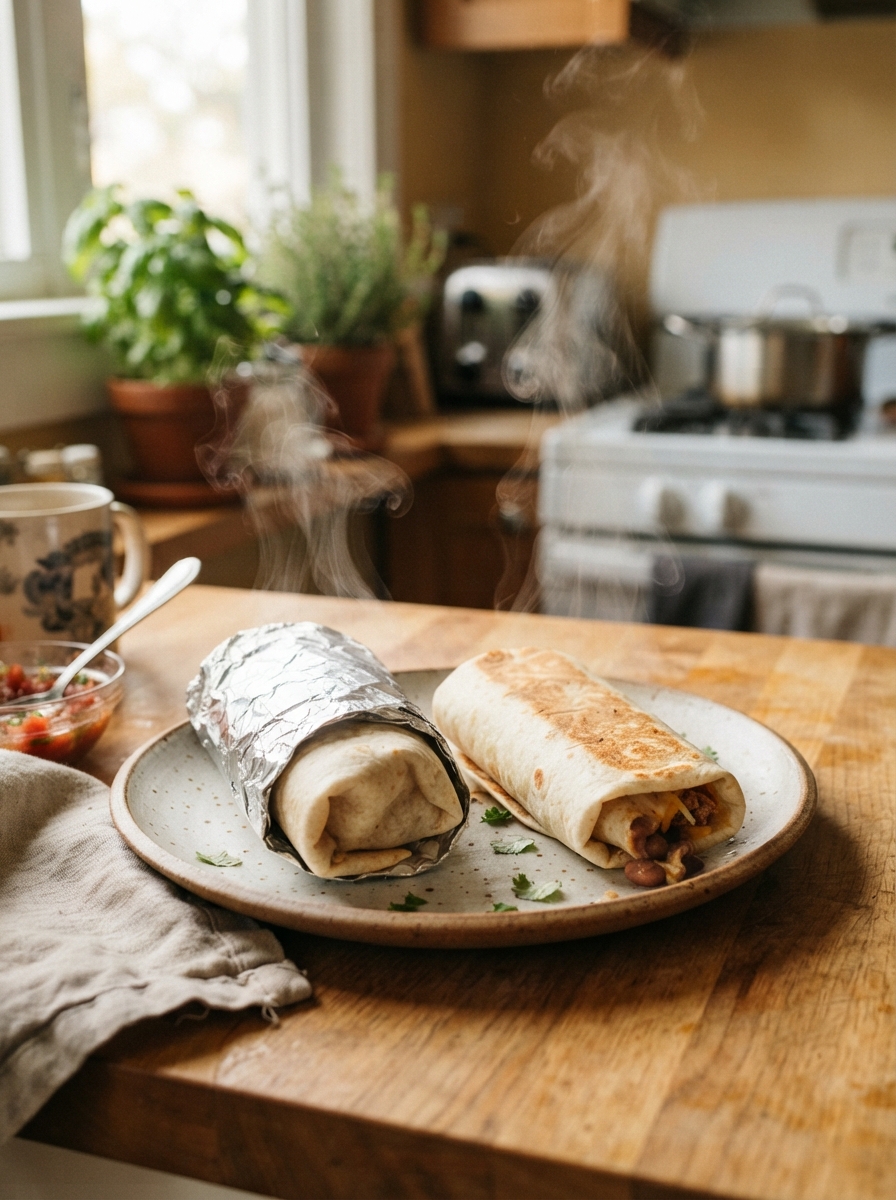
Each reheating method gives a slightly different result, so pick based on how much time you have:
- Microwave (fastest): Remove any foil, wrap the burrito in a damp paper towel, and microwave in 60–90 second increments until hot through. This is the quickest option but leaves the tortilla softer.
- Oven (best texture): Wrapped in foil, bake at 375°F for about 25–30 minutes from frozen. This method gives the most even reheating with a firmer tortilla.
- Air fryer (crispiest): Unwrap and air fry at 350°F for 12–15 minutes, flipping halfway, for a burrito with a crisp, slightly toasted exterior.
- Thaw overnight for faster reheating: Moving a burrito to the fridge the night before cuts any of these reheating times significantly.
Flavor Variations to Keep Breakfast Interesting
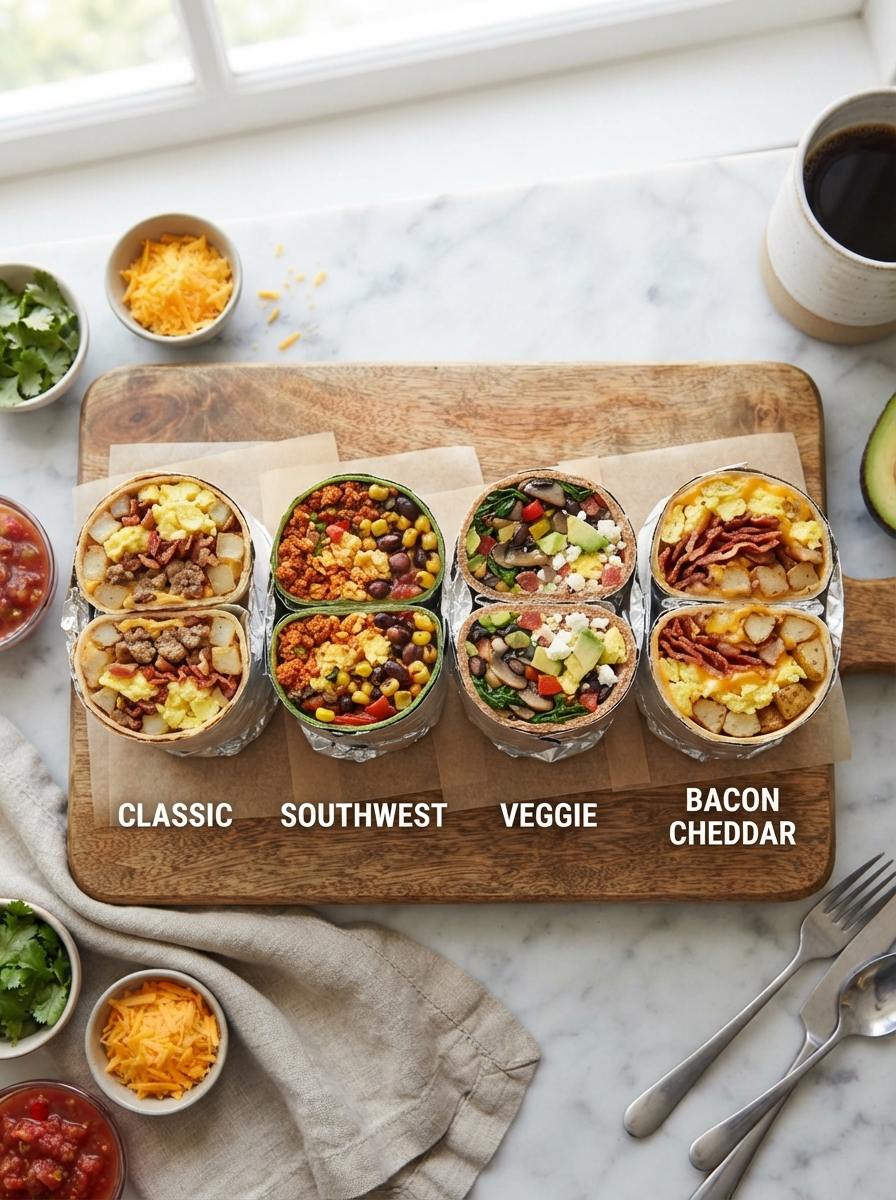
Making several varieties in one session means you’re never eating the exact same burrito five days in a row — the same approach that works well for high-protein breakfast meal prep generally:
- Classic: Eggs, sausage, cheese, and diced potatoes.
- Southwest: Eggs, black beans, corn, and pepper jack cheese with a pinch of cumin.
- Veggie-forward: Eggs, sautéed spinach, mushrooms, and feta.
- Bacon and cheddar: Eggs, crumbled bacon, sharp cheddar, and a little green onion.
- Chorizo and potato: Eggs, cooked chorizo, and crispy diced potatoes for a spicier option.
How Long Freezer Burritos Actually Last
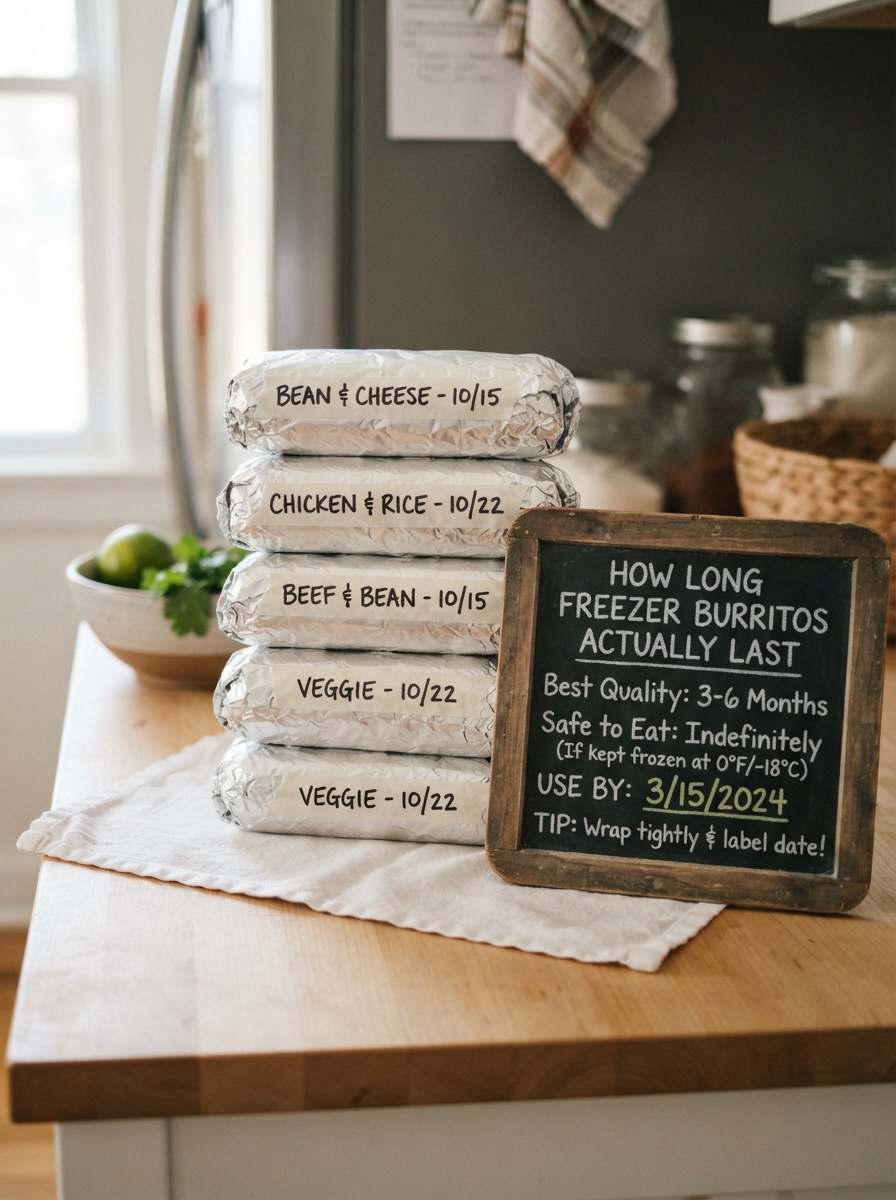
Wrapped and stored properly, freezer breakfast burritos hold their quality for about 2–3 months, though they remain safe to eat well beyond that if your freezer stays at a consistent temperature. The tortilla is usually the first thing to suffer in quality over time, going slightly drier or tougher — reheating in the oven rather than the microwave helps offset this if you’re eating from the back of your freezer stash.
A Sample Burrito-Making Session for a Month of Breakfasts
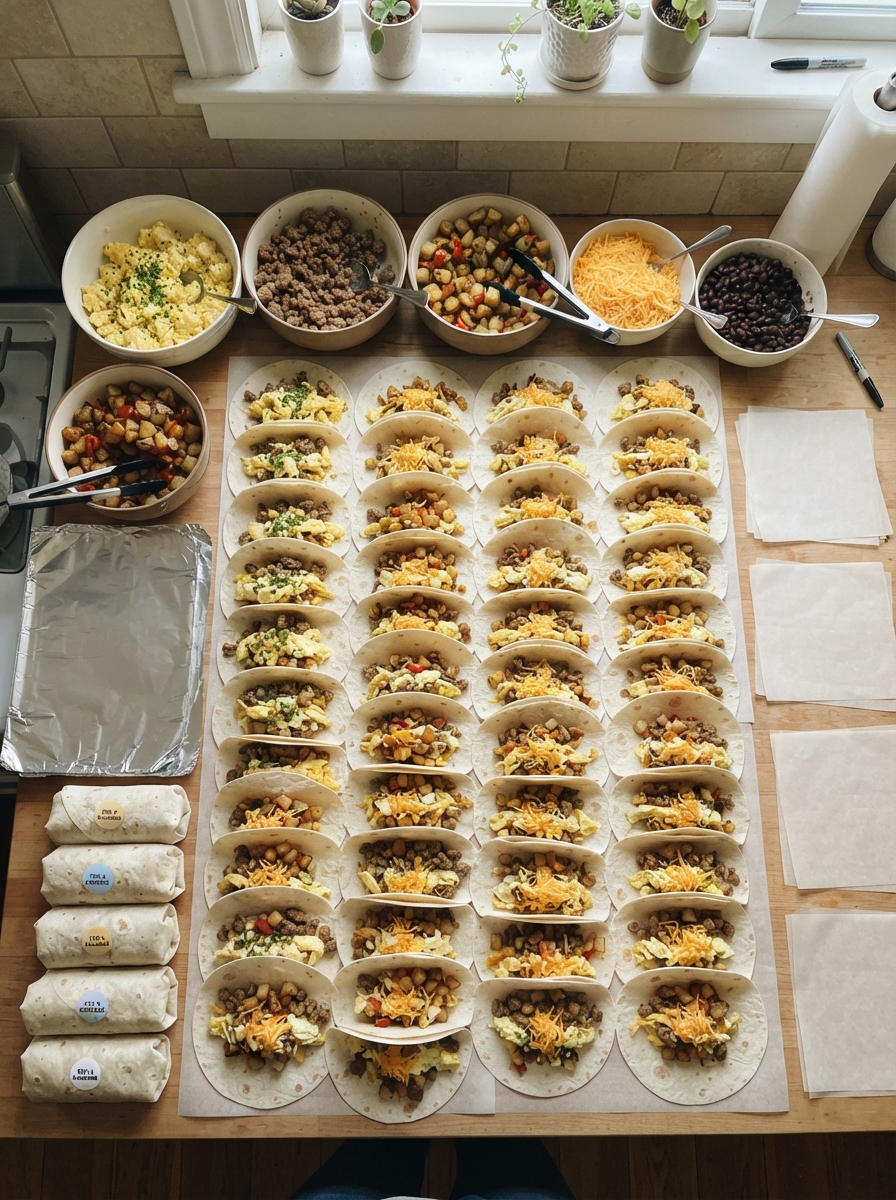
A single Sunday session can realistically stock a full month of breakfasts. Here’s a simple plan: scramble a dozen eggs across two batches, cook a pound of breakfast sausage and a pound of chorizo separately, roast a tray of diced potatoes, and shred a couple of cups of cheese. From those components, assemble 10–12 burritos across three or four flavor combinations, wrap them individually, and freeze. That’s roughly two to three weeks of grab-and-go breakfasts from about an hour of hands-on work — the same batch-and-freeze logic behind our meal prep ideas for the week.
Frequently Asked Questions
Can you freeze breakfast burritos with eggs in them?
Yes — scrambled eggs freeze well as long as they’re slightly undercooked before assembling and the burrito is wrapped tightly to prevent freezer burn. They finish cooking during reheating. If you want to go further, cooking tips covers it in detail.
How do you keep freezer burritos from getting soggy?
Let fillings cool before assembling, drain excess grease or liquid, skip watery fresh vegetables, and avoid overfilling the tortilla so it wraps and freezes tightly.
What’s the best way to reheat a frozen breakfast burrito?
The oven gives the best texture (375°F for 25–30 minutes wrapped in foil), the microwave is fastest (wrapped in a damp paper towel), and the air fryer gives the crispiest result.
How long do freezer breakfast burritos last?
About 2–3 months at peak quality when wrapped individually and stored in an airtight bag or container, though they stay safe to eat longer if your freezer holds a steady temperature.

One Comment