

As an Amazon Associate I earn from qualifying purchases. Some links in this post are affiliate links, at no extra cost to you.
A sharp knife and a few basic skills will do more for your cooking than any gadget you could buy. Once you’re comfortable with a handful of core cuts and a proper grip, everything in the kitchen gets faster: prep time drops, food cooks more evenly, and cooking stops feeling like a chore. Here’s what actually matters, skipping the fancy restaurant tricks you’ll never use at home. See also: kitchen decor.
Why Knife Skills Matter More Than Any Gadget
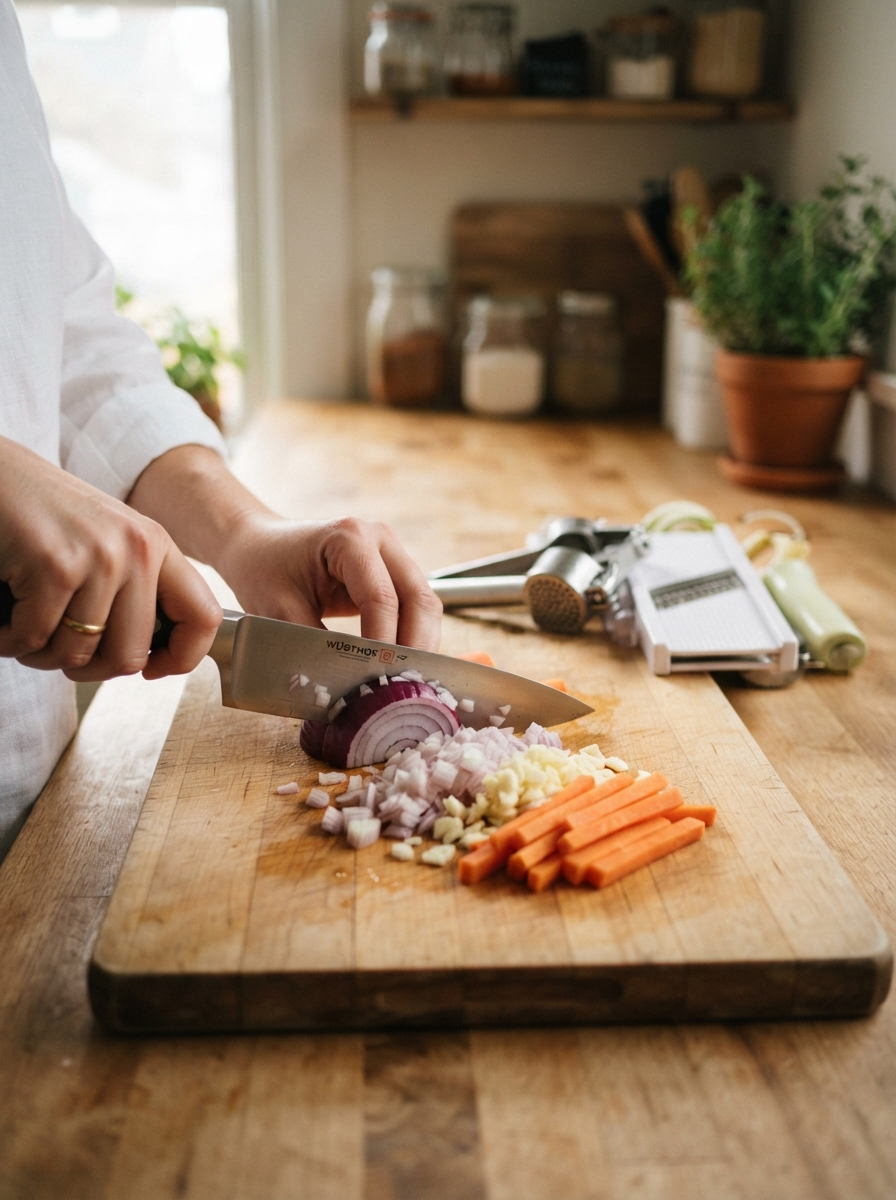
It’s tempting to buy a food processor, a mandoline, a garlic press, and a dozen other single-use tools to speed up prep. But almost everything those gadgets do, a sharp knife does just as fast, with less cleanup and less counter clutter. Good knife skills also mean more even cuts, which means food cooks at the same rate instead of some pieces burning while others stay raw. If you’re already trying to meal prep for the week, better knife skills are the single fastest way to cut your prep time without cutting corners on quality.
There’s also a safety angle that gets overlooked: a dull knife is more dangerous than a sharp one, because it slips and requires more force to cut through food. Learning to hold a knife properly and keep it sharp isn’t just about speed — it’s about keeping your fingers intact.
The Only 3 Knives You Actually Need
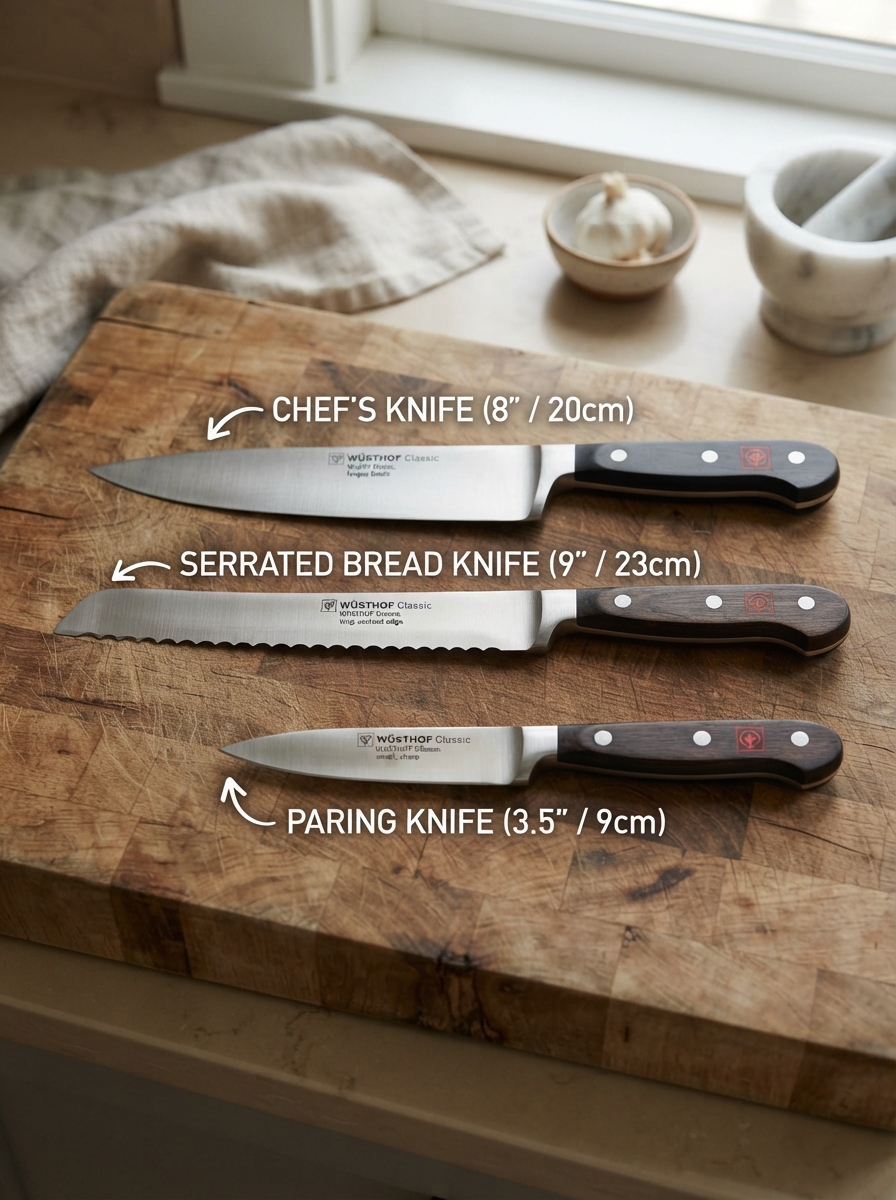
You don’t need a 15-piece knife block. Almost every home cook can get by with three knives, used well:
- An 8-inch chef’s knife: This does 90% of the work — chopping, slicing, mincing, dicing. If you only buy one knife, make it this one. For more on building out the rest of your kitchen without overspending, see our budget-friendly kitchen tools starter kit.
- A paring knife: For small, precise jobs a chef’s knife is too big for — hulling strawberries, deveining shrimp, peeling small fruit.
- A serrated bread knife: Essential for bread, tomatoes, and anything with a tough skin and a soft interior — a chef’s knife will crush a tomato before it cuts through the skin.
Beyond these three, everything else is a nice-to-have, not a need-to-have. A cheap set of six mismatched knives is almost always worse than one genuinely good chef’s knife.
How to Hold a Knife (and Why Your Grip Is Probably Wrong)
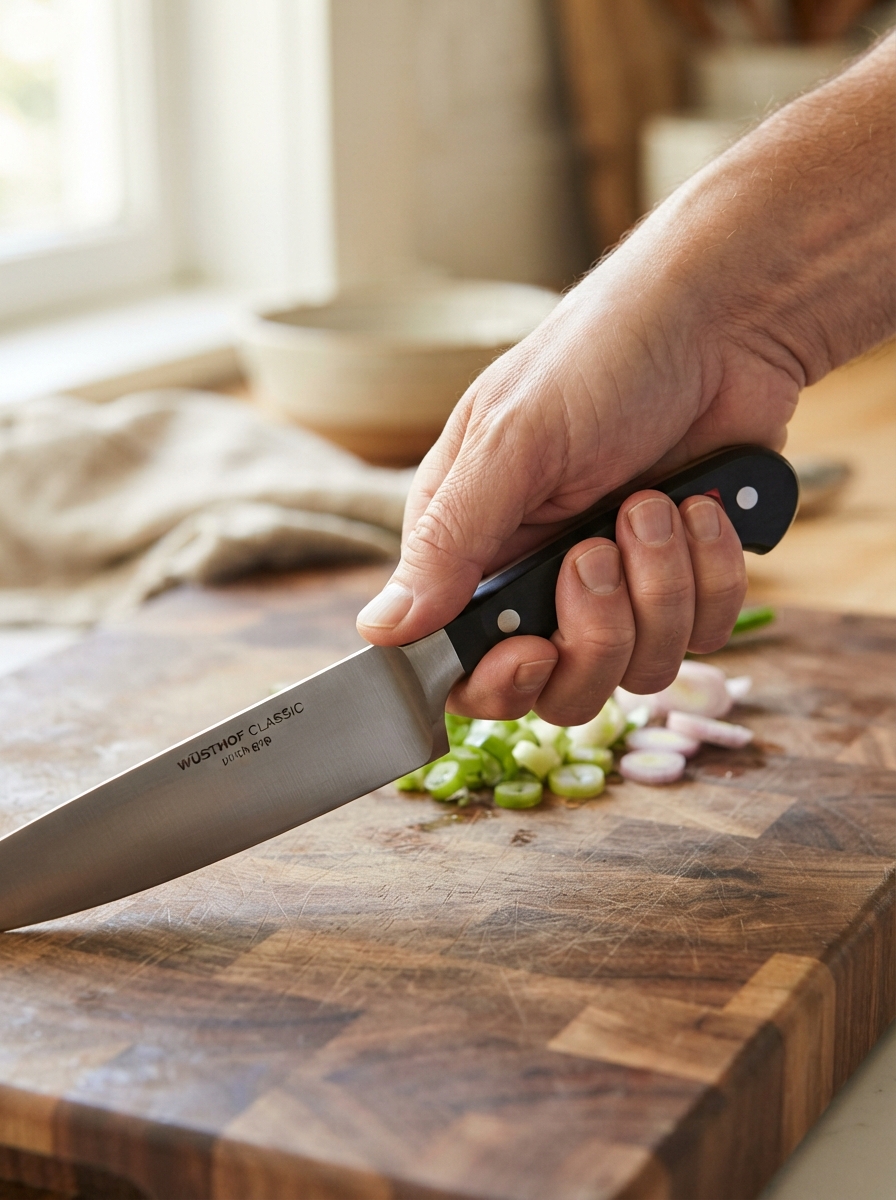
Most home cooks grip the knife entirely by the handle, wrapping all four fingers and the thumb around it. Professional cooks use what’s called a “pinch grip” instead: pinch the blade itself between your thumb and index finger, right where the blade meets the handle, and wrap your remaining three fingers around the handle.
This grip feels strange at first, but it gives you far more control over the blade’s tip and edge, which is where the actual cutting happens. Holding the handle alone puts your force behind the wrong part of the knife and makes precise cuts much harder. Give it a week of regular use and it will feel completely natural — most people don’t go back to a full-handle grip once they’ve tried it.
The Claw Grip: Protecting Your Fingers While You Cut
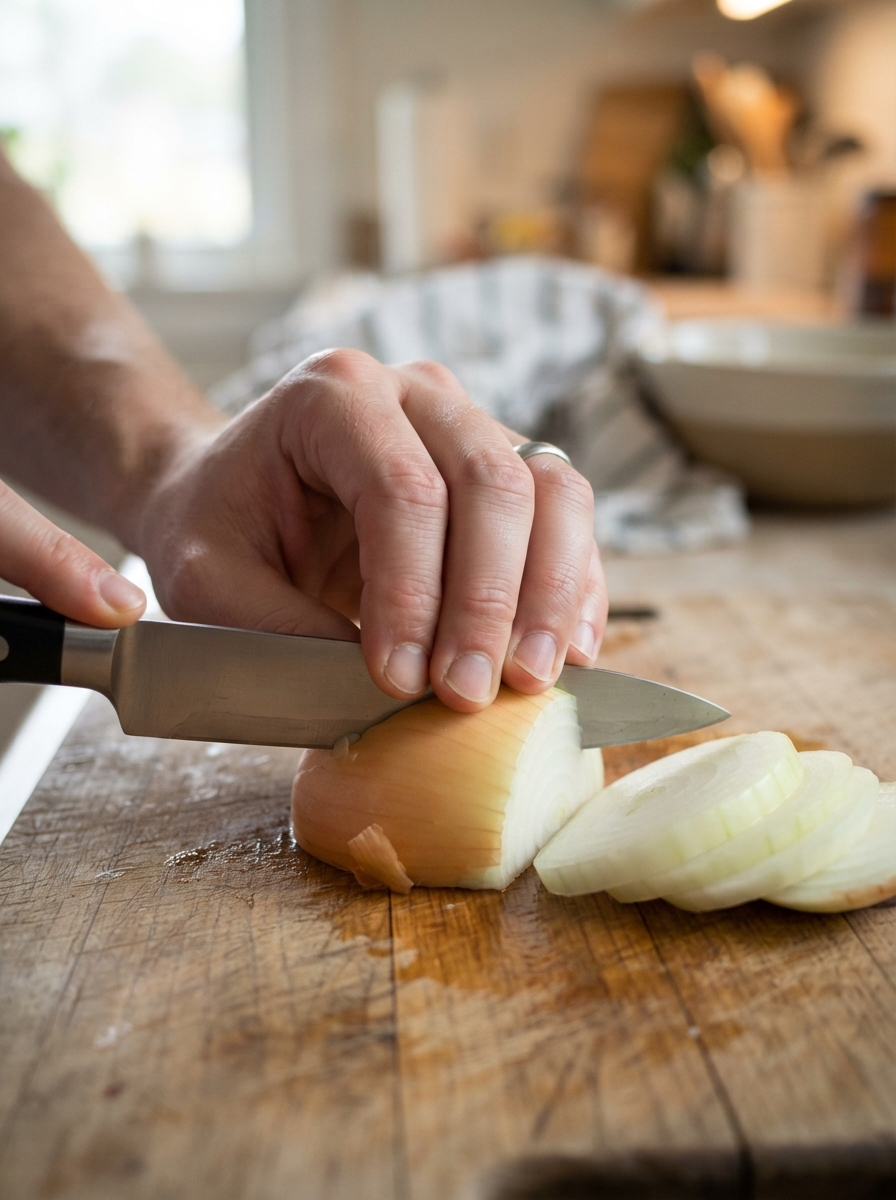
Your non-cutting hand matters just as much as the one holding the knife. The “claw grip” means curling your fingertips under and back, so your knuckles — not your fingertips — face the blade. Your thumb tucks behind your fingers too, out of the blade’s path entirely.
The flat side of the knife should rest lightly against your top knuckles as you cut, using them as a guide. This single habit is the biggest injury-prevention tool in the kitchen, and it becomes automatic with practice. Slow down at first — the goal is building the habit, not cutting fast.
Basic Cuts Every Cook Should Master
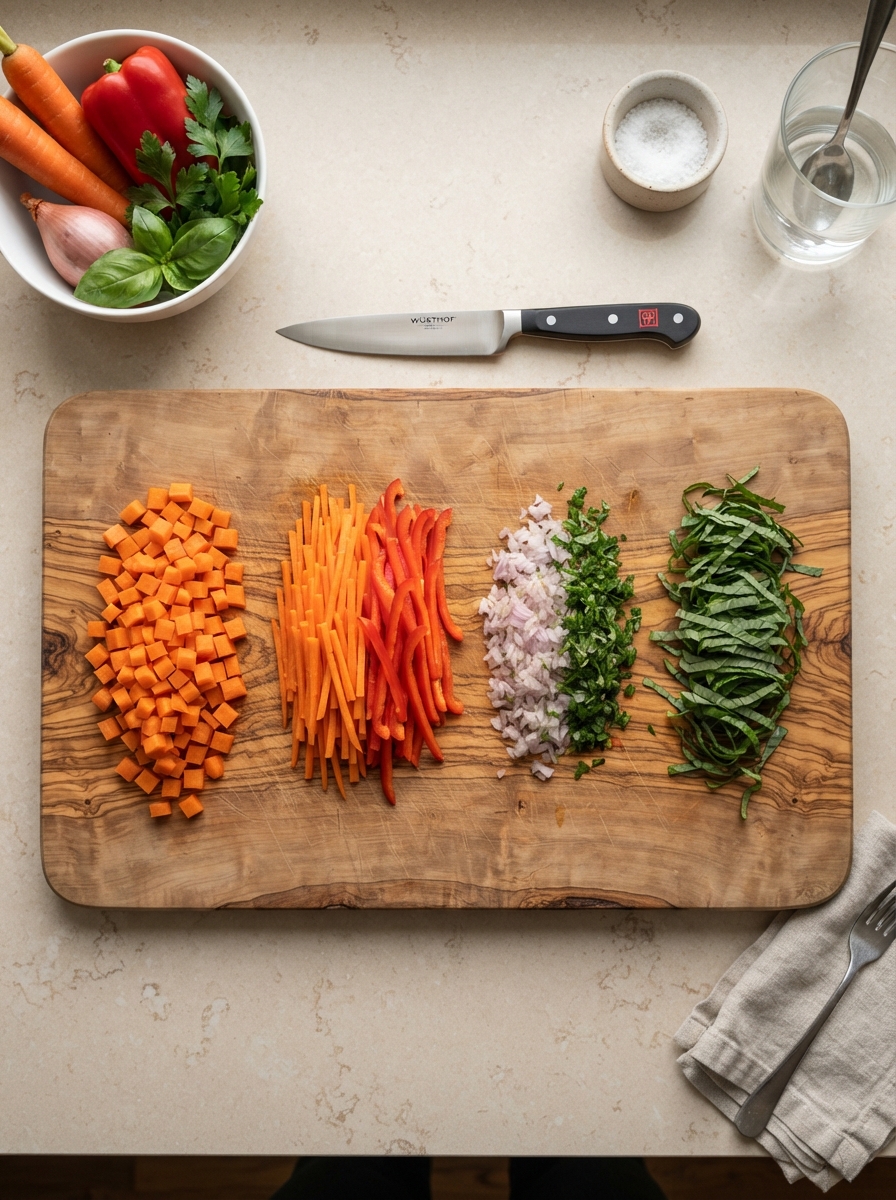
You don’t need restaurant-level knife skills, but these four cuts cover almost every recipe you’ll ever make:
- Dice: Cutting food into small, even cubes. Start by slicing the food into planks, then into strips, then across into cubes. Even sizing means even cooking.
- Julienne: Thin, matchstick-sized strips, usually for vegetables that go into stir-fries or salads. Slice into thin planks first, then stack and slice into thin strips.
- Mince: Very fine, irregular pieces, typically for garlic and herbs. Rock the knife tip-down while keeping the point anchored on the board, pivoting the blade back and forth over the food.
- Chiffonade: Thin ribbon cuts for leafy herbs like basil — stack the leaves, roll them tightly, then slice thinly across the roll.
Practice these on cheap vegetables like onions and carrots before you try them on something expensive. Consistency matters more than speed at first; speed comes naturally once the motion feels familiar.
How to Keep Your Knife Sharp Between Sharpenings
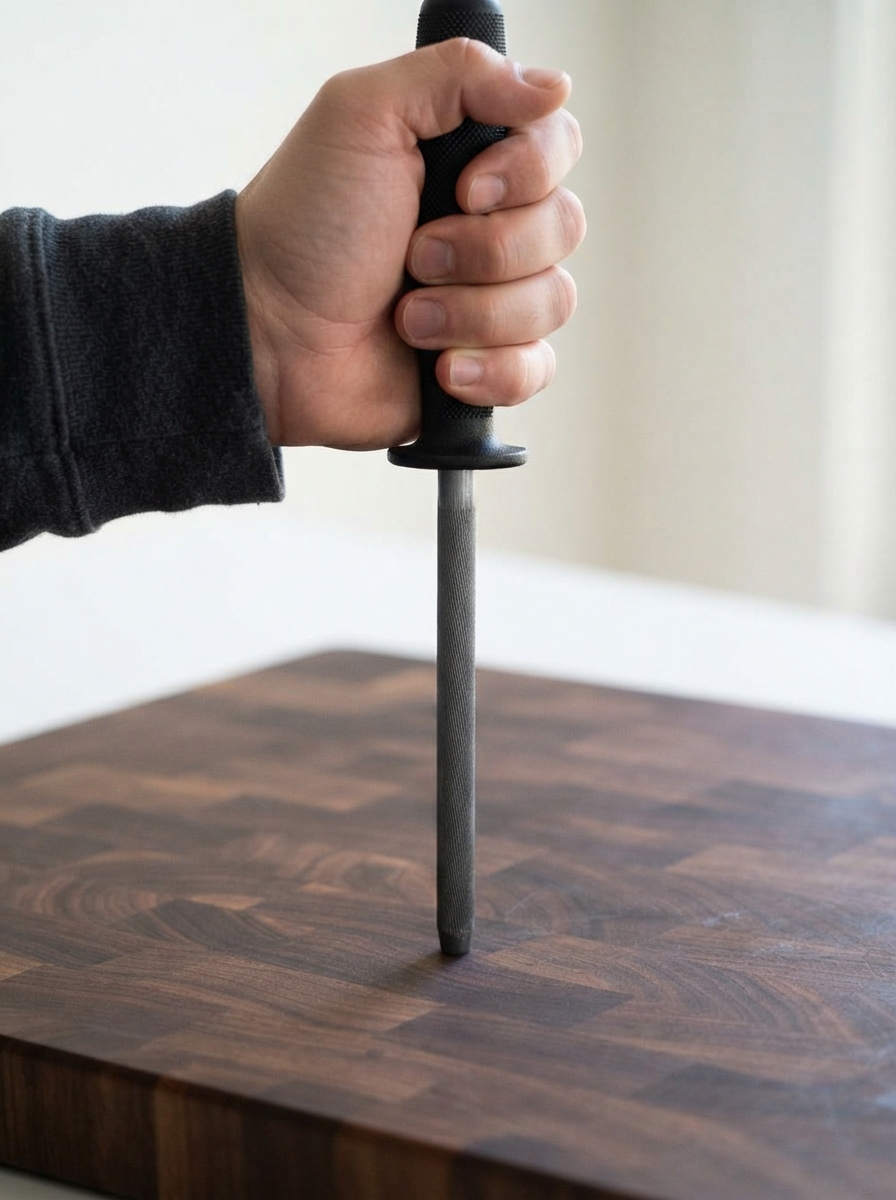
A knife doesn’t need to be professionally sharpened every week to stay useful — it needs to be honed. Honing realigns the blade’s edge (which bends slightly with regular use) using a honing steel, while sharpening actually removes metal to create a new edge. Most home cooks should hone before every use or two, and get a proper sharpening two to four times a year.
- Hone regularly: A few strokes on a honing steel before you start cooking keeps the edge straight and cutting cleanly.
- Sharpen occasionally: Use a whetstone, a pull-through sharpener, or take it to a professional a few times a year.
- Store it properly: Knives tossed loose in a drawer dull faster and are a safety hazard. A knife block, magnetic strip, or blade guard protects the edge.
- Never put good knives in the dishwasher: The heat, moisture, and jostling dull the blade and can damage the handle.
Common Knife Mistakes That Slow You Down
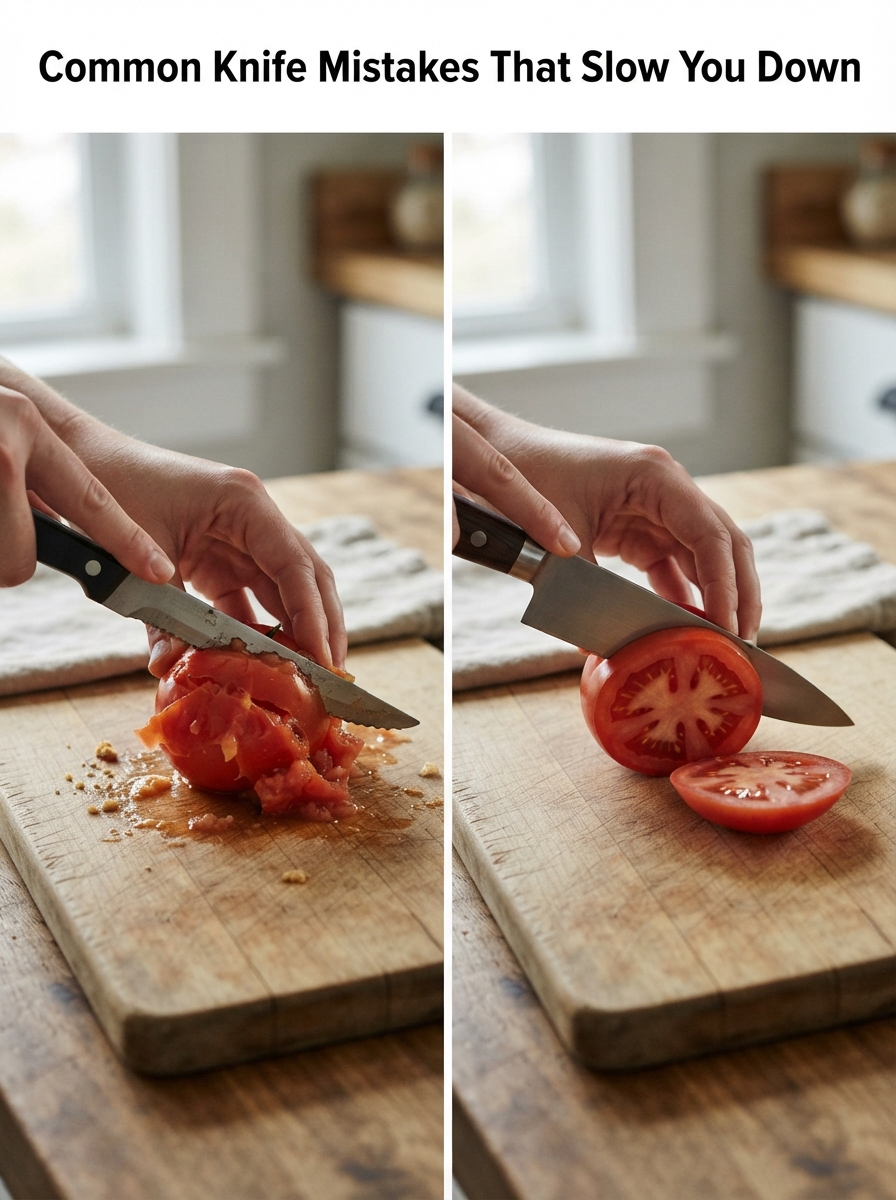
A few habits quietly cost home cooks time and consistency every time they cook:
- Using a dull knife: It requires more force, slips more easily, and produces uneven cuts. Sharpness is safety, not just convenience.
- Cutting on the wrong surface: Glass and stone cutting boards dull knives fast. Stick to wood or plastic.
- Sawing instead of slicing: Let the blade do the work with a smooth forward or downward motion rather than sawing back and forth.
- Not stabilizing the cutting board: A damp towel underneath keeps the board from sliding while you work.
- Cutting round vegetables without a flat edge: Slice a thin piece off one side of round vegetables like onions or potatoes first, so they sit flat and stable instead of rolling.
Knife Skills for Meal Prep: Cutting Once, Using All Week
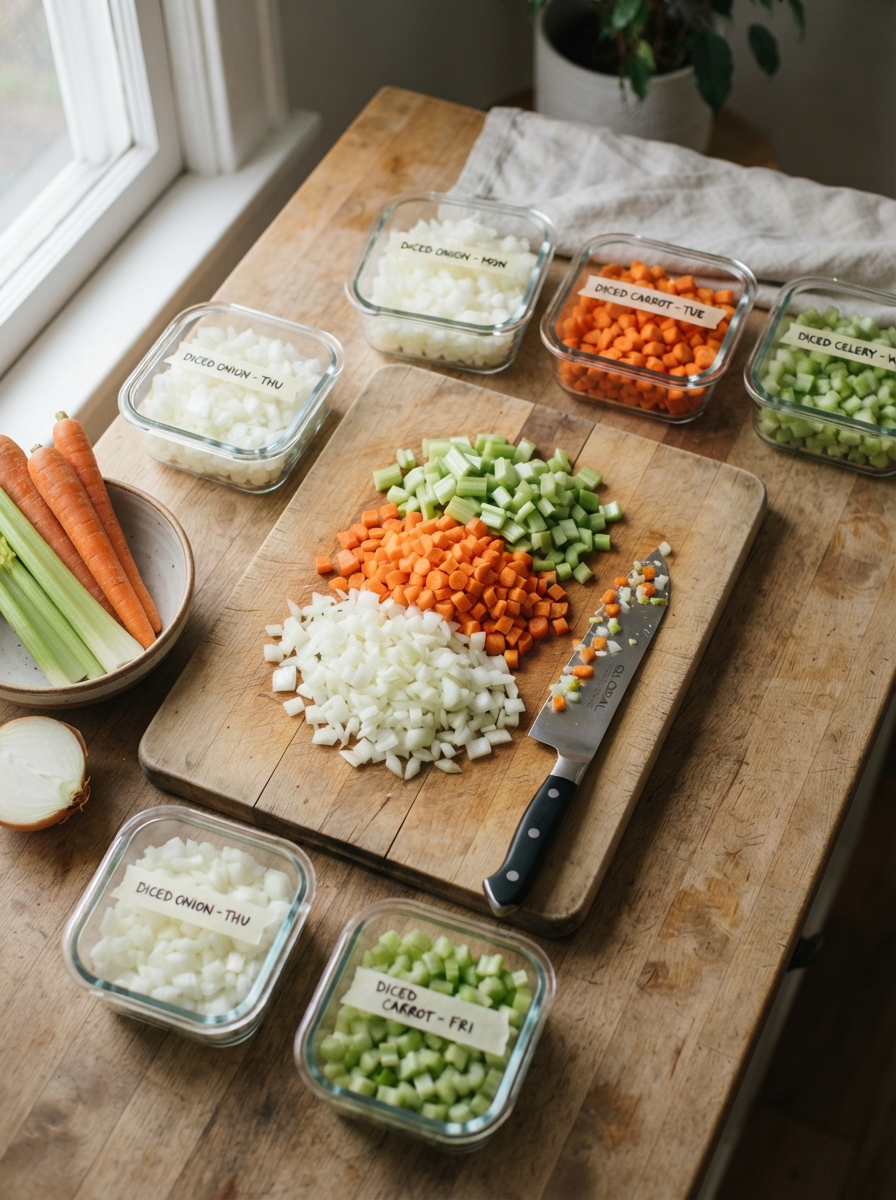
Good knife skills pay off the most during a weekly prep session, when you’re cutting large quantities at once. A consistent dice means vegetables roast or sauté evenly, and uniform pieces store and reheat more predictably. If you’re building out meal prep containers for the week, prepping onions, peppers, and other aromatics in bulk with consistent cuts saves real time on busy weeknights — you’re doing one cutting session instead of five separate ones.
A few habits that make batch cutting faster: prep your most-used aromatics (onion, garlic, celery, carrot) first since they show up in the most recipes, cut similar vegetables together so you’re not switching techniques constantly, and keep a designated container for prepped vegetables so they go straight from the board to the fridge. For more on this, see our meal prep guide.
A 10-Minute Knife Skills Practice Routine
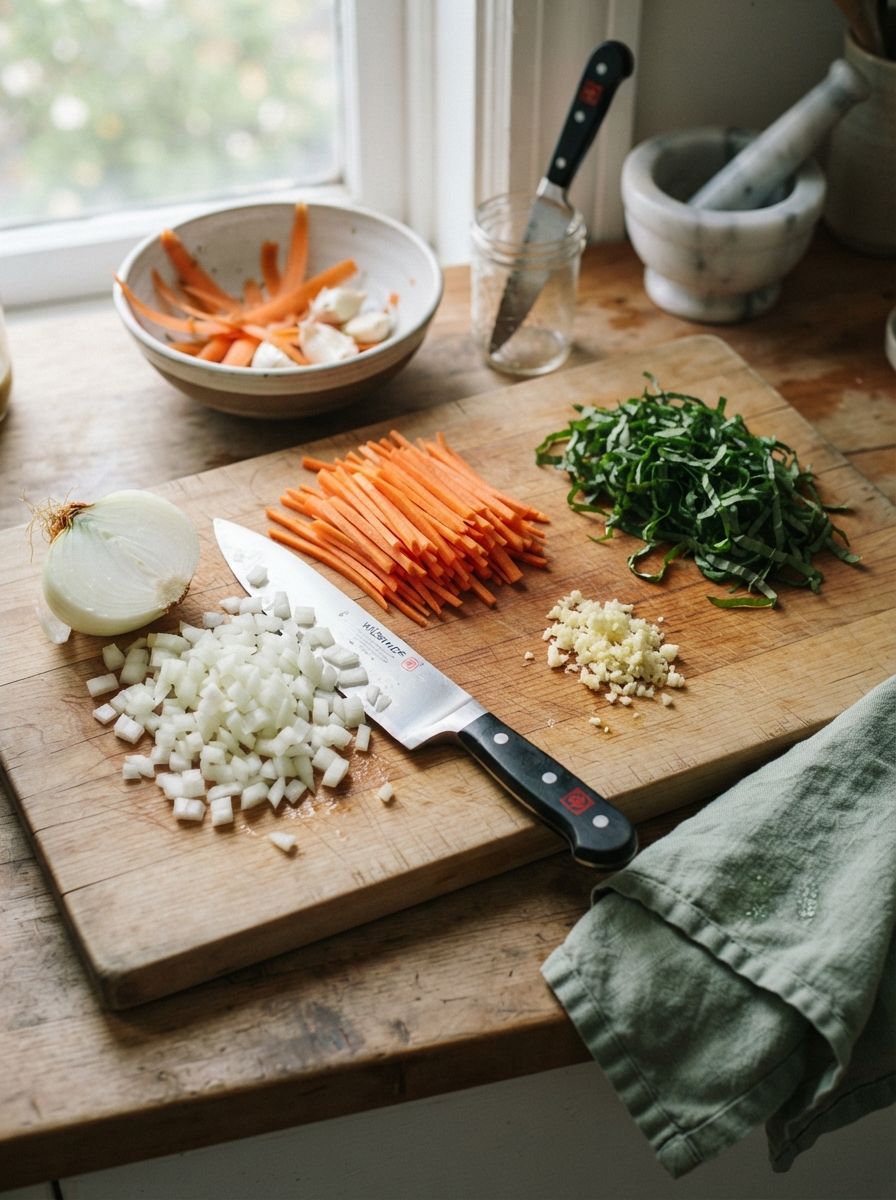
You don’t need a class to get noticeably better — ten minutes of deliberate practice a few times a week is enough:
- Minutes 1–3: Dice one onion as evenly as you can, focusing on the pinch grip and claw grip together.
- Minutes 4–6: Julienne a carrot or bell pepper into thin, even strips.
- Minutes 7–8: Mince a clove or two of garlic, practicing the rocking motion.
- Minutes 9–10: Chiffonade a few basil or spinach leaves.
Do this a couple of times a week for a month and the improvement is noticeable — not just in speed, but in how much more relaxed cooking feels once the knife work stops requiring conscious thought. If you also want to tighten up the rest of your kitchen workflow, our guide on organizing your kitchen like a chef pairs well with better knife skills — prepped ingredients and a clear station make everything come together faster.
Frequently Asked Questions
What are the most important knife skills for beginners?
Learning the pinch grip, the claw grip, and the basic dice cut will improve your cooking more than any other single skill. Once those feel natural, julienne, mince, and chiffonade come quickly.
How often should I sharpen my kitchen knife?
Hone your knife before every use or two with a honing steel, and get it properly sharpened (with a whetstone or professional service) two to four times a year, depending on how often you cook.
Do I really need more than one knife?
No — an 8-inch chef’s knife handles most tasks. A paring knife and a serrated bread knife round out a functional set for nearly every recipe you’ll cook at home.
Why does my knife keep slipping when I cut?
A dull blade and an unstable cutting board are the two most common causes. Keep your board from sliding with a damp towel underneath, and hone your knife regularly to keep the edge cutting cleanly instead of sliding off the food.




One Comment